

A convenience store license requirements checklist is the structured set of permits, registrations, and regulatory approvals every store owner must secure before opening legally. Skipping even one item on this checklist can trigger fines, forced closures, or months of delays. The full list spans business entity registration, a Federal Employer Identification Number (EIN) from the IRS, sales tax permits, zoning approvals, health department food permits, tobacco retail licenses, and state alcohol licenses. Convenience stores need multiple permits because each product category and operational function carries its own regulatory layer. Getting the sequence right from day one is what separates a smooth opening from a costly restart.
1. Convenience store license requirements checklist: start with business entity registration
Business entity formation is the first step in every store license requirements process. You cannot apply for most downstream permits without a registered legal entity. The two most common structures are a Limited Liability Company (LLC) and a Corporation. LLC formation typically takes 3–14 days depending on the state, while corporate filings can run longer.
After forming your entity, apply for a Federal Employer Identification Number (EIN) directly through the IRS. EIN applications processed online are approved the same day. The EIN is your business's tax identity and a required field on nearly every subsequent permit application.

Once you have your EIN, file for a general business license through your city or county clerk's office. This license confirms your right to operate commercially within that jurisdiction. Some municipalities bundle this with a home occupation permit or a commercial activity tax registration, so check local requirements carefully.
Pro Tip: Complete entity registration and EIN before scheduling any zoning meetings or permit appointments. Arriving without a legal entity on record wastes your time and theirs.
2. How to get a sales tax permit before you sell a single item
A sales tax permit, also called a seller's permit, authorizes you to collect state sales tax from customers. State revenue departments issue these permits, and most states require one before your first transaction. The application is typically free or low cost, and many states now process them online within a few business days.
The seller's permit process varies by state, but the core requirement is the same: you must register with your state's department of revenue or taxation. Some states also require a separate local sales tax registration if your city or county levies its own sales tax. Missing either layer creates liability for back taxes and penalties.
A sales tax permit also unlocks your ability to purchase inventory at wholesale prices without paying sales tax upfront. That alone makes early registration a financial priority, not just a legal one.
3. How zoning and occupancy permits affect your store location
Zoning approval confirms that your chosen location is legally permitted for retail commercial use. Zoning typically permits convenience stores in commercial or mixed-use zones. Residential or industrial areas may require a variance, and variances can take months to process, causing serious opening delays.
Contact your local planning or zoning department before signing any lease. Request a zoning verification letter for the specific address. This single step prevents the most common cause of permit delays: discovering a location is improperly zoned after you have already committed to it.
After zoning clears, you need a Certificate of Occupancy (CO) from your local building department. The CO confirms the physical space meets building code standards for commercial retail use. Inspectors check fire exits, electrical systems, plumbing, and structural integrity before issuing it.
- Verify the zoning designation before signing a lease
- Request a written zoning verification letter from the planning department
- Confirm the space has an existing CO or budget time for a new inspection
- Check for any overlay districts (historic, flood zone) that add requirements
- Ask whether a change of use permit is needed if the prior tenant was a different business type
4. What product-specific licenses convenience stores must obtain
Product-specific permits are where the convenience store compliance checklist gets most complex. Each regulated product category carries its own licensing authority, fee structure, and processing timeline.
Health department food permits
A retail food permit is required any time you sell packaged food, prepared food, or beverages for human consumption. Local or county health departments issue these permits after an inspection of your store's food storage, refrigeration, and handling areas. Food safety inspections focus on actual food temperatures, with cold holding required below 41°F and hot holding required above 135°F. Health permits typically cost $100–$1,000 annually and take 3–6 weeks to process. A retail food permit guide walks through what inspectors look for and how to prepare.
Tobacco retail licenses
Tobacco retail licenses are issued at the state level, and requirements vary significantly by state. Some states charge under $100 annually; others charge several hundred dollars and require staff training certifications. The FDA's Center for Tobacco Products sets federal age verification standards, but enforcement and licensing happen at the state level. Apply for your tobacco license as soon as your business entity is registered, because some states have processing queues that run several weeks.
State alcohol licenses
Alcohol licenses carry the highest cost and longest processing times of any permit on this list. Alcohol retail licenses cost $300–$10,000 or more annually depending on the state and license type (beer and wine only versus full spirits). Processing times range from two weeks to several months. State Alcoholic Beverage Control (ABC) boards manage these applications and often require public notice periods, background checks, and premise inspections.
Pro Tip: File your alcohol license application the same week you submit your business entity registration. The long processing time means every day of delay pushes your opening date back.
Lottery retailer licenses
If you plan to sell lottery tickets, your state lottery commission issues a separate retailer license. Most states require a clean financial and criminal background check. The application is usually free, but approval can take several weeks.
5. What convenience store permits cost and how long they take
Total permit costs for a convenience store (excluding fuel) range from $760 to $14,680 depending on which licenses you hold. The wide range reflects the outsized impact of alcohol licensing. A store without an alcohol license sits near the low end; one with full spirits retail authority sits near the high end.
Routine applications like EINs process in a single day. Complex permits take 2–8 weeks. Alcohol and food permits consistently fall at the longer end of that range.
The recommended licensing sequence is: business entity registration first, then zoning and occupancy confirmation, then general business license and tax registration, and finally product-specific permits. Owners who apply for higher-level permits before securing foundational approvals create their own delays. A state ABC board will not process an alcohol license for a business that has not yet registered its legal entity.
- Budget $760–$14,680 for permits, with alcohol licensing as the primary cost variable
- Allow 3–14 days for LLC formation and same-day EIN processing
- Allow 3–6 weeks for health permits and 2+ weeks to several months for alcohol licenses
- Bundle applications where possible: some jurisdictions allow combined health and business license submissions
- Start alcohol and food permit applications before your build-out is complete, not after
6. Ongoing compliance requirements after you open
Compliance does not end on opening day. Compliance is a daily operation, not a one-time hurdle. Owners who treat licensing as a finish line rather than a starting point face fines, license suspension, and lost customer trust.
Maintaining documented procedures for food safety, age-restricted sales refusals, and equipment checks is a legal requirement in most jurisdictions. Health inspectors treat these logs as evidence of compliance during audits. Missing logs are treated the same as missing compliance.
Your point-of-sale (POS) system plays a direct role in regulatory compliance. POS systems must handle age verification prompts, tobacco reporting, EBT/SNAP processing, and real-time sales tax reporting. Choosing a POS without these features forces expensive retrofits later. Select your POS before you open, not after your first inspection.
Business licenses must stay current through annual or biannual renewals. Administrative termination for missed renewals is common and creates the same legal exposure as never having a license at all. Set renewal reminders at least 60 days before each expiration date.
Pro Tip: Assign one staff member as the compliance point of contact for each shift. That person owns the daily log, the age verification refusal record, and the temperature check. Distributed responsibility means no one owns it.
Key takeaways
A complete convenience store license requirements checklist, followed in the right sequence, is the single most effective way to avoid delays, fines, and forced closures before and after opening.
| Point | Details |
|---|---|
| Sequence matters | Complete entity registration and EIN before applying for any other permit or license. |
| Alcohol licenses take longest | Apply for state alcohol licenses as early as possible; processing can take several months. |
| Total permit costs vary widely | Budget $760–$14,680 depending on which product licenses your store requires. |
| Compliance is daily | Maintain temperature logs, age verification records, and renewal calendars after opening. |
| POS selection is a compliance decision | Choose a POS system that handles age verification, tobacco reporting, and sales tax before you open. |
The part most owners get wrong
Most entrepreneurs treat the licensing checklist as a bureaucratic obstacle to clear once and forget. That framing is the root cause of most compliance failures I see.
The sequence issue is real and underappreciated. Owners apply for alcohol licenses before they have a registered legal entity. They sign leases before confirming zoning. They open food service before the health permit clears. Each of these errors adds weeks or months to an opening timeline, and none of them are recoverable quickly.
The ongoing compliance piece is where profitable stores separate from struggling ones. A store that loses its tobacco or alcohol license for a documentation failure does not just lose that revenue stream. It loses customer traffic, staff confidence, and sometimes the entire business. The daily log is not paperwork. It is your license protection.
My practical advice: treat your compliance checklist the same way you treat your inventory order. It is a recurring operational task, not a one-time project. If you are operating multiple locations, that discipline becomes even more critical because the failure points multiply. Tools that centralize permit tracking across locations, like Vaultedai, exist precisely because spreadsheets and calendar reminders do not scale past two or three stores.
Start early, follow the sequence, and build compliance into your daily operations from week one. The stores that do this well rarely think about it. The stores that do not think about it constantly.
— Rakin
Vaultedai: permit and compliance tracking for convenience store operators
Running a convenience store means managing a stack of permits, renewals, and daily compliance records across every product category you sell. Vaultedai is built for exactly this operational reality.
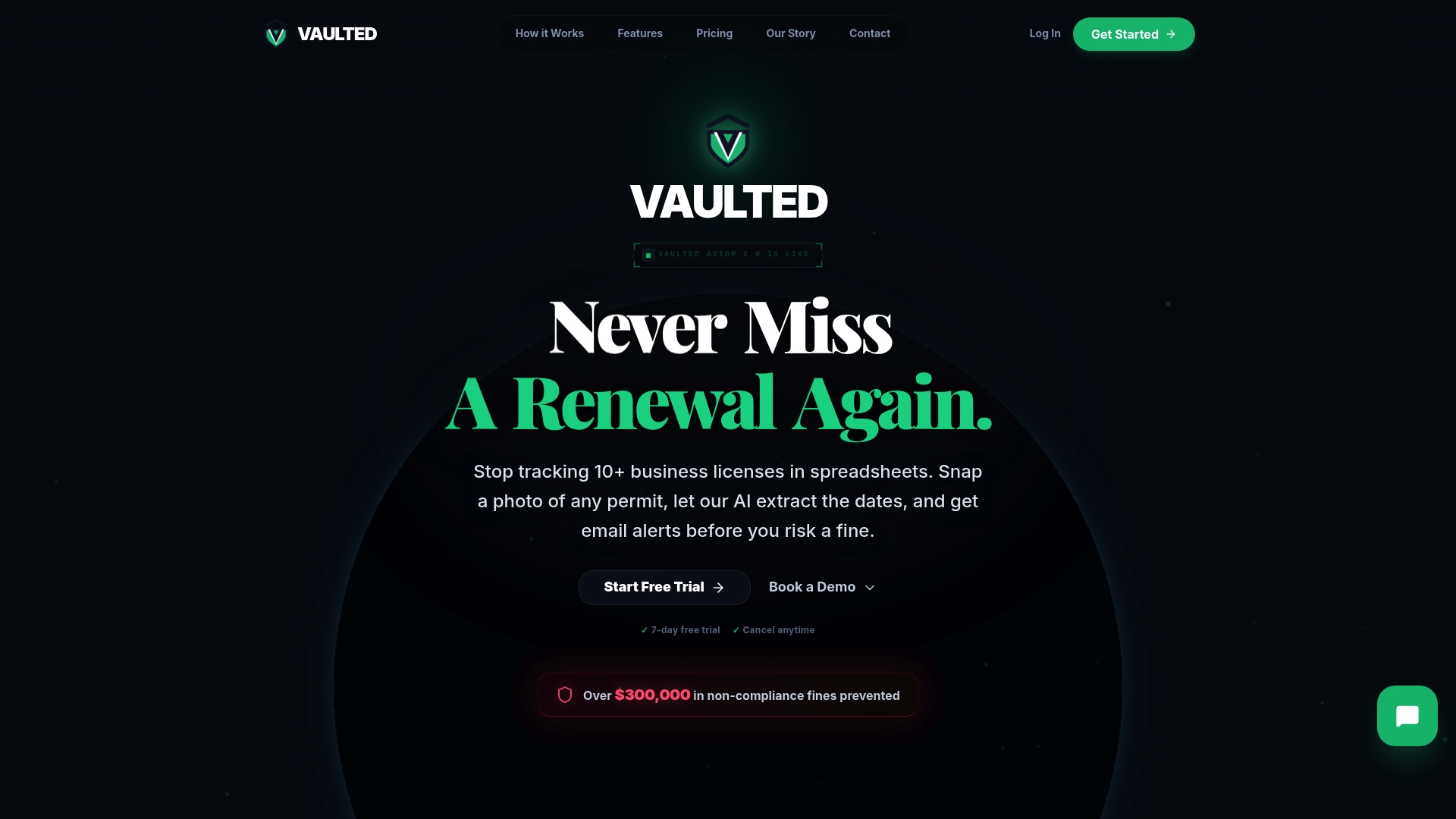
Vaultedai centralizes all your permits, license renewal dates, and compliance documents in one place. The platform is designed for multi-location operators who have outgrown spreadsheets and need clear visibility across every store. Fast onboarding means you can load your existing licenses and set renewal alerts within hours, not weeks. If you are managing compliance across locations or preparing for your first store opening, explore Vaultedai and see how it fits your operation.
FAQ
What licenses does a convenience store need to open?
A convenience store needs a registered business entity, an EIN, a general business license, a sales tax permit, a health department food permit, and any product-specific licenses for tobacco, alcohol, or lottery sales. The exact list depends on your state and municipality.
How long does it take to get all convenience store permits?
Total licensing time ranges from a few days for foundational registrations to several months for alcohol licenses. Plan for at least 2–3 months of lead time before your target opening date.
How much do convenience store permits cost?
Total permit costs range from $760 to $14,680 excluding fuel permits, with alcohol retail licenses representing the largest single cost variable at $300–$10,000 or more annually.
What happens if I skip zoning verification?
Skipping zoning verification is a leading cause of license delays. If your location is not zoned for retail commercial use, you may need a variance that takes months to approve, pushing your entire opening timeline back.
How often do convenience store licenses need to be renewed?
Most licenses renew annually or biannually. Licenses must stay current to avoid administrative termination, which carries the same legal exposure as operating without a license.