
A business license audit checklist is a structured process that confirms every operating license across your locations is current, correctly named, and tracked for renewal. For franchise operators and multi-location businesses, this is not a one-time task. It is an ongoing compliance discipline that protects you from penalties, funding delays, and regulatory shutdowns. This guide breaks down the 10 critical steps in a license compliance audit, explains how often to run them, and identifies the mistakes that cost operators the most.
1. What goes on a business license audit checklist?
A complete audit checklist for licenses covers at least 10 key areas: license inventory, ownership assignment, renewal deadlines, entity alignment, documentation, compliance calendar, corporate change tracking, jurisdiction segmentation, internal reconciliation, and digital management. Each area addresses a specific failure point that auditors, underwriters, and regulators look for. Skipping even one creates a gap that can surface at the worst possible moment, such as during a loan application or a surprise inspection.

The term "business license audit" is sometimes used loosely. The recognized industry term is license compliance review, and it refers to a formal verification that all licenses are valid, properly assigned, and aligned with your legal entity records. Both terms describe the same process, and you will see them used interchangeably in regulatory and financial contexts.
2. Build a complete license inventory first
The license inventory is the foundation of every compliance review. Multi-location operators must treat licensing as a geographically dispersed project, with a register that tracks jurisdiction, legal entity, license type, license number, expiration date, and the responsible owner for each entry. Without this register, you are managing compliance from memory, and that always fails at scale.
For a franchise group with 12 locations across three states, this register might contain 60 or more individual license records. General city or county business license fees typically range from $25 to $150, while state-level professional licenses run $50 to $500 annually. That cost range matters because it signals how many distinct license types you are likely carrying across jurisdictions.
Pro Tip: Use a spreadsheet or compliance platform to build your initial inventory. Columns should include: location name, license type, issuing authority, license number, expiration date, renewal lead time, and assigned owner. This single document becomes your audit source of truth.
3. Assign a named owner to every license
Every license in your register needs one named person responsible for its renewal and maintenance. This is not a shared team responsibility. Shared responsibility means no one acts when a deadline approaches. Assign a specific individual, whether that is a location manager, an operations director, or a compliance coordinator, and document that assignment in your register.
This step matters most during staff turnover. When a location manager leaves and no one has documented license ownership, renewal deadlines get missed. Missed renewal deadlines create costly legal and operational disruptions for multi-location businesses. A named owner with a documented handoff process prevents that gap from opening.
4. Align legal entity names across all records
Aligning your legal identity across licenses, bank accounts, and merchant portals is one of the most overlooked steps in a license compliance audit. If your license reads "Smith Enterprises LLC" but your bank account says "Smith Enterprises," that mismatch triggers manual investigations and delays capital access. Underwriters use licenses to verify physical presence and operational status, so any discrepancy becomes a red flag.
Check that your legal entity name, DBA registrations, and EIN are consistent across every license, every bank account, and every vendor portal. This cross-check should happen at least once per quarter. If you have recently changed your business name, rebranded a location, or added a DBA, update every record before the next audit cycle.
5. Build and maintain a compliance calendar
A compliance calendar is a scheduled system of alerts and review dates tied to every license renewal, filing deadline, and regulatory requirement across your locations. You can learn more about setting up a compliance calendar to understand how it works as a proactive tracking tool rather than a reactive reminder. Without one, renewal deadlines become surprises.
Set alerts at 90 days, 60 days, and 30 days before each expiration. The 90-day alert gives you time to gather documentation. The 60-day alert is your action trigger. The 30-day alert is your final check. This three-stage system works for businesses with 3 locations or 300.
6. Maintain a permanent company documentation folder
A permanent company folder containing formation certificates, operating agreements, and licenses proves your business structure and supports audit evidence requests. Auditors do not just want to see your current license. They want to see the legal entity behind it. A folder that contains your articles of incorporation, operating agreement, EIN confirmation, and all active licenses answers those requests immediately.
This folder should live in a centralized, access-controlled location. Cloud storage works well for multi-location operators because it allows your compliance team, accountants, and legal counsel to access documents without routing requests through a single person. Every new license or renewal should be added to this folder the day it is received.
7. Conduct formal audits quarterly
Quarterly compliance audits are the industry best practice for multi-location businesses. A quarterly cadence means you catch problems before they become violations. It also means your records are always close to current, which matters when a lender, franchisor, or regulator asks for documentation on short notice.
Monthly reviews of your compliance calendar complement the quarterly audit. The monthly review is not a full audit. It is a 15-minute check to confirm no deadlines are approaching in the next 60 days and that no recent corporate changes have created new licensing obligations. Together, quarterly audits and monthly calendar reviews create a rhythm that keeps compliance from falling behind.
Pro Tip: Schedule your quarterly audit as a recurring calendar event tied to your fiscal quarters. Treat it like a financial close. Assign it to a specific person, set a two-week completion window, and require a written summary of findings.
8. Document every corporate change immediately
Corporate transactions require pre-transaction license research and timely updates to reduce risk and maintain operational continuity. When you open a new location, acquire a business, change your legal structure, or add a new product category, your licensing obligations change. Failing to update your register and notify the relevant agencies creates compliance gaps that surface during due diligence.
Build a trigger list into your audit process. Any of the following events should automatically initiate a license review: new location opening, ownership change, name change, new product or service category, state or county expansion, and lease address change. You can find detailed guidance on expansion permit requirements to understand what new obligations each trigger creates.
9. Tailor your audit folder to each agency's requirements
Each auditing agency has unique scope and documentation requirements. A generic audit folder is insufficient. The IRS, OSHA, state licensing boards, and local health departments each ask for different evidence. A folder built for one agency will fail another. Your audit preparation must be specific to the agency conducting the review.
For a restaurant group, this means maintaining separate documentation sets for health department inspections, liquor license renewals, and state food handler certifications. For a convenience store operator, it means tracking tobacco permits, lottery licenses, and fuel storage permits as distinct categories with distinct documentation requirements. Operators in regulated industries should review common license application errors to understand where documentation gaps most often appear.
10. Use digital tools to manage compliance at scale
Spreadsheets work for one or two locations. At five or more locations, manual tracking creates too much risk. Digital compliance platforms centralize your license register, automate renewal alerts, store documentation, and give your team a single source of truth across all locations. This is where tools like Vaultedai become operationally significant for growing operators.
The comparison below shows how centralized digital management differs from decentralized manual tracking:
| Factor | Centralized digital management | Decentralized manual tracking |
|---|---|---|
| Renewal alerts | Automated, multi-stage | Dependent on individual memory |
| Documentation access | Instant, cloud-based | Scattered across locations |
| Entity alignment checks | Built into workflow | Manual, inconsistent |
| Audit readiness | Always current | Requires preparation sprint |
| Scalability | Grows with locations | Breaks down past 5 locations |
The operational difference is not subtle. Centralized management means your compliance status is visible at any moment. Decentralized tracking means you only know your status when you check, and checking takes time you rarely have.
Key takeaways
A business license audit checklist works only when it is systematic, assigned, and reviewed on a fixed schedule across every location you operate.
| Point | Details |
|---|---|
| Build a license register | Track jurisdiction, entity, license type, number, expiration, and owner for every license. |
| Assign named owners | Every license needs one responsible person to prevent missed renewals during staff changes. |
| Align entity records | Match legal name, DBA, and EIN across licenses, bank accounts, and vendor portals to avoid audit flags. |
| Audit quarterly | Formal compliance reviews every quarter keep records current and funding-ready at all times. |
| Use digital tools | Centralized platforms like Vaultedai replace manual tracking and scale with your location count. |
Why most multi-location operators audit too late
I have worked with franchise operators who ran 20 locations without a single formal license audit. They knew their licenses existed. They just had no system to confirm they were current, correctly named, or assigned to anyone. The first time they needed to prove compliance, during a lender's due diligence review, they spent three weeks scrambling to pull documents that should have been organized from day one.
The uncomfortable truth about license audits is that most operators only build the process after something goes wrong. A missed renewal shuts down a location for two weeks. A name mismatch delays a $500,000 loan. A missing DBA registration kills a franchise transfer. These are not edge cases. They are predictable outcomes of treating licensing as a background task rather than a core operational discipline.
What I have found actually works is treating the license register the same way you treat your financial records. You would not run a business without a current balance sheet. You should not run a multi-location operation without a current license register. The quarterly audit is your close. The compliance calendar is your accounts payable aging report. The named owner is your controller. Once operators frame it that way, the process sticks.
The other thing most guides miss is the DBA documentation gap. Many operators have DBAs registered at the state level but never updated their local business licenses to reflect them. That mismatch is invisible until an auditor or underwriter looks closely. Catching it requires a deliberate cross-check between your state registration records and your local license files, and that cross-check belongs on every quarterly audit agenda.
— Rakin
How Vaultedai helps you stay audit-ready across every location
Managing license compliance across multiple locations without a dedicated system means you are always one missed deadline away from a problem.
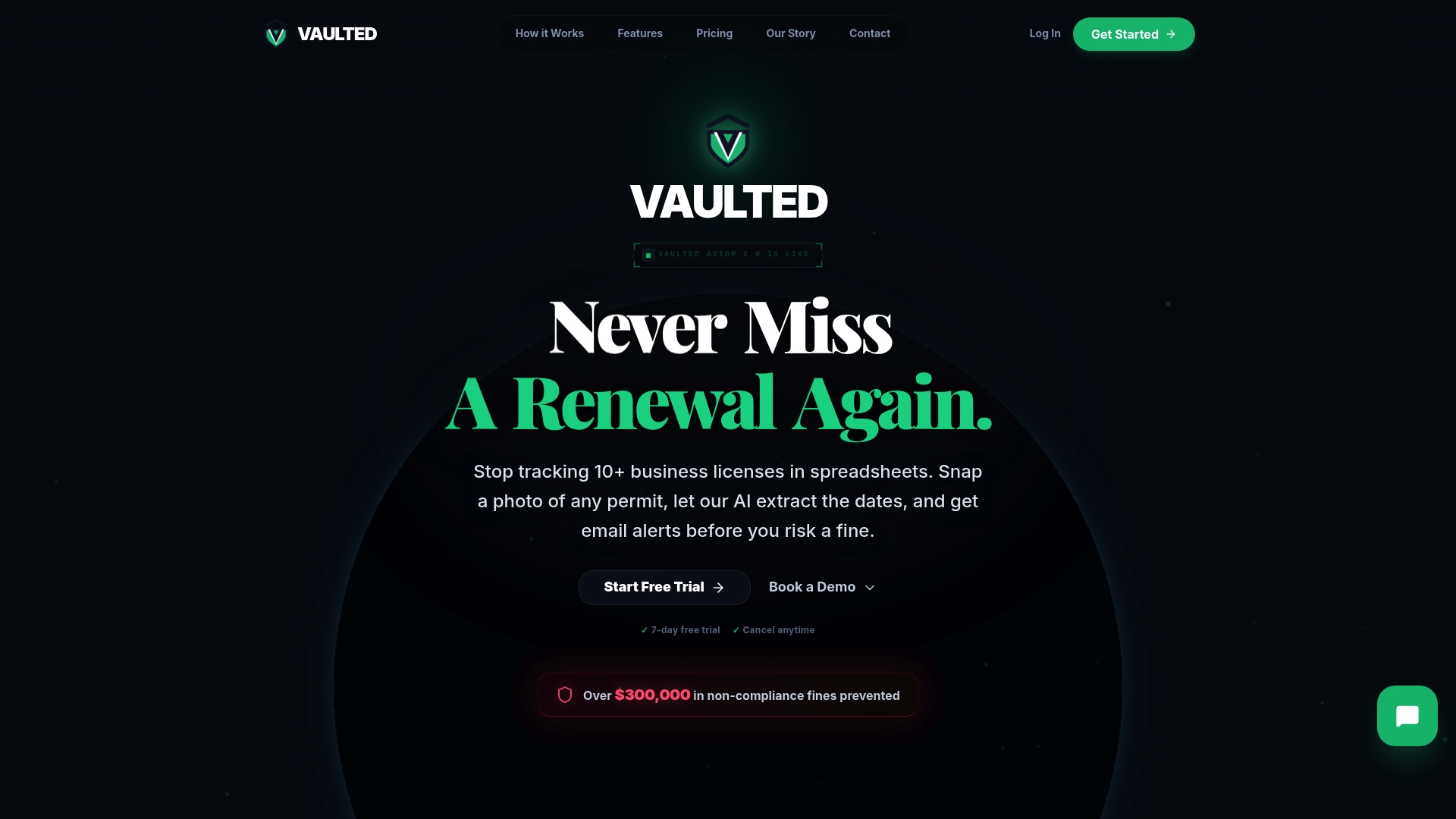
Vaultedai is built specifically for multi-location operators who need to centralize permits, licenses, renewals, and compliance documents in one place. The platform gives you a live license register, automated renewal alerts, and a document vault that is always ready for auditor or lender review. Whether you operate smoke shops, restaurants, convenience stores, or franchise units, Vaultedai replaces the spreadsheet chaos with a clear, organized compliance workflow. Start managing your licenses with Vaultedai and stop treating audits as emergencies.
FAQ
What is a business license audit?
A business license audit is a formal review that verifies all operating licenses across your locations are current, correctly named, and aligned with your legal entity records. It is also called a license compliance review in regulatory and financial contexts.
How often should multi-location businesses audit their licenses?
Quarterly formal audits are the industry best practice, supplemented by monthly compliance calendar reviews to catch upcoming deadlines before they become violations.
What are the most common errors found during license audits?
The most frequent errors are mismatched entity names across licenses and bank records, missing DBA documentation, unassigned license owners, and generic audit folders that do not meet agency-specific requirements.
How does a license audit affect loan applications?
Underwriters use business licenses to verify physical presence and operational status. Entity mismatches on licenses and bank statements trigger manual investigations that delay funding approvals.
What tools help manage license audits for franchises?
Digital compliance platforms like Vaultedai centralize license registers, automate renewal alerts, and store documentation across all locations. They replace manual spreadsheet tracking, which breaks down reliably past five locations.