
Managing smoke shop permit requirements means securing the correct state tobacco retail license, local business license, and federal FDA registration before you sell a single product. These are not optional layers of bureaucracy. They are the legal foundation of your business, and missing any one of them exposes you to fines, forced closure, or permanent license revocation. As of Q2 2026, 47 states plus D.C. mandate a state tobacco retail license, with fees ranging from $5 to over $1,000 and total permitting timelines running 6–12 weeks. California, New York, Texas, and Minneapolis each layer on additional local rules that make a one-size-fits-all approach impossible.
How to manage smoke shop permit requirements by type
Every smoke shop operates under a multi-tier licensing structure. Understanding each tier prevents the most common and costly mistake: assuming one permit covers everything.
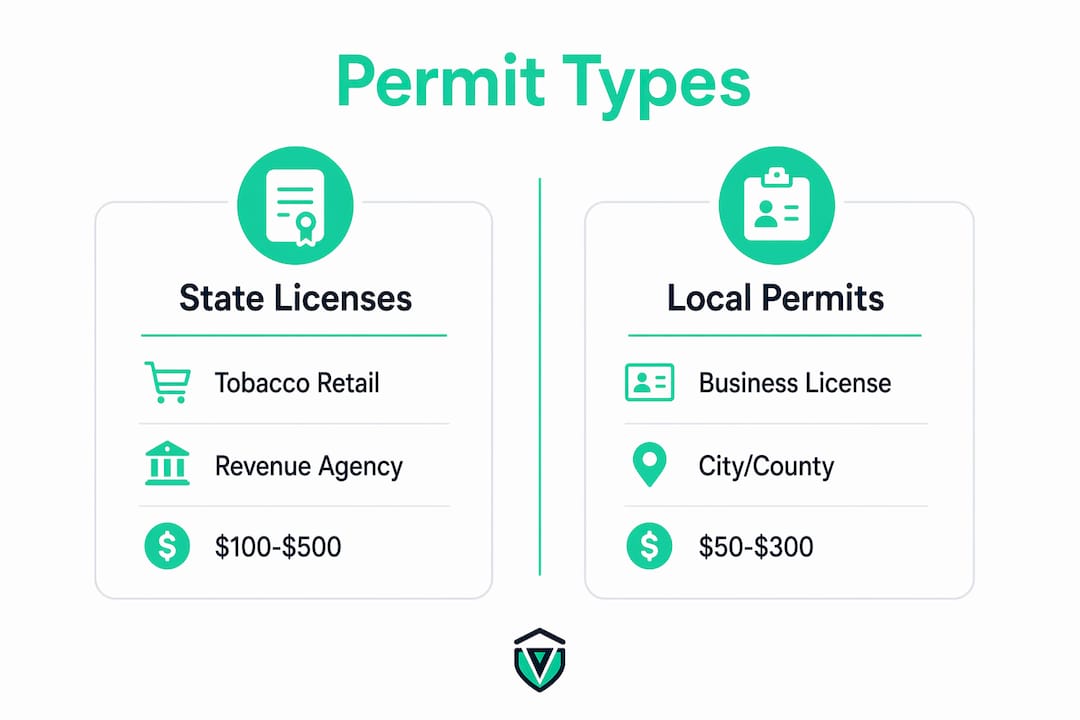
State tobacco retail licenses
The state tobacco retail dealer license is your primary operating credential. It is issued by your state's revenue or health department and must be renewed annually in most jurisdictions. Fees and documentation requirements vary significantly. Texas requires an active Sales Tax Certificate linked to your EIN before the state will even process a tobacco license application. State Comptrollers reject tobacco applications without an active Sales Tax Certificate tied to the business location. That sequencing mistake alone delays hundreds of applications every year.
Local business licenses and zoning permits
City and county governments issue their own local business licenses separately from state credentials. Many jurisdictions also require a zoning permit confirming your location is approved for tobacco retail. Minneapolis takes this further with a tiered system. The city's Exclusive Tobacco Dealer license requires at least 90% of revenue to come from tobacco and smoking accessories. That threshold directly affects what you can stock and sell, not just how you are classified.

Federal FDA registration
The FDA requires all tobacco retailers to register under the Family Smoking Prevention and Tobacco Control Act. FDA tobacco retailer registration is free and takes about 15 minutes online. The low barrier to entry makes skipping it inexcusable, yet many new operators overlook it entirely because it does not come with a physical permit to post on the wall.
Permit type comparison
| Permit Type | Issuing Agency | Typical Fee | Notes |
|---|---|---|---|
| State Tobacco Retail License | State Revenue or Health Dept. | $5–$1,000+ annually | Requires active Sales Tax Permit first |
| Local Business License | City or County Clerk | $50–$500 | Location-specific; one per storefront |
| Zoning or Land Use Permit | City Planning Dept. | $100–$300 | Confirms site is approved for tobacco retail |
| Certificate of Occupancy | Building or Fire Dept. | Varies | Required before permit issuance in many states |
| FDA Retailer Registration | U.S. Food and Drug Administration | Free | Takes approximately 15 minutes online |
| Special Vaping or Flavored Tobacco Permit | State or Local Health Dept. | Varies | Required in California, some cities |
What does the smoke shop licensing process look like?
The smoke shop licensing process follows a specific sequence. Skipping steps or applying out of order is the single biggest source of delays.
-
Obtain your EIN. Register your business entity with the IRS and get your Employer Identification Number. Every subsequent application ties back to this number.
-
Apply for a Sales Tax Permit. Your state's comptroller or revenue department issues this. In Texas and several other states, a Sales Tax Permit must be active at the same business address before your tobacco license application will be accepted.
-
Apply for the state tobacco retail license. Submit your application with your EIN, Sales Tax Permit number, and business address documentation. Budget 3–6 weeks for processing in most states.
-
Secure local permits. Apply for your city or county business license and zoning permit simultaneously. Do not wait for state approval to start local applications. These processes run in parallel, not in sequence.
-
Schedule building and fire inspections. A Certificate of Occupancy and fire safety clearance are often required before your permit is issued. Planning departments and fire marshals cause common bottlenecks in licensing timelines. Contact them early, not after you have signed a lease.
-
Complete FDA registration. Log into the FDA's online portal and register as a tobacco retailer. Keep your confirmation number on file.
-
Obtain any special product permits. If you plan to sell vaping products or flavored tobacco in states like California or New York, check whether additional permits or product registrations apply before you order inventory.
Pro Tip: Apply for your Certificate of Occupancy the same week you sign your lease. Fire marshal inspections in cities like Houston and Los Angeles can take 3–5 weeks to schedule. Starting late pushes your entire opening date back.
The full process from EIN to final permit approval typically runs 6–12 weeks. Multi-location operators face this timeline for every single storefront. One license cannot cover multiple storefronts; each location requires its own complete set of state and local permits. If you are expanding to additional locations, plan your permit applications at least two months before your target opening date.
How do you maintain ongoing smoke shop regulation compliance?
Obtaining your permits is the starting line, not the finish line. Smoke shop regulation compliance is an active, ongoing obligation that directly affects your ability to renew.
Holding a permit is a conditional operating right. Regulators in cities like Boston review your compliance record before approving renewal. Unpaid citations and violations of youth-access laws can result in outright renewal denial. That means a single unresolved fine from a routine inspection can shut down your business at renewal time.
Here are the ongoing compliance actions every smoke shop owner must maintain:
- Track all renewal deadlines. State and local permits renew on different schedules. Missing one while the others are current still constitutes unlicensed operation.
- Monitor local flavor ban rules. California's SB 793 bans most flavored tobacco products. Active inspections verify flavored product sales compliance under this law. Possession of a valid license does not protect you from a flavored inventory violation.
- Respond to citations immediately. Pay fines and correct violations before your next renewal window opens. Regulators check citation history.
- Audit your signage. Many jurisdictions require specific health warnings and prohibit certain promotional displays near the entrance. A signage permit violation can trigger a broader compliance review.
- Watch for zoning buffer changes. Cities periodically update distance requirements between tobacco retailers and schools or parks. Zoning buffer enforcement changes can force relocations retroactively even if your existing permit is valid.
- Keep all documents centralized. Inspectors can request your permits, inspection reports, and renewal confirmations on the spot. Disorganized records create unnecessary risk.
Pro Tip: Set calendar reminders 90 days before each permit's expiration date. Most state agencies allow early renewal, and submitting early protects you if processing delays occur.
What are the most common smoke shop permit mistakes?
Most permit problems are predictable. The operators who avoid them are simply the ones who knew what to look for before it happened.
Assuming one license covers all locations. This is the most expensive mistake in multi-location smoke shop management. Tobacco licenses are location-specific, meaning every storefront needs its own state license, city license, and federal registration. An operator who opens a second location under an existing license is operating illegally from day one.
Applying for a tobacco license before the Sales Tax Permit is active. The application gets rejected. You lose weeks and restart the process. The fix is simple: sequence your applications correctly from the beginning. Review our guide on seller's permits if you are unclear on how Sales Tax Permits work.
Skipping fire and building inspections. Some operators sign a lease, order inventory, and start applying for permits without scheduling a Certificate of Occupancy inspection. Certificate of Occupancy and fire safety inspections are often required before permit issuance and can delay your opening by weeks if the building fails inspection.
Ignoring local flavor bans. Selling flavored tobacco in a jurisdiction that bans it is not a gray area. Flavor ban enforcement has shifted toward retail audits and undercover inspections. Getting caught with non-compliant inventory can cost you your license, not just a fine.
Letting citations sit unresolved. A citation from a routine inspection feels minor in the moment. At renewal time, it becomes a reason for denial. Treat every citation as urgent. For a broader look at common application errors that affect retail businesses, the pattern of neglect is consistent across industries.
Key takeaways
Effective smoke shop permit management requires correct sequencing, location-specific licensing, and active ongoing compliance across state, local, and federal levels.
| Point | Details |
|---|---|
| Sequence your applications correctly | Obtain your Sales Tax Permit before applying for a state tobacco retail license. |
| Every location needs its own permits | One license cannot cover multiple storefronts at any permit level. |
| FDA registration is free and required | Complete federal registration online in 15 minutes; skipping it is a compliance gap. |
| Citations affect renewal eligibility | Unresolved fines and violations can result in permit renewal denial. |
| Flavor bans require active inventory management | Holding a valid license does not protect you from flavored product violations under laws like California's SB 793. |
The part most operators learn too late
I have worked with enough multi-location retail operators to know that permit problems almost never come from ignorance of the rules. They come from underestimating the operational load of staying current across multiple jurisdictions simultaneously.
The operators who get into real trouble are usually the ones running three or four locations on spreadsheets and memory. They know their state license renews in March. They forget the city license renews in October. One missed renewal, one unresolved citation, and suddenly a location that generates $40,000 a month is dark while they scramble to fix a paperwork problem.
What I find consistently true is that regulatory complexity in the tobacco retail space is only increasing. States are adding flavor restrictions. Cities are updating zoning buffers. The FDA is expanding its oversight of vaping products. The operators who treat compliance as a one-time setup task will keep getting caught off guard.
The smarter approach is to treat your permit portfolio the same way you treat your inventory. You would not run a store without knowing what is on the shelves. You should not run a smoke shop without knowing exactly which permits are active, which are expiring, and which jurisdictions have changed their rules since your last renewal.
Technology helps here, but only if you actually use it. A centralized compliance system that tracks deadlines and flags regulatory changes is worth far more than its subscription cost the first time it prevents a missed renewal. The businesses that scale successfully in this industry are not the ones that know the most about tobacco regulations. They are the ones that have built systems so the right information reaches the right person at the right time.
— Rakin
Keep your permits current with Vaultedai
Running a smoke shop means managing a stack of permits that renew on different schedules, across different agencies, with different documentation requirements for each location.
Vaultedai is built for exactly this situation. The platform centralizes your permits, licenses, and renewal deadlines across every location in one place. Automated reminders flag upcoming expirations before they become emergencies. Document storage keeps your compliance records organized and accessible when an inspector walks through the door. If you are managing more than one storefront or planning to grow, track your permits with Vaultedai and stop relying on spreadsheets that do not send alerts.
FAQ
What permits does a smoke shop need to operate legally?
A smoke shop requires a state tobacco retail license, a local business license, a zoning permit, and free FDA retailer registration at minimum. Some states and cities require additional permits for vaping products or flavored tobacco.
How long does the smoke shop licensing process take?
The full permitting process typically takes 6–12 weeks from initial application to final approval. Fire and building inspections are the most common source of delays, so schedule them as early as possible.
Can one tobacco license cover multiple store locations?
No. Tobacco licenses are location-specific at every level. Each storefront requires its own state license, city business license, and federal registration regardless of how many locations the same owner operates.
What happens if a smoke shop misses a permit renewal?
Operating with an expired permit constitutes unlicensed operation, which can result in fines, forced closure, and difficulty obtaining future licenses. Regulators also review citation history before approving renewals, so unresolved violations compound the risk.
Do flavor bans affect smoke shops that already hold a valid license?
Yes. A valid license does not authorize the sale of banned products. California's SB 793 and similar local ordinances are enforced through retail audits and undercover inspections, and violations can result in license suspension or revocation independent of your permit status.