
Yes, growing multi-location retail and hospitality businesses need compliance tools. Without them, a single missed liquor license renewal can shut a location down, a stalled permit can delay a grand opening by weeks, and a disorganized document trail can kill an enterprise contract before it starts. Compliance tools reduce those risks, accelerate new-location launches, and signal the operational maturity that procurement teams and investors now expect up front.
Two triggers make a tool non-negotiable:
- You operate more than three locations and track permits in spreadsheets
- You've missed at least one renewal or experienced a launch delay tied to a permit backlog
Table of Contents
- Why compliance is a growth lever, not just overhead
- What breaks when your business starts to scale
- What a compliance tool must actually do for multi-location operators
- The real ROI of compliance tools for retail and hospitality operators
- How to choose a compliance tool: a checklist for multi-location operators
- How Vaultedai addresses these needs for multi-location operators
- Key Takeaways
- Compliance as infrastructure, not paperwork
- See how Vaultedai works for your operation
- Useful sources and further reading
Why compliance is a growth lever, not just overhead
Multi-location operators often treat compliance as a cost center. That framing is wrong, and it's expensive. Compliance maintained as a standing capability shortens sales cycles, improves vendor credibility, and removes the friction that stalls enterprise partnerships before they begin.
Enterprise and mid-market buyers increasingly require proof of operational maturity before engaging. For a restaurant group pitching a corporate catering contract, or a convenience chain pursuing a wholesale fuel agreement, a clean compliance record is the price of admission. Investors run the same calculus: unresolved compliance liabilities get discounted at valuation, sometimes deal-killingly so.
Three outcomes operators see when compliance is treated as infrastructure:
- Faster new-location openings because permits and licenses are tracked and renewed proactively
- Fewer regulatory fines from missed deadlines or inconsistent local practices
- Stronger partner and investor confidence from audit-ready documentation
Pro Tip: Score your compliance maturity quarterly on three items: percentage of licenses with documented renewal dates, percentage of locations with current certificates on file, and number of open audit findings. A simple three-item score tells you where you're exposed before an auditor does.
What breaks when your business starts to scale
The problems are predictable. Compliance programs built on manual effort and tribal knowledge become unstable as locations multiply. What worked at three stores fails at ten.
Common pain points multi-location operators run into:
- Fragmented records: permits scattered across email threads, shared drives, and personal folders
- Missed renewals: no centralized calendar means deadlines slip through
- Inconsistent local practices: each location manager interprets requirements differently
- Audit evidence gaps: no standardized trail means scrambling when an inspector arrives
- Launch delays: permit backlogs hold up openings while revenue sits on the table
The highest-ROI problems to fix first are renewals and permit visibility. A compliance calendar with automated reminders eliminates the most common and most costly failure mode before anything else.
A single missed health department license can force a restaurant location to close for days. The lost revenue, emergency legal fees, and reputational damage from that one gap typically cost far more than a year of compliance tooling.
What a compliance tool must actually do for multi-location operators
The tool must centralize, automate, and evidence compliance across every location. That's the job description. Anything short of all three creates a new version of the same problem.
Core capabilities to require:
- Centralized document repository for permits, licenses, and certificates across all locations
- Automated renewal reminders and workflows so deadlines surface before they're missed
- Role-based access and approvals so the right people see and act on the right documents
- Audit-ready evidence trails that can be pulled on demand, not assembled under pressure
- Configurable checklists per jurisdiction because a liquor license in Texas has different requirements than one in Illinois
- Integrations with HR, POS, and procurement systems so compliance data flows where decisions are made
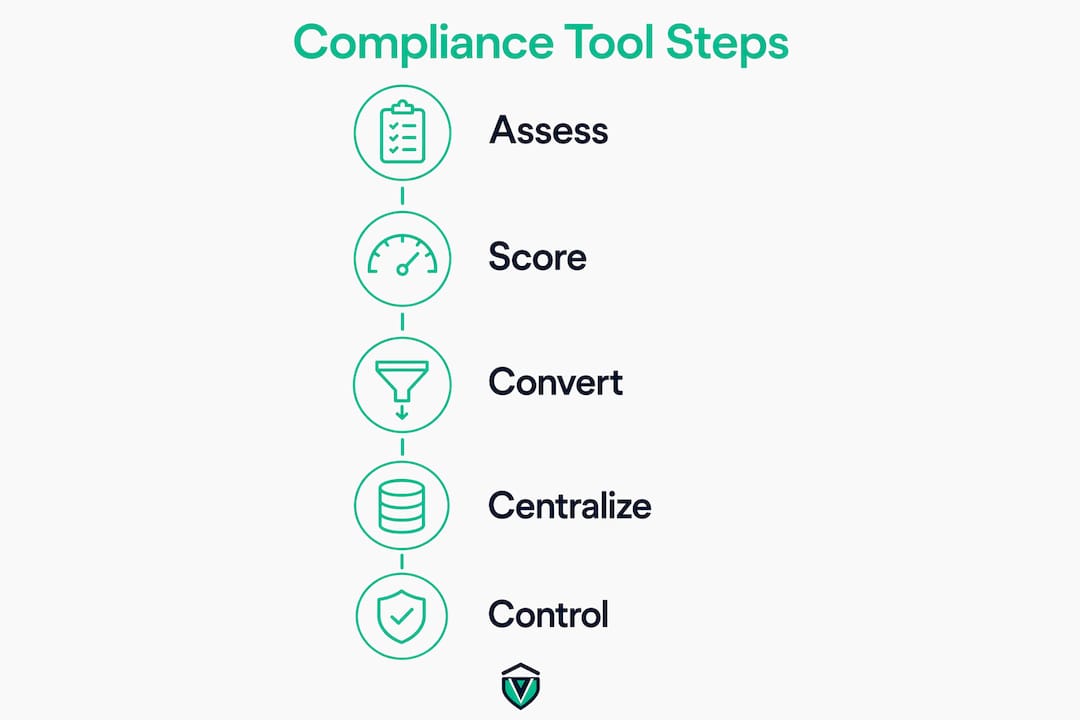
Effective compliance platforms assess whether a regulation applies, score it by business impact, and convert it into a task. That's the difference between a document storage tool and a compliance management platform.
| Capability | Operator impact |
|---|---|
| Centralized document repository | Single source of truth across all locations; no more hunting through email |
| Automated renewal reminders | Missed-renewal incidents drop; no manual calendar maintenance required |
| Workflow automation | Approvals route to the right person without manager follow-up |
| Role-based access controls | Procurement and investors can verify compliance without accessing sensitive ops data |
| Audit-ready evidence trails | Audit prep shrinks from days to hours |
| Jurisdiction-configurable checklists | Each location meets its specific local requirements, not a one-size-fits-all template |

Security and access controls deserve a specific note. Procurement teams at enterprise buyers and institutional investors will ask who has access to compliance records and how changes are logged. A tool without granular access controls and an immutable audit log is a red flag in those conversations.
The real ROI of compliance tools for retail and hospitality operators
Measurable return comes from three places: avoided fines, faster openings, and higher win rates with enterprise partners. The hidden costs of reactive compliance include emergency legal fees, license rush charges, and business interruptions that dwarf the cost of proactive tooling.
Concrete benefits operators report:
- Fewer missed-renewal penalties from automated deadline tracking
- Shorter new-location launch timelines when permit workflows are pre-built
- Reduced audit prep hours when evidence is centralized and current
- Higher close rates on enterprise and wholesale contracts where compliance is a prerequisite
The intangible benefits compound over time. Companies that integrate compliance early are more attractive to acquirers and institutional investors. A clean compliance record signals that the business is run with discipline, which matters in due diligence whether you're raising capital or selling.
Pro Tip: Calculate your reactive compliance cost for the past 12 months: add up any fines, rush fees, legal costs, and revenue lost to location closures or delayed openings. That number is your baseline ROI case for tooling.
How to choose a compliance tool: a checklist for multi-location operators
Use a short, prioritized checklist rather than getting lost in feature comparisons. The goal is to find a tool that fits your current scale and can absorb the next two years of growth without a platform switch.
Pre-buy checklist:
- Map every permit, license, and renewal across all current locations
- Identify your three most common failure modes (missed renewals, audit gaps, launch delays)
- Confirm which jurisdictions you operate in and which have the most complex requirements
- Define who needs access: location managers, ops leads, legal, finance
Vendor questions to ask:
- How does the platform handle jurisdiction-specific requirements?
- What does the audit evidence export look like, and who controls the data?
- How does pricing scale with new locations?
- What integrations exist with HR and POS systems?
- What's the support SLA for urgent compliance issues? Ensure your platform offers robust client management for field service teams to coordinate operations and streamline workflows across locations.
Red flags:
- No audit trail or immutable log
- Manual workarounds required for basic renewal tracking
- Pricing that jumps unpredictably as you add locations
- No onboarding support or defined implementation timeline
For a multi-location audit checklist you can use immediately, that resource covers the specific license categories retail and hospitality operators most commonly miss.
Sample scoring rubric (copy for 3 finalists):
| Criterion | Weight | Score (1–5) | Weighted score |
|---|---|---|---|
| Audit-ready evidence export | 20% |
A typical pilot runs 30–60 days, covering one to three locations. Full roll-out across a ten-location operation usually takes 60–90 days with a platform that has structured onboarding.
How Vaultedai addresses these needs for multi-location operators
Vaultedai centralizes permits, licenses, renewals, and compliance documents across all locations in one place. The platform is built specifically for multi-location retail and hospitality operators who have outgrown spreadsheets, including restaurant groups, convenience store chains, smoke shop operators, and franchises.
Feature coverage mapped to the checklist above:
- Central document repository with location-level organization
- Automated renewal reminders and configurable workflows
- Role-based access controls for location managers, ops leads, and executives
- Audit-ready evidence trails accessible on demand
- Fast onboarding designed for operators without dedicated compliance staff
Onboarding timeline: Most operators complete a pilot covering their first locations within 30 days. Full roll-out for a ten-plus-location operation typically runs 60–90 days, with Vaultedai's team supporting setup and workflow configuration throughout.
Two scenarios where the platform changes outcomes: A restaurant group opening two new locations simultaneously uses Vaultedai to track health permits, food handler certifications, and liquor licenses across both sites, with automated reminders preventing the renewal gaps that previously delayed soft openings. A convenience chain managing liquor licenses across twelve states uses the jurisdiction-configurable checklists to standardize what each location manager is responsible for, eliminating the inconsistency that created audit exposure.
Pro Tip: During your pilot, automate your three highest-risk renewal categories first. Operators who start with liquor licenses, health permits, and business operating licenses see the fastest reduction in missed-deadline incidents.
For a deeper look at scaling compliance strategy as your location count grows, that guide covers the framework decisions that matter most at 5, 10, and 20-plus locations.
Key Takeaways
Growing multi-location retail and hospitality businesses need compliance tools because manual processes fail at scale, missed renewals carry real financial and operational costs, and enterprise buyers now treat compliance as a prerequisite.
| Point | Details |
|---|---|
| Manual processes break at scale | Spreadsheets and tribal knowledge create audit gaps and missed renewals as location count grows. |
| Renewals are the highest-ROI fix | Automating renewal reminders eliminates the most common and costly compliance failure first. |
| Compliance unlocks enterprise deals | Procurement teams require proof of operational maturity; a clean record shortens sales cycles. |
| Reactive compliance costs more | Emergency legal fees, rush charges, and closure losses exceed the cost of proactive tooling. |
| Vaultedai centralizes and automates | Vaultedai gives multi-location operators a single platform for permits, licenses, and audit-ready evidence. |
Compliance as infrastructure, not paperwork
The operators who struggle most with compliance share one trait: they treat it as something to handle after growth happens. The ones who scale without constant fires treat it as part of how the business runs from the start.
The most common mistake is waiting until a missed renewal or a failed audit forces the issue. By that point, the cost is already real, and the fix is reactive. Operators who build a centralized, automated compliance system before they need it find that audits become routine, new locations open faster, and enterprise conversations move forward instead of stalling on documentation requests.
If you haven't audited your current permit and license status across all locations, that's the right first step. A 30-minute review of what you have, what's expiring, and what's missing will tell you exactly where you're exposed.
See how Vaultedai works for your operation
Multi-location retail and hospitality operators who've outgrown spreadsheets get a clear, immediate advantage with Vaultedai: every permit, license, and renewal tracked in one place, with automated reminders and audit-ready documentation that's ready when you need it.
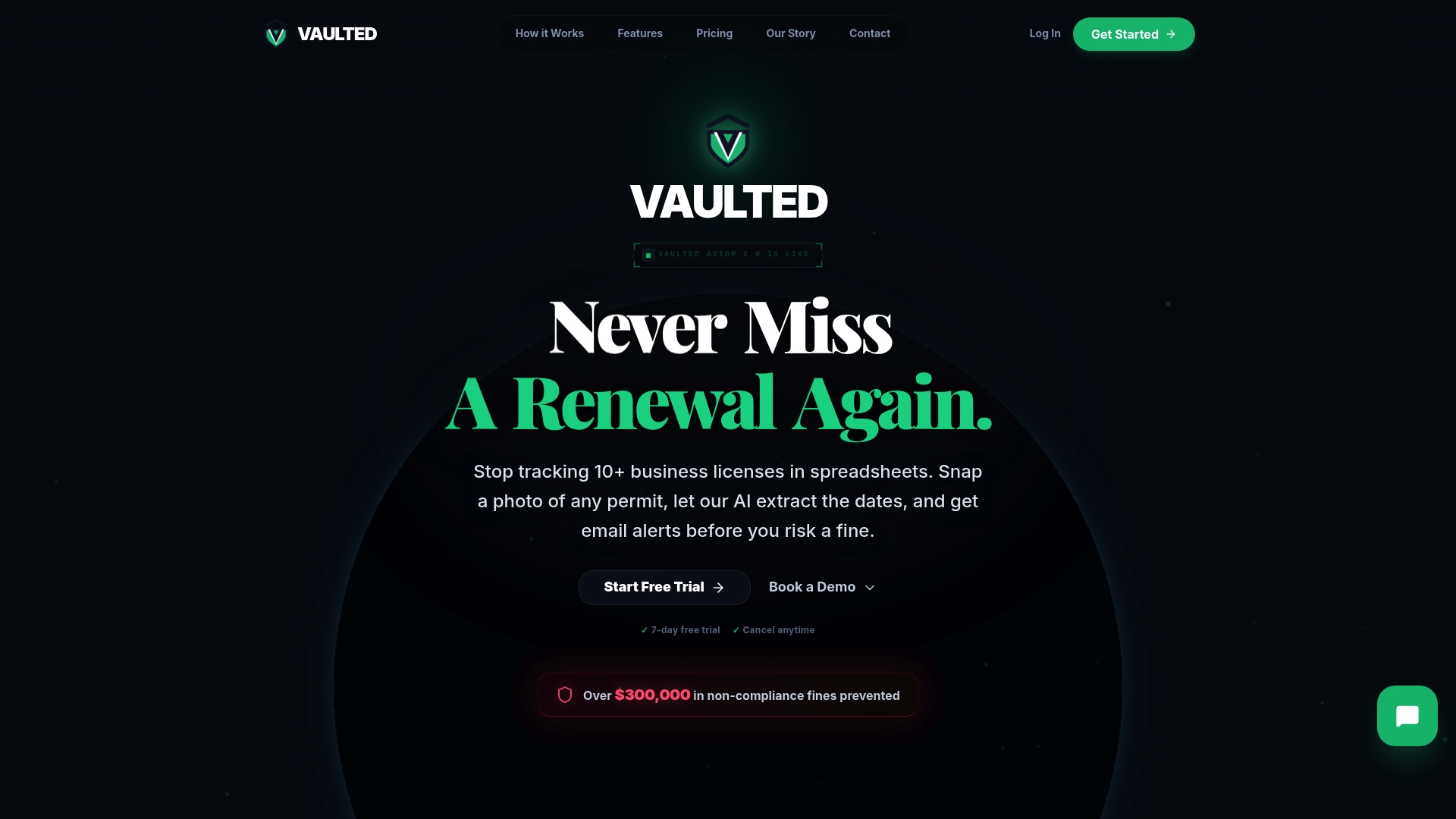
Onboarding is fast. Most operators have their first locations configured within 30 days, with Vaultedai's team supporting the setup. There's no months-long implementation or complex IT project. You get operational clarity quickly, and the platform grows with you as you add locations.
Start a pilot or book a demo to see how Vaultedai fits your current operation and where it can close your compliance gaps before they become problems.
Useful sources and further reading
- Why Do Compliance Programs Fail as Your Organization Scales? — Explains how manual processes and tribal knowledge create instability as organizations grow; foundational context for the scaling challenges covered here.
- Compliance as a Growth Strategy — Covers how organized compliance systems shorten sales cycles and improve vendor credibility with enterprise buyers.
- Compliance Was Always a Growth Engine — Details the hidden costs of reactive compliance and the ROI case for proactive tooling.
- Compliance Is a Competitive Edge — Examines how compliance maturity affects investor and acquirer perception during due diligence.
- Is Compliance the Growth Lever Early Teams Are Missing? — Quantifies how compliance unlocks new markets and improves procurement outcomes for growing businesses.
- Effective Compliance Management Systems — Holland & Knight's overview of FTC and DOJ expectations for compliance management systems across business sizes.
- Vaultedai Blog: Business Scaling Compliance Strategy — Practical framework for building scalable compliance as location count grows.
- Vaultedai Blog: Role of Compliance in Business Growth — Explores how automated compliance signals operational maturity to partners and investors.