
Compliance software is defined as technology that automates an organization's regulatory obligations, replacing manual tracking with continuous, audit-ready monitoring. The industry standard term is "compliance management software," and it covers frameworks including HIPAA, GDPR, ISO 27001, and SOC 2. Businesses use compliance software because manual methods, primarily spreadsheets and shared drives, create daily risk exposure and consume staff time that could go toward growth. Leading platforms perform 1,200+ hourly automated tests across 35+ regulatory frameworks, a scale no human team can match. The result is fewer compliance gaps, faster audit cycles, and a verifiable compliance record that builds trust with customers and regulators alike.
Why businesses use compliance software: the core case
The fundamental reason businesses adopt compliance management solutions is simple. Manual compliance workflows fail at scale. A single-location business can track licenses and renewals in a spreadsheet. A franchise group with 20 locations, each subject to state, local, and federal requirements, cannot. Errors compound, deadlines slip, and audit preparation becomes a weeks-long fire drill.
Compliance software automates the identification of applicable regulations, assigns tasks to the right people, and captures evidence continuously. That shift from reactive to proactive compliance is the core operational benefit. Teams stop scrambling before audits and start maintaining a living record of their compliance posture year-round.

The advantages of using compliance software also extend to error reduction. Manual data entry introduces mistakes. Automated evidence collection does not. When a control is tested hourly rather than reviewed quarterly, gaps surface immediately rather than during an auditor's visit.
How does compliance software automate regulatory monitoring?
Compliance software uses rules engines to ingest regulatory content and translate it into specific, testable controls. When a regulation changes, the platform flags the affected controls and reassigns tasks automatically. That is the shift modern platforms enable: from a reactive "midnight slide deck" scramble to proactive automated documentation maintained in real time.
The automation layer covers several critical functions:
- Regulatory content ingestion. The platform monitors regulatory sources and updates its control library when rules change, so your team does not have to track Federal Register updates manually.
- Automated alerts and task assignment. When a control requires evidence, the system assigns the task to the designated control owner with a deadline and escalation path.
- Continuous evidence collection. Rather than gathering screenshots and logs the week before an audit, the platform captures and timestamps evidence as it is generated.
- Real-time gap identification. Automated tests run continuously, surfacing failures immediately rather than during annual reviews.
The impact on risk reduction is direct. Manual audit prep taking weeks is replaced with automated organization, which lowers the risk of non-compliance penalties. Teams that previously spent months preparing for a SOC 2 audit can maintain audit readiness continuously instead.
Pro Tip: Set your automated alerts to trigger at 60 days and 30 days before a renewal or evidence expiration. Two-stage reminders give control owners time to act without creating urgency-driven errors.
What is control mapping and why does it matter?
Control cross-mapping is the single biggest time saver in compliance scaling. The concept is straightforward: one control, defined once, satisfies multiple regulatory frameworks simultaneously. A password policy control, for example, can satisfy requirements under SOC 2, ISO 27001, and HIPAA at the same time. Without cross-mapping, a team would write, test, and document that control three separate times.
Mapping a single control across multiple frameworks is the primary mechanism that allows compliance teams to scale without adding headcount. Modern platforms support this across dozens of frameworks simultaneously.
The table below shows how a single control applies across three common frameworks:
| Control | SOC 2 | HIPAA | GDPR |
|---|---|---|---|
| Access control policy | CC6.1 | §164.312(a) | Article 32 |
| Encryption at rest | CC6.7 | §164.312(a)(2)(iv) | Article 32 |
| Incident response plan | CC7.3 | §164.308(a)(6) | Article 33 |
| Employee security training | CC9.2 | §164.308(a)(5) | Article 39 |
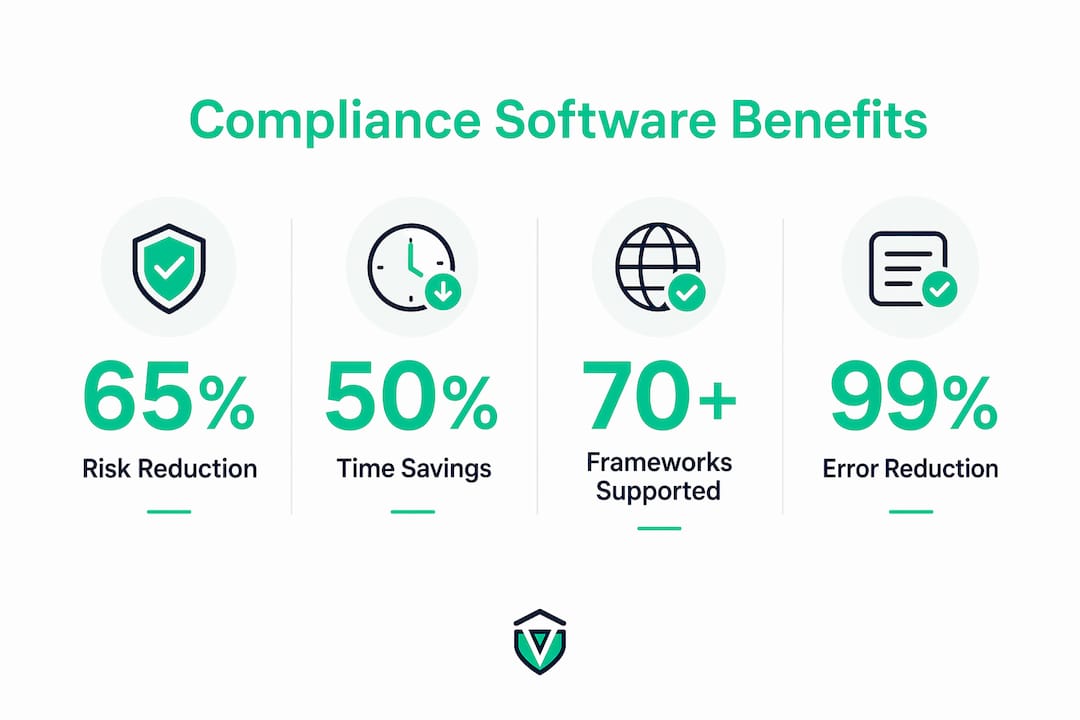
Organizations can map one control to satisfy over 70 different frameworks simultaneously, with centralized evidence applied once to all relevant obligations. That eliminates duplicated documentation work and dramatically reduces audit complexity when multiple certifications are required.
Pro Tip: Before selecting a compliance platform, confirm it supports every framework your business currently needs and the ones you expect to need within two years. Migrating platforms mid-audit cycle is expensive and disruptive.
How compliance software improves operational efficiency and reduces risk
Operational efficiency gains from compliance software come from three specific mechanisms: clear ownership, automated workflows, and real-time reporting. Each one addresses a failure point that manual compliance processes create.
Clear ownership and accountability
Every control in a compliance platform is assigned to a primary owner and a backup owner. When evidence is due, the system notifies the owner directly. If the owner does not respond, the escalation path triggers automatically. This structure eliminates the "I thought someone else handled it" problem that causes compliance gaps in manual workflows.
Automated reminders and approval workflows
Compliance software removes the need for compliance managers to chase colleagues for documentation. The platform sends reminders, tracks completion, and routes evidence through an approval workflow before it is marked complete. That approval chain creates an auditable record of who reviewed what and when.
Reduced manual errors and last-minute chaos
The operational benefits of compliance tools are most visible during audit season. Teams using manual methods spend weeks gathering evidence, formatting it for auditors, and discovering gaps they did not know existed. Teams using compliance management solutions spend that same period reviewing a dashboard that already contains everything the auditor needs.
The specific operational improvements businesses report include:
- Fewer missed renewal deadlines due to automated calendar alerts
- Faster onboarding of new locations into existing compliance frameworks
- Reduced time spent on internal audit preparation
- Clearer visibility into which controls are passing, failing, or at risk
- Faster response to regulatory changes without emergency all-hands meetings
A compliance calendar integrated into the platform gives leadership a single view of every upcoming obligation across all locations. That visibility alone prevents the category of compliance failure that comes from simply not knowing a deadline existed.
How does compliance software support business growth and stakeholder trust?
Compliance software transforms compliance from a cost center into a growth asset. Businesses entering regulated markets, such as healthcare, financial services, or food service, face a common barrier: proving to customers and regulators that their controls are real and current. A compliance platform provides verifiable, timestamped evidence that answers that question immediately.
Real-time verifiable compliance evidence helps businesses enter highly regulated markets faster than competitors who rely on manual documentation. That speed advantage is concrete. A restaurant group seeking a new state license can produce a complete compliance record in hours rather than days.
Stakeholder confidence also improves when leadership has continuous visibility into the organization's compliance posture. Boards, investors, and enterprise customers increasingly require evidence of compliance as a condition of doing business. A platform that generates that evidence automatically makes those conversations faster and more credible.
For multi-location operators, the growth case is especially clear. Staying compliant during expansion requires a system that scales with the business, not one that requires proportionally more staff time as locations are added. Compliance software provides that scale by applying existing control frameworks to new locations automatically.
The competitive advantage of continuous compliance is not theoretical. Businesses that can demonstrate audit readiness on demand close enterprise deals faster, satisfy due diligence requirements more efficiently, and avoid the reputational damage that comes from publicized compliance failures.
Key Takeaways
Businesses use compliance software because it replaces error-prone manual workflows with automated, continuous monitoring that keeps teams audit-ready and reduces regulatory risk at scale.
| Point | Details |
|---|---|
| Automation replaces manual tracking | Platforms run 1,200+ hourly tests, catching gaps before auditors do. |
| Control cross-mapping saves time | One control mapped across 70+ frameworks eliminates duplicated documentation work. |
| Clear ownership drives accountability | Assigning primary and backup control owners prevents compliance gaps from falling through the cracks. |
| Continuous compliance beats audit sprints | Real-time evidence collection replaces weeks of pre-audit scrambling with a maintained, living record. |
| Compliance builds stakeholder trust | Verifiable, timestamped evidence accelerates market entry and satisfies enterprise due diligence requirements. |
What I've learned from watching businesses implement compliance software
The businesses that get the most from compliance software are not the ones with the biggest compliance teams. They are the ones that define ownership before they configure anything else.
I have seen operators deploy a full-featured platform and still fail their first audit because no one was assigned as the control owner for half their requirements. The software worked perfectly. The accountability structure did not. Failing to assign primary and backup control owners before implementation turns a compliance platform into a well-organized filing cabinet with no one responsible for keeping it current.
The second mistake I see consistently is treating the platform as a place to dump existing spreadsheets. Migrating old, unverified data into a new system does not create compliance. It creates the appearance of compliance, which is worse. Start with a clean control inventory, assign owners, and let the platform build the evidence record from day one.
The third issue is evidence freshness. Platforms that score documentation currency prevent the last-minute audit scramble that kills team morale and introduces errors. If your platform does not flag expiring evidence weeks in advance, you will discover the gap when an auditor asks for it.
The businesses that scale compliance without scaling headcount are the ones that treat the software as a system of record from the first day, not a reporting tool they update before audits.
— Rakin
Vaultedai keeps your compliance current without the manual work
Multi-location businesses that have outgrown spreadsheets need a platform built for their specific reality: multiple permits, licenses, and renewal deadlines across locations that do not wait for convenient timing.
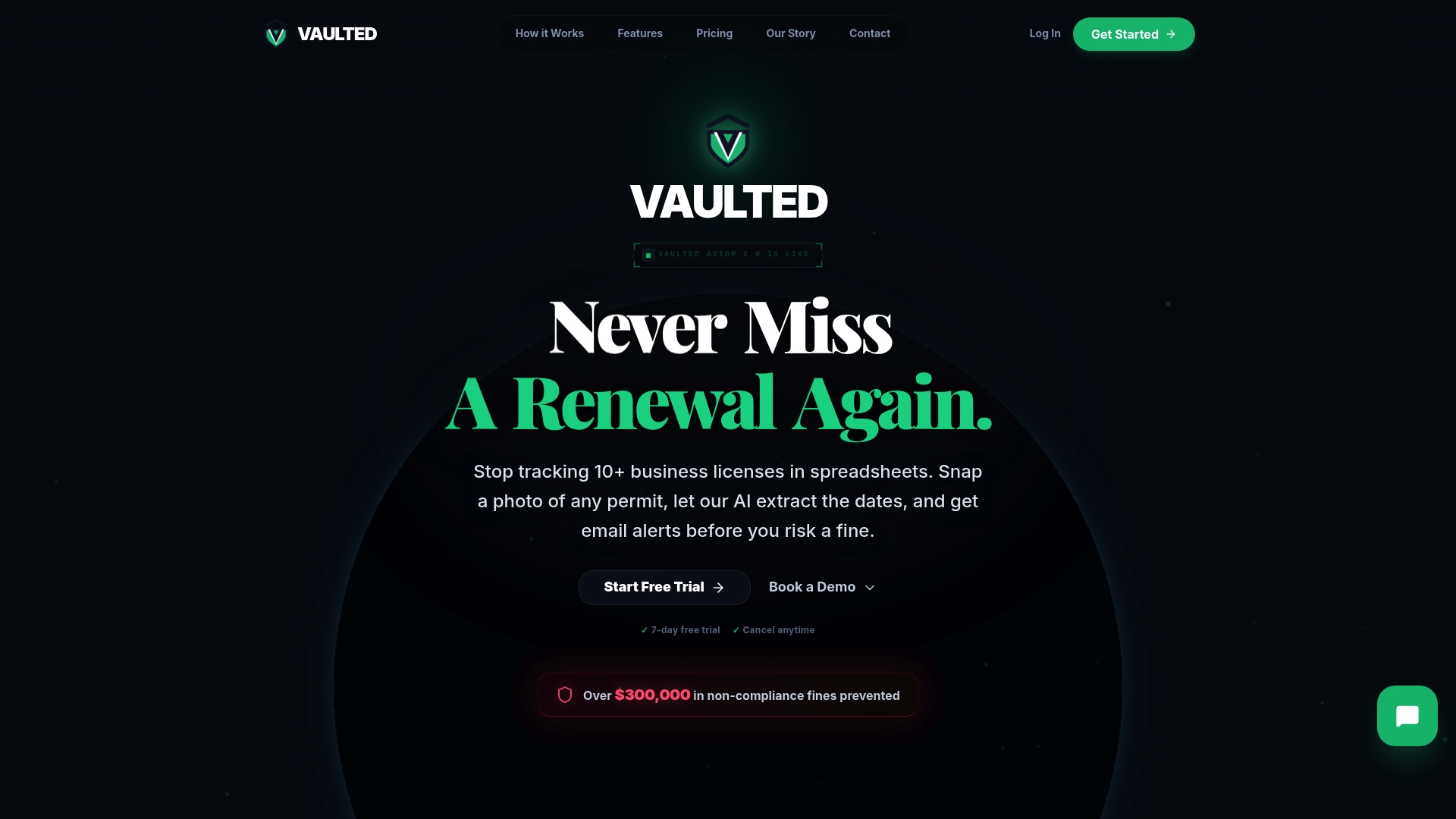
Vaultedai centralizes permits, licenses, renewals, and compliance documents across every location in one place. The platform automates deadline tracking, assigns ownership to the right team members, and gives leadership a clear view of compliance status without requiring a dedicated compliance department. For smoke shop groups, restaurant operators, convenience stores, and franchise teams, Vaultedai provides the operational clarity that manual tracking cannot. Visit Vaultedai to see how the platform fits your business and get started with fast onboarding built for growing teams.
FAQ
Why do businesses use compliance software instead of spreadsheets?
Spreadsheets fail at scale because they require manual updates, miss deadline alerts, and create no audit trail. Compliance software automates evidence collection, assigns task ownership, and maintains a continuous, verifiable compliance record.
What regulations does compliance software typically support?
Most modern platforms support major frameworks including HIPAA, GDPR, ISO 27001, and SOC 2, with leading platforms covering 35 or more regulatory frameworks through automated testing.
How does compliance software reduce audit preparation time?
Compliance software captures evidence continuously throughout the year, so audit preparation becomes a review rather than a collection sprint. Teams using these platforms replace weeks of pre-audit work with a dashboard that already contains organized, timestamped evidence.
Can compliance software help businesses expand into new markets?
Yes. Platforms that maintain verifiable, real-time compliance evidence allow businesses to demonstrate regulatory readiness to new customers and regulators immediately, which accelerates entry into highly regulated markets.
What is the most common mistake when implementing compliance software?
Failing to assign primary and backup control owners before configuration is the most common implementation error. Without clear ownership, the platform collects data but no one is accountable for keeping it accurate or current.