

A zoning permit is an official government authorization confirming that a specific land use or business activity complies with local zoning laws for a particular property. Unlike a general business license, a zoning permit is tied to one parcel and one defined use. Change the use or the location, and you typically need a new permit. For business owners signing leases, opening new locations, or expanding operations, understanding zoning permits is the difference between a smooth launch and a costly compliance problem.
What is a zoning permit and how does it work?
A zoning permit is the formal approval that a proposed land use meets the rules set by a local zoning code. Every city, county, or municipality divides its territory into zoning districts: residential, commercial, industrial, mixed use, and more. Each district has a use table that lists what activities are allowed, restricted, or prohibited on any parcel within it.
The zoning permit definition goes beyond a simple checkbox. It confirms that your specific business activity, whether a restaurant, retail shop, warehouse, or smoke shop, is legally authorized at that address. Zoning permits are use-specific and location-specific. That means a permit for a coffee shop at one address does not transfer to a new address or convert automatically if you change the business type.

Zoning codes also set physical standards that the permit process enforces. These include setbacks from property lines, maximum building height, lot coverage limits, and minimum parking ratios. A use matrix cross-references business activity with district classifications, helping owners assess approval likelihood before signing a lease or purchasing property. Using that matrix early reduces site acquisition risk significantly.
Pro Tip: Before touring any commercial space, pull the zoning district designation from the local planning department's GIS map. Confirm your business type appears as a permitted use in that district's use table before you spend time or money on a site.
How zoning classifications determine what your business can do
Zoning codes classify uses into four general categories: permitted by right, limited use, conditional use, and prohibited. Permitted by right means your business activity is automatically allowed in that district, subject only to meeting the numeric standards. Limited uses have specific restrictions, such as size caps or hours of operation. Conditional uses require additional review. Prohibited uses cannot operate in that district at all.
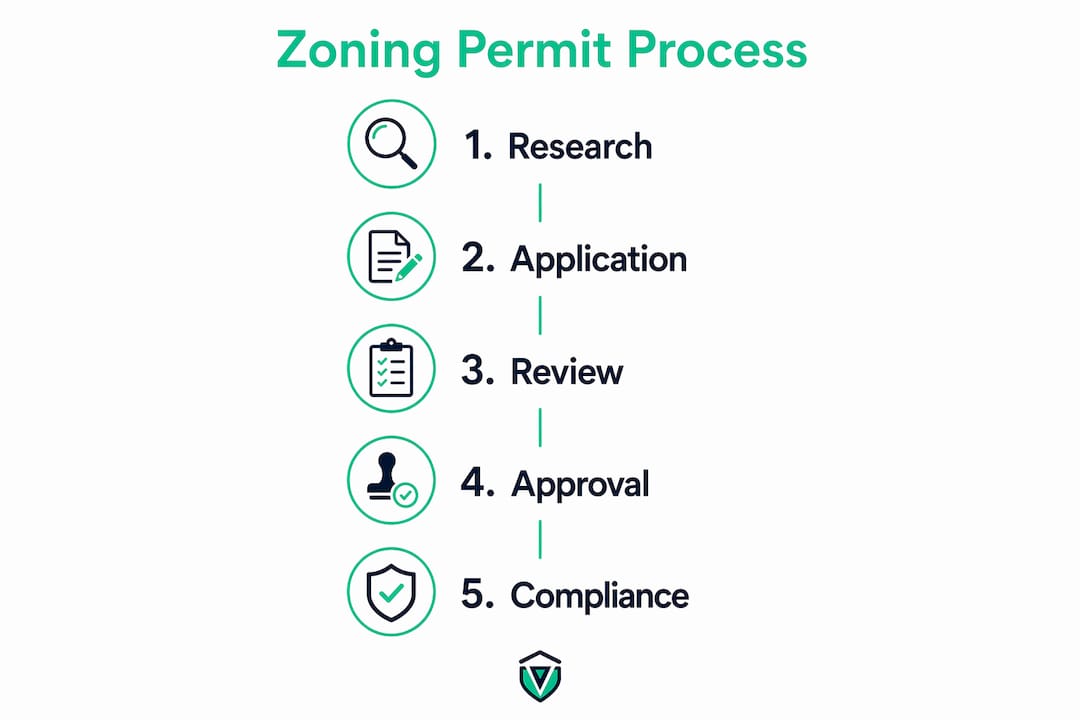
Zoning decisions focus on strict numeric criteria like setbacks and lot coverage, which limits subjective denial and supports predictable outcomes. This matters for business owners because it means the process is largely standards-based, not political. If your project meets the numbers, approval follows.
Common standards checked during zoning permit review include:
- Setbacks: Minimum distances between your building and property lines or adjacent uses
- Height limits: Maximum structure height by district
- Lot coverage: The percentage of a parcel a building or impervious surface can occupy
- Parking requirements: Minimum spaces based on use type and square footage
- Density: Number of units or intensity of use per acre
Conditional use permits (also called special use permits) apply when a business activity is allowed in a district but only with additional scrutiny. Conditional use permits often require public hearings and may include conditions affecting operations like parking, noise buffers, or hours of operation. Boards can approve, deny, or approve with conditions based on these considerations. A bar in a mixed-use zone or a drive-through restaurant near a residential area are classic examples of conditional uses.
Zoning permits vs. building permits: what's the difference?
Business owners frequently confuse zoning permits with building permits. They are separate approvals issued by different municipal departments and serve different compliance purposes.
A zoning permit addresses land-use legality. It answers the question: "Is this business activity allowed at this location?" A building permit addresses construction safety. It answers: "Does this structure meet building codes, fire codes, and structural standards?" You need both when construction is involved, but they are not interchangeable.
| Permit Type | What It Covers | Issued By | When You Need It |
|---|---|---|---|
| Zoning permit | Land use and activity compliance | Planning or zoning department | Before any use change or new occupancy |
| Building permit | Structural and safety code compliance | Building department | Before construction or major renovation |
| Health permit | Food handling and sanitation | Health department | For food service businesses |
| Fire permit | Fire safety systems and occupancy | Fire marshal | For occupancies above certain thresholds |
| Sign permit | Exterior signage dimensions and placement | Planning or zoning department | Before installing exterior signs |
Zoning approval must be obtained before a building permit, because zoning determines whether the use is legal before construction begins. Skipping zoning review and going straight to a building permit creates a compliance gap that can surface during inspections or property sales. Zoning permits also act as the use eligibility gate before trade permits for health, fire, or signage can be granted. Missing a required zoning permit delays every subsequent approval in the chain.
For a deeper look at how building permits fit into the process, the building permit guide covers the full construction approval sequence.
Types of zoning permits businesses need and when to apply
Business owners encounter several types of zoning permits depending on the nature of their project. Knowing which type applies to your situation determines how long the process takes and what documentation you need.
-
Standard zoning permit (administrative review): Applies when your use is permitted by right in the district. The review is typically administrative, meaning a staff planner checks your application against the use table and numeric standards. No public hearing is required.
-
Conditional use permit (CUP) or special use permit (SUP): Required when your business activity is allowed in the district but only with additional conditions. This involves a public hearing before a planning commission or zoning board. Conditional use permits carry conditions to mitigate impacts such as noise, traffic, and hours of operation.
-
Zoning amendment or rezoning: Required when the current zoning district does not allow your use at all. This is the most time-intensive process and involves legislative action by a city council or county board.
-
Variance: Applies when you need relief from a specific numeric standard, such as a reduced setback, without changing the underlying zoning district.
-
Certificate of occupancy (CO): Issued after construction and inspections confirm the space is ready for its approved use. Some jurisdictions treat this as the final step in the zoning compliance sequence.
The zoning permit application process typically follows this path: submit an application with a site plan and business description, pay the review fee, wait for staff review, and respond to any comments or requests for additional information. Processing time ranges from 10 working days to several weeks depending on project size and local jurisdiction workload. Conditional use permits take longer because of the public hearing requirement.
Pro Tip: Apply for your zoning permit before signing a long-term lease. If the use is not permitted or requires a conditional use permit with uncertain outcomes, you want to know before you are locked into a lease obligation.
For businesses opening multiple locations, the franchise location permit checklist outlines the full sequence of approvals needed before opening day.
Common challenges in zoning compliance and how to handle them
Zoning permits come with nuances that catch business owners off guard. The most common is assuming that a prior tenant's use automatically applies to your business. It does not. Failure to obtain a zoning permit can result in fines, project delays, and legal complications impacting business operations. Most local governments apply escalating fines based on the size and nature of the unpermitted work.
Key challenges business owners face include:
- Use changes between tenants: A space previously used as a retail store may not automatically qualify for a restaurant without a new zoning review, because the use classification and parking requirements differ.
- Conditional approval conditions: Zoning approvals with conditions require businesses to adapt operational plans to comply with restrictions on hours, noise, landscaping, and parking, not just building design.
- Local variation: Zoning codes differ significantly between municipalities. A use permitted by right in one city may require a conditional use permit in the next.
- Interior renovations: Some interior renovations may not require zoning permits if the use remains consistent and the project does not affect external characteristics, though this varies by locality.
- Post-permit compliance: Even after zoning permits are granted, ongoing compliance is critical. Proof of continued conformance is often required for financing, sales, or expansions.
Zoning verification letters are a tool many business owners overlook. These letters confirm a property's lawful use and compliance history and are often required by lenders or buyers to close transactions. Requesting one proactively before a sale or refinancing avoids last-minute delays.
For businesses planning to expand their footprint or add locations, the business expansion permit guide covers the full permit sequence including zoning requirements.
Key Takeaways
A zoning permit is the foundational land-use authorization every business owner must secure before operating, building, or changing use at any commercial property.
| Point | Details |
|---|---|
| Zoning permit definition | An official authorization confirming a specific business use complies with local zoning laws at a particular address. |
| Zoning comes before building | Secure zoning approval before applying for a building permit to avoid compliance gaps and project delays. |
| Know your permit type | Standard, conditional, variance, and rezoning permits each apply to different situations with different timelines. |
| Conditions are binding | Conditional use permits carry operational restrictions on hours, noise, and parking that businesses must follow after approval. |
| Post-permit compliance matters | Zoning verification letters and certificates of occupancy are required for financing, property sales, and expansions. |
Why most business owners get zoning wrong from the start
The most expensive zoning mistake I see business owners make is treating zoning as a formality to handle after signing a lease. By that point, the leverage is gone. If the use requires a conditional use permit or a rezoning, you are now negotiating with a landlord while simultaneously waiting on a planning board. That combination is expensive and slow.
The second mistake is conflating a zoning permit with a business license. A business license is an administrative registration. A zoning permit is a land-use authorization tied to a specific parcel. They are not interchangeable, and one does not substitute for the other.
The business owners who move fastest are the ones who pull the zoning district map before they tour a space. They cross-reference their business type against the use table, confirm whether the use is permitted by right or conditional, and factor that timeline into their project schedule. That 30-minute step can save months of delays.
Working with zoning officials early also changes outcomes. Planning staff are not adversaries. They know the code better than any consultant, and a pre-application meeting often surfaces issues that would otherwise appear as rejection comments weeks later. Ask for a pre-application conference. Most jurisdictions offer them at no cost.
— Rakin
Managing zoning permits at scale with Vaultedai
Multi-location businesses face a compounding version of the zoning problem. Each location sits in a different municipality with different zoning codes, different permit expiration dates, and different renewal requirements.
Vaultedai is built for exactly this situation. The platform centralizes permits, licenses, renewals, and compliance documents across all locations in one place, replacing the spreadsheets and manual tracking that break down as businesses grow. Restaurant groups, smoke shop operators, convenience store chains, and franchise networks use Vaultedai to track zoning approvals, flag upcoming deadlines, and maintain a clear compliance record across every location. Missing a zoning renewal or failing to document a conditional use condition no longer slips through the cracks. Visit Vaultedai to see how the platform works for your operation.
FAQ
What is the zoning permit definition in simple terms?
A zoning permit is an official approval from a local government confirming that a specific business activity or land use is legally allowed at a particular property address.
Do I need a zoning permit before a building permit?
Yes. Zoning approval comes first because it confirms the use is legal before construction begins. A building permit addresses structural safety and is issued after zoning is cleared.
How long does a zoning permit take to get?
Processing time typically ranges from 10 working days to several weeks for standard reviews. Conditional use permits take longer because they require a public hearing before a planning board.
What happens if I operate without a zoning permit?
Operating without a required zoning permit can result in fines, forced closure, and legal complications. Most jurisdictions apply escalating fines based on the scope of the unpermitted activity.
Does a zoning permit expire or need renewal?
Zoning permits tied to a specific approved use generally remain valid as long as the use does not change. However, conditional use permits may include expiration dates or periodic compliance reviews, and certificates of occupancy must be updated when use changes occur.