
If you're about to break ground on a new addition, rewire a basement, or knock out a load-bearing wall, you need to know what is a building permit before you pick up a single tool. A building permit is an official government authorization that allows you to legally begin construction, renovation, or demolition work on a property. Skipping this step isn't just risky. It can cost you far more than the permit itself, from fines and stop-work orders to problems when you try to sell or insure the property later.
Table of Contents
- Key takeaways
- What is a building permit, exactly?
- When you actually need a building permit
- The building permit application process, step by step
- Zoning permits vs. building permits: know the difference
- Recent regulatory updates worth knowing in 2026
- My take on why permits are more protection than process
- How Vaultedai makes permit tracking less painful
- FAQ
Key takeaways
| Point | Details |
|---|---|
| Permits are legal authorizations | A building permit confirms your plans meet local safety codes before work begins. |
| Not all projects require one | Minor repairs and cosmetic work are often exempt, but thresholds vary by jurisdiction. |
| The process involves inspections | Permits trigger mandatory inspections at key milestones to verify hidden work is code-compliant. |
| Zoning and building permits differ | You may need both. Confusing them is one of the most common and costly mistakes. |
| Skipping permits carries serious risk | Unpermitted work can trigger fines, forced demolition, and complications during property sales. |
What is a building permit, exactly?
At its core, a building permit is an official document issued by your local government that authorizes a specific scope of construction or renovation work. Think of it as a contract between you and your municipality. You agree to build according to approved plans, and the local authority agrees to inspect the work to verify it's safe.
The building permit definition goes beyond paperwork. It serves three real functions:
- Safety assurance: Plans must meet structural, fire, and life-safety codes before approval is granted.
- Inspection triggers: A building permit triggers mandatory inspections at key construction milestones, ensuring hidden work like electrical wiring or foundation pours meets code before they're covered up.
- Legal documentation: Permits maintain a legal record that affects future property sales, refinancing, and insurance claims.
That last point often surprises people. The permit you pull today is the evidence your insurer or a future buyer will look for years from now. Without it, a legitimate insurance claim can be denied, or a real estate transaction can stall at closing. Permits protect property value and shield owners from the financial consequences of substandard or undocumented work.
"A building permit isn't bureaucratic red tape. It's a documented assurance that the work done on your property is safe, legal, and insurable."
When you actually need a building permit
Most property owners assume permits are only for big projects. That assumption gets people in trouble regularly. Here's a more accurate picture of what generally requires a permit:
- New construction of any kind, including detached garages, sheds over a certain square footage, and accessory dwelling units.
- Structural changes, such as removing or relocating walls, altering a roofline, or adding a room.
- Major system work, including electrical panel upgrades, new HVAC systems, gas line installations, and plumbing reroutes.
- Significant renovations, like finishing a basement, adding a bathroom, or converting a garage to living space.
- Demolition, when tearing down a structure or a portion of one.
Work that's typically exempt includes painting, flooring replacement, installing cabinets, replacing fixtures with like-for-like items, and minor repairs below a cost threshold. However, local codes vary significantly, so you should always confirm the exact building permit requirements with your jurisdiction before starting.
One of the most important topics in 2026 is the importance of building permits for contractors who work across multiple states or municipalities. What's exempt in one county may require a full permit in the next. A deck over 30 inches off the ground might be a non-issue in one town and require structural drawings in another.
Pro Tip: When you're unsure whether your project needs a permit, call your local building department directly. A five-minute phone call is faster and cheaper than dealing with a stop-work order weeks into a job.
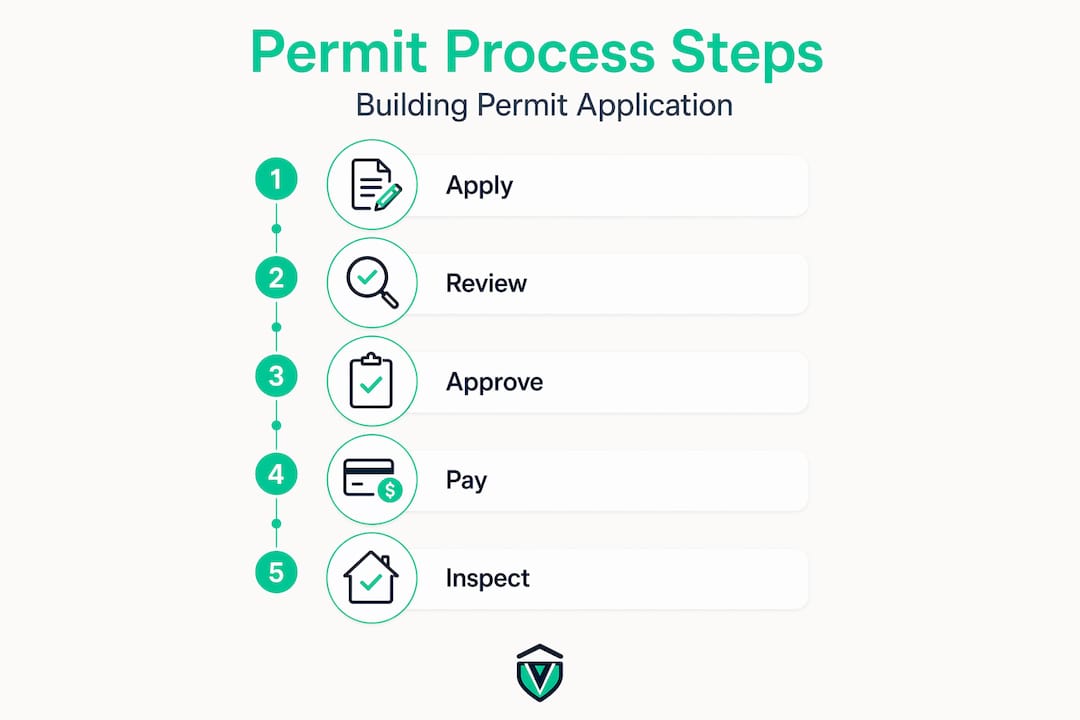
The building permit application process, step by step
Understanding the building permit process explained in real terms matters because the sequence varies more than people expect. Here's how it typically works, along with what to watch for at each stage.
Submitting your application
You start by filing a building permit application with your local building department. Most jurisdictions now accept digital submissions, though some smaller municipalities still require paper plans. Your application will typically include site plans, architectural drawings, engineering reports (for structural work), and a scope of work description.
Plan review and agency coordination
Once submitted, your plans go through a review process. Plan review can take anywhere from one day to eight weeks depending on the complexity of the project and how backlogged the department is. Complex commercial builds or projects in dense urban areas almost always sit at the longer end of that range.

In many cases, plans must be routed to multiple departments simultaneously, including fire, zoning, public works, and health departments. Any one of those agencies can flag a concern and send your application back for revisions. This is where projects lose weeks.
Fees and permit issuance
Once plans are approved, you pay your permit fees and receive your permit. Residential permit fees typically range from $200 to $800 depending on project scope and location. Commercial projects run substantially higher, often calculated as a percentage of total construction value.
| Project type | Typical fee range | Average review time |
|---|---|---|
| Minor residential renovation | $200 to $400 | 1 to 5 business days |
| Major residential addition | $400 to $800 | 2 to 4 weeks |
| New commercial construction | $1,000+ | 4 to 8 weeks |
| Structural or MEP-heavy project | Varies widely | 3 to 8 weeks |
Inspections and final approval
Once work begins, your permit will specify which inspections are required and at what stages. Framing, rough electrical, rough plumbing, insulation, and final inspections are common checkpoints. You're responsible for scheduling these. Skipping an inspection means the inspector can't sign off on the next phase, and in some cases, completed work must be opened back up for review.
Failing inspections tied to permits can invalidate your insurance coverage or delay a property sale until remediation and retroactive approval are completed.
Zoning permits vs. building permits: know the difference
This distinction trips up contractors and property owners alike. Zoning permits regulate land use and building placement, covering things like setbacks from property lines, allowable uses, and height restrictions. Building permits, on the other hand, regulate how something is built, verifying that the construction itself meets structural and safety codes.
You often need both. If you're building a new retail space, you need zoning approval to confirm the use is allowed in that district, then a building permit to authorize the actual construction.
Common pitfalls to avoid:
| Mistake | Why it matters | Consequence |
|---|---|---|
| Getting a building permit without checking zoning | Work may be unauthorized for that land use | Forced removal or change of use |
| Assuming one permit covers everything | Zoning and building are handled by separate departments | Project halts mid-build |
| Splitting a project to avoid thresholds | Authorities prohibit project splitting to evade permits | Fines or demolition orders |
That third row is more common than you'd think. Some contractors try to break a $10,000 renovation into two separate contracts to stay under a threshold. Building departments know this tactic well. Getting caught doing it intentionally can result in the most severe consequences available under local code.
Pro Tip: Always pull your zoning approval before you begin the building permit application process. Discovering a zoning conflict after you've paid for architectural drawings is an expensive lesson.
Recent regulatory updates worth knowing in 2026
Permit law isn't static, and 2026 brought some notable changes that property owners and contractors in certain states should understand.
The most significant update comes from Florida. Under Florida HB 803, effective July 1, 2026, residential construction projects valued under $7,500 are exempt from permit requirements. However, this exemption does not apply to electrical, plumbing, structural, mechanical, or gas work, regardless of cost. The exemption also doesn't override HOA approval requirements, meaning you may still need association sign-off even when no permit is required.
Key points to take away from these updates:
- The $7,500 threshold is based on total project value, not per-trade costs.
- Core life-safety systems are explicitly excluded from any exemption.
- Private providers are now playing a larger role in plan reviews, which can speed up approvals for some projects.
- HOA procedural rules remain intact even when a permit isn't technically required.
Florida's approach reflects a broader trend in several states toward reducing permitting friction for small residential repairs while maintaining strict oversight where safety is at stake. Even so, always confirm current building permit requirements with your local jurisdiction. State law sets a floor, but municipalities can still impose stricter rules.
My take on why permits are more protection than process
I've seen firsthand how property owners treat the permit process as an obstacle rather than a resource. The mindset is understandable: permits cost money, take time, and add another layer of coordination to an already complex project. But every time I've seen someone skip one, the story rarely ends well.
What I've come to believe is that the real cost of a permit isn't the fee. It's the inspection system that comes with it. Those mandatory site visits catch problems that would otherwise get buried behind drywall. A building inspector flagging an undersized beam or a reversed neutral wire isn't creating a problem. They're finding one that already existed.
The financial risk of unpermitted work compounds over time. When you go to sell a property, unpermitted work risks including fines, stop-work orders, and forced demolition are not hypothetical. They come up in title searches, home inspections, and lender appraisals. I've seen deals fall through entirely because a previous owner finished a basement without a permit 15 years earlier.
My advice: engage with your local building department early. They're not adversaries. In most cases, the staff will tell you exactly what you need, point you to the right forms, and clarify ambiguities that would otherwise take weeks to resolve. That early conversation is the single highest-leverage step in any permit process.
— Rakin
How Vaultedai makes permit tracking less painful

Managing a single permit is manageable. Managing permits across dozens of locations, projects, or jurisdictions is where things fall apart fast. Missed renewal deadlines, lost documentation, and no centralized view of what's approved and what's pending are problems that cost real money.
Vaultedai is built specifically for multi-location businesses that need one place to track every permit, license, and compliance deadline. Property managers, contractors running multiple job sites, and franchise operators all use Vaultedai to get a clear view of where each permit stands, what's due next, and what needs attention before a deadline becomes a violation.
For those exploring industry-specific compliance resources alongside a dedicated tracking tool, Vaultedai gives you operational clarity without the spreadsheet chaos.
FAQ
What is the building permit definition?
A building permit is an official authorization issued by a local government that allows construction, renovation, or demolition work to proceed legally. It confirms the proposed work meets applicable safety codes before work begins.
Do I need a building permit for a small renovation?
It depends on your jurisdiction and the nature of the work. Cosmetic updates like painting or flooring typically don't require a permit, but electrical, plumbing, structural, and mechanical work almost always do, regardless of project size.
How long does the building permit application process take?
Plan review alone can range from one day to eight weeks depending on project complexity and local department workload. Simpler residential projects in less-busy jurisdictions tend to move much faster than commercial or structural builds.
What are the consequences of not getting a building permit?
Unpermitted work can result in fines, stop-work orders, legal action, or forced demolition. It can also complicate future property sales, refinancing, and insurance claims when the lack of documentation surfaces.
What is the difference between a zoning permit and a building permit?
A zoning permit regulates where and how land can be used, while a building permit regulates how construction must be carried out to meet safety codes. Many projects require both, and they are processed by separate government departments.