
Business expansion permit requirements are defined as the combined set of federal, state, county, and city licenses and approvals your business must obtain before opening, remodeling, or relocating to a new location. No single document covers all of it. According to the SBA, the exact permits and fees vary by business activity and jurisdiction, which means a restaurant group expanding into three states faces three entirely different compliance stacks. For multi-location owners and franchise operators, understanding this layered structure is the difference between a smooth opening and a costly delay. Resources like the SBA, Minnesota's eLicensing portal, and Pinellas County's Access Portal each represent a different layer of that compliance picture.
1. What business expansion permit requirements actually cover
The phrase "business expansion permit" is a useful shorthand, but the recognized industry term is a permit and license portfolio. That portfolio spans four government levels, and each level has its own triggers, timelines, and documentation standards.
Federal licenses apply when your business activity falls under federal jurisdiction. The U.S. Department of Transportation regulates interstate trucking. The Bureau of Alcohol, Tobacco, Firearms and Explosives covers firearms dealers. The U.S. Department of Agriculture governs food imports and certain agricultural operations. Most retail and food service expansions do not trigger federal permits, but transportation, alcohol distribution, and firearms retail always do.

State-level permits cover occupational licenses, environmental compliance, and industry-specific certifications. Minnesota DEED notes that businesses may need occupational and environmental permits at the state level even when the operating model stays identical across locations. A smoke shop group expanding from Texas into Colorado, for example, faces a completely different state tobacco retail licensing structure.
County and city permits are where most expansion projects get complicated. These include general business licenses, zoning approvals, certificates of occupancy, signage permits, and health department clearances. A local business license is almost always required at the city or county level regardless of what state licenses you already hold.
Pro Tip: Contact the SBA's local district office and your target city's planning department before signing a lease. Both can provide a preliminary list of required permits specific to your business type and location.
2. How jurisdictional differences shape your documentation
Every city and county defines a "complete application" differently. That definition determines how long your permit review takes and how many resubmittal cycles you absorb.
Spokane, Washington, illustrates this clearly. Intake meetings are mandatory when a project includes site work, parking lot changes, exterior modifications, or a change in use or occupancy group. Miss that requirement and your application does not move forward. Spokane also requires ten site plan prints plus three sets of architectural, structural, and mechanical plans stamped by Washington-licensed professionals. That is not a suggestion. It is a minimum submittal standard.
Pinellas County, Florida, takes a different approach. Commercial permits require digitally signed and sealed plan sets covering architectural, structural, MEP, and life-safety sheets, all uploaded through the county's Access Portal. The portal defines completeness strictly. Missing a required sheet type or uploading plans without a licensed engineer's digital seal triggers an automatic rejection and restarts the clock.
These two examples represent opposite ends of the documentation spectrum, and both are in the same country. For franchise operators rolling out ten locations across five states, the documentation package for each site is effectively a custom build.
- Request a predevelopment or intake meeting with the local planning or building department before finalizing your site plans.
- Ask for a written minimum submittal checklist at that meeting. Most jurisdictions will provide one.
- Confirm whether the jurisdiction uses a paper-based or portal-based submission system, since each has different formatting requirements.
- Verify that your architect or engineer holds a license in the specific state where the project is located.
- Identify whether a change of use or occupancy is involved, since that triggers a separate review track in most cities.
Pro Tip: During predevelopment meetings, ask specifically whether your project triggers an environmental review or a special use permit. These are easy to miss and can add weeks to your timeline.
3. Common permit types for commercial expansions and remodels
Understanding which permit categories apply to your project prevents the most common expansion mistake: submitting an incomplete package because you did not know a second or third permit was required.
| Permit type | When it applies |
|---|---|
| Construction permit | New builds, additions, remodels, and demolitions affecting structural elements |
| Change of use or occupancy | When the new tenant's business type differs from the prior occupant's classification |
| Mechanical, electrical, plumbing | Any work on HVAC, wiring, plumbing, or gas systems |
| Fire sprinkler and safety systems | New or modified suppression systems, alarms, or egress changes |
| Sign permit | Exterior signage, window graphics, and monument signs |
| Certificate of occupancy | Required before opening any new or significantly remodeled commercial space |
A building permit covers the structural and systems work, but it does not substitute for a certificate of occupancy. Those are two separate approvals with two separate inspections. Franchise operators frequently discover this distinction only after a general contractor declares the build complete.
The change of use permit deserves particular attention. If your new location previously housed a different business category, such as a retail clothing store converting to a food service operation, the building's fire load, egress requirements, and plumbing capacity all get re-evaluated. That review can add four to eight weeks to your timeline depending on the jurisdiction.
Sign permits are often overlooked entirely. Most cities require a separate permit for exterior signage, and many have design standards tied to zoning overlays. A franchise operator who installs branded signage before permit approval risks a stop-work order and a fine.
4. How to build a permit requirements matrix for multiple locations
The SBA advises that no universal checklist exists for expansion permits. The best practice is a jurisdiction-by-jurisdiction requirements matrix keyed to your specific business activities. For multi-location operators, that matrix is not optional. It is the operational backbone of your expansion program.
A functional permit matrix maps each location against the following variables:
- Business activity triggers: Does the location involve food service, alcohol sales, tobacco retail, or firearms? Each category activates a different set of state and federal requirements.
- Physical scope of work: Is the project a new build, a remodel, or a tenant improvement? Scope determines which building permit subtypes apply.
- Zoning classification: Is the site zoned correctly for your use? A commercial lease permit review often surfaces zoning conflicts before you sign.
- Submission format: Does the jurisdiction use a paper process, an online portal like Pinellas County's Access Portal, or a hybrid system like Minnesota's eLicensing platform?
- Renewal cycles: Permits and licenses expire on different schedules. A matrix that tracks only acquisition and ignores renewal creates compliance gaps at scale.
Avoiding resubmittal cycles is where most multi-location operators lose time. Digital submission portals impose strict completeness definitions that vary by jurisdiction, and a plan set that passes review in one county may fail in another because of a missing sheet type or an incorrect file format. Standardizing your architect's deliverable template to the most demanding portal requirements in your expansion footprint reduces that risk significantly.
Pro Tip: Use state portals like Minnesota's eLicensing system to identify all state-level permits required before engaging local jurisdictions. State requirements are the foundation; local requirements build on top of them.
Staying compliant during business expansion also means tracking predevelopment meeting outcomes in writing. Spokane's predevelopment meeting guidelines explicitly state that these meetings advise on applicable rules and submission requirements without conducting exhaustive reviews. That distinction matters. A predevelopment meeting is not an approval. It is a risk reduction tool, and its value depends entirely on whether you document what was said and act on it before submitting.
Key takeaways
Business expansion permit requirements are a multi-layer portfolio of federal, state, county, and city approvals, and managing them location by location is the only approach that works at scale.
| Point | Details |
|---|---|
| No single expansion permit exists | Every location requires a custom portfolio of federal, state, county, and city approvals. |
| Jurisdictional documentation varies sharply | Spokane requires stamped print sets; Pinellas County requires digitally sealed portal uploads. |
| Change of use triggers extra review | Converting a space to a new business category adds weeks and separate permit tracks. |
| Predevelopment meetings reduce risk | Request a written submittal checklist at every intake meeting before investing in final plans. |
| A permit matrix is non-negotiable at scale | Map each location by activity, scope, zoning, submission format, and renewal cycle. |
What I've learned about expansion permits after watching operators get burned
Most operators treat expansion permits as a single administrative task. They assign it to a project manager, assume the general contractor knows what to pull, and move on. That assumption is responsible for more delayed openings than any other single factor I have seen.
The real problem is that permit requirements are not just bureaucratic paperwork. They are a signal about how a jurisdiction views your business type. A city that requires an intake meeting before accepting a commercial application is telling you something: they want to vet your project before you spend money on final drawings. Ignoring that signal by submitting without the meeting does not save time. It costs you weeks.
The other pattern I keep seeing is operators who treat their most recent expansion as the template for the next one. They use the same plan set, the same document package, and the same contractor. Then they hit a jurisdiction that requires a digital seal instead of a wet stamp, or a portal that rejects their PDF because the file naming convention is wrong. The resubmittal cycle burns two to three weeks, and the lease clock is already running.
My honest recommendation: build your permit matrix before you sign any lease, not after. Engage the local planning department at the site selection stage. The information you get from a 30-minute predevelopment meeting is worth more than any consultant's generic checklist. And if you are managing more than three locations, the manual tracking approach will eventually fail you. The complexity compounds faster than most operators expect.
— Rakin
Manage every expansion permit in one place with Vaultedai
Running permit applications across five jurisdictions with different portals, deadlines, and document standards is where spreadsheets break down completely.
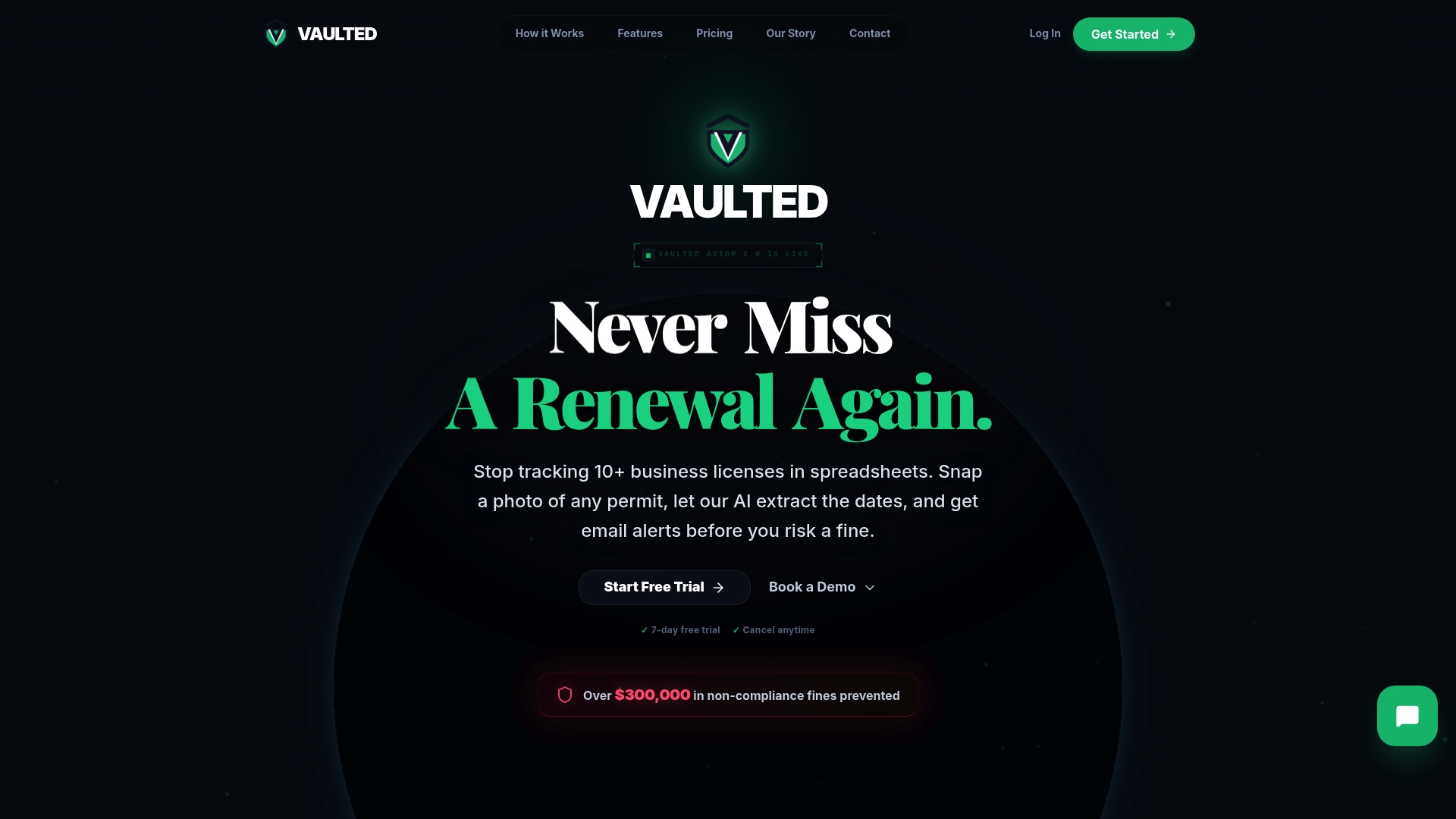
Vaultedai is built specifically for multi-location businesses and franchise operators who need to centralize permits, licenses, and compliance documents across every location. The platform tracks renewal deadlines, flags missing documents, and gives your whole team visibility into where each application stands. Whether you operate smoke shops, restaurants, convenience stores, or franchise units, Vaultedai replaces the manual tracking that causes missed deadlines and resubmittal cycles. Start managing your permits in one place and stop letting compliance gaps slow your next opening.
FAQ
What is a business expansion permit?
A business expansion permit is not a single document. It refers to the combination of federal, state, county, and city licenses and approvals required before opening, remodeling, or relocating a commercial location, with the exact requirements varying by jurisdiction and business activity.
How do I find out which permits my expansion requires?
Start with the SBA's license and permit resource at sba.gov, then contact the planning and building departments in each target city. Request a predevelopment meeting and ask for a written minimum submittal checklist specific to your business type and project scope.
Do permit requirements differ between states and cities?
Yes, significantly. Spokane, Washington requires stamped print plan sets and mandatory intake meetings for certain project types, while Pinellas County, Florida requires digitally signed and sealed plans uploaded through an online portal. Requirements vary at every level of government.
What triggers a change of use permit during expansion?
A change of use permit is required when the new tenant's business category differs from the prior occupant's classification. This triggers a re-evaluation of fire load, egress, and plumbing capacity, and typically adds four to eight weeks to the review timeline.
How should multi-location businesses track permit requirements across sites?
Build a jurisdiction-by-jurisdiction permit requirements matrix that maps each location by business activity, physical scope, zoning classification, submission format, and renewal cycle. The SBA confirms no universal checklist exists, making a location-specific matrix the only reliable approach at scale.