

A new location permit checklist is a customized, jurisdiction-specific matrix that maps every required permit, license, and approval step for a single business location. Generic checklists fail multi-location operators because permit requirements vary by city, county, and business activity. A restaurant group opening its fifth location in a new state faces entirely different zoning, health, and fire requirements than its existing sites. Getting this matrix right before you break ground is the difference between opening on schedule and sitting idle while corrections work through a plan review queue.
1. What belongs on a new location permit checklist?
A complete new location permit checklist covers six core permit categories. Each category carries its own documentation requirements, fees, and timelines. Missing one at intake forces a resubmission and restarts the clock.
The six categories are:
- Building permit. Required for construction, remodeling, or change of occupancy. Commercial permits cost between $500 and $5,000 or more, depending on project scope. Simple projects clear in 5–20 business days; complex commercial projects take 4–8 weeks or longer.
- Zoning and land use permit. Confirms the business activity is allowed at the address. Zoning approval often precedes every other permit in the queue.
- Health department permit. Mandatory for food service, personal care, and any business involving public sanitation. Health permit types vary by state and county, so verify the exact category before applying.
- Signage permit. Governs exterior sign dimensions, lighting, and placement. Many jurisdictions require a separate sign permit even when the building permit is already approved.
- Fire and life safety permit. Covers sprinkler systems, alarm installations, and occupancy loads. Fire marshals often conduct a separate inspection before a certificate of occupancy is issued.
- Temporary use permit. Needed for pop-up operations, outdoor seating, or phased openings. A temporary use permit lets you operate legally while permanent permits are still in review.
Pro Tip: Request the written minimum submittal checklist directly from the local building department. That document, not a generic online guide, is the only reliable source for what each jurisdiction actually requires at intake.
2. What documents are required for a location permit application?

Typical permit documentation includes completed application forms, construction plans stamped by a licensed professional, site plans showing property boundaries and setbacks, contractor license copies, insurance certificates, and applicable fees. Each item on that list is a potential rejection point if it is missing or formatted incorrectly.
Insurance requirements deserve special attention. In New York City, for example, permit noncompliance fines reach $200 per violation, and certain permits require $1 million in liability coverage. That figure is not unusual. Many jurisdictions tie permit issuance directly to proof of general liability insurance, so confirm coverage minimums before you submit.
Construction plans must be prepared by architects or engineers licensed in the specific jurisdiction where you are applying. A set of plans stamped by a California-licensed engineer will not satisfy a Texas building department. Budget for jurisdiction-specific professional services at each new site.
3. How to build a jurisdiction-specific permit matrix
There is no universal permit checklist. The SBA advises multi-location operators to build a bespoke permit requirements matrix keyed to each jurisdiction's rules and business activity. The process has five concrete steps.
- Schedule a predevelopment meeting. Seattle's building department calls this "permit coaching." Pre-submission meetings with local planning and building officials are the single most effective method to uncover hidden requirements before you finalize site plans.
- Obtain the written minimum submittal checklist. Ask the building department for its official intake checklist in writing. This document defines exactly what reviewers will check on day one.
- Map permits by business activity and zoning. List every operational activity at the new site, then match each activity to its required permit category. A convenience store that sells tobacco, for instance, needs multiple permit types beyond a standard business license.
- Identify renewal cycles. Some permits renew annually; others are one-time approvals tied to the certificate of occupancy. Build renewal dates into your matrix from day one.
- Confirm the submission format. Many municipalities now require digital uploads through online portals. Plan review fees are typically 50%–65% of total permit fees and are paid upfront at submission.
Pro Tip: Ask the building department during your predevelopment meeting whether they use parallel or serial plan review. Parallel review, where multiple disciplines review simultaneously, can save weeks compared to serial review, where each discipline waits for the previous one to finish.
4. What are the most common permit pitfalls for multi-location operators?
The most expensive permit mistakes are also the most preventable. Each one below has a direct fix.
- Reusing plans from another jurisdiction. Assuming plans approved in one city qualify in another is a critical mistake. Local formatting, stamping, and submission rules vary widely. A plan set that sailed through approval in Denver may be rejected at intake in Atlanta.
- Skipping the predevelopment meeting. Operators who skip this step discover missing requirements only after submitting, which triggers a correction cycle and restarts review timelines.
- Underestimating review timelines. Serial plan review processes can add weeks to your opening date. Operators who plan for parallel review timelines and receive serial review instead face real schedule and cost overruns.
- Missing insurance documentation. Permit applications rejected for missing insurance certificates are common. Confirm the exact coverage type and minimum limits required before you assemble your package.
- Ignoring renewal deadlines. A permit that lapses mid-operation can trigger fines, forced closures, and in some jurisdictions, a temporary ban on new permit applications. Track every expiration date in your matrix.
Common license application errors follow predictable patterns. Operators who document their mistakes at each new location build better checklists for the next one.
5. How do permit processes differ across jurisdictions?
Permit processes differ in four measurable ways: submission method, review structure, fee levels, and inspection requirements. The table below shows how these variables play out across common scenarios.
| Variable | Online portal jurisdictions | Paper-based jurisdictions |
|---|---|---|
| Submission method | Digital upload, fees paid online | Physical documents, fees paid at counter |
| Plan review fees | 50%–65% of total permit fees, paid upfront | Same proportion, paid at submission |
| Review structure | Often parallel; faster approvals | Often serial; stepwise, slower |
| Inspection timing | Scheduled online post-approval | Scheduled by phone, longer lead times |
| Noncompliance risk | Automated flags for missing documents | Manual review; errors caught later |
Parallel versus serial review is the single biggest variable in approval speed. Jurisdictions that run parallel reviews, where building, fire, and zoning departments review simultaneously, approve permits significantly faster than those using serial processes. Asking which method a jurisdiction uses during your predevelopment meeting directly affects how you schedule your opening timeline.
Fees also vary sharply. Commercial building permits range from $500 to over $5,000. A franchise group opening ten locations in ten different cities needs a fee budget that accounts for this range, not a flat estimate based on one jurisdiction's schedule.
6. How franchises should structure their permit checklists
Franchise operators face a specific challenge: the franchisor's standard build-out package was designed for one prototype, not fifty jurisdictions. The franchise location permit checklist process requires adapting that prototype to each local code environment.
The practical approach is to treat each new location as its own permit project with a dedicated matrix. Assign one person or team to own the predevelopment meeting, document collection, and submission for each site. Centralize all matrices in one system so renewal dates, fee payments, and inspection records are visible across the entire portfolio.
A business license audit checklist run annually across all locations catches lapses before they become fines. Franchisees who rely on the franchisor's generic compliance documents without verifying local requirements are the ones who face shutdowns.
Pro Tip: Build your permit matrix in a format that can be duplicated and updated for each new site. A template that captures permit type, jurisdiction contact, submission format, fee amount, review timeline, and renewal date covers every variable you will encounter.
Key takeaways
A jurisdiction-specific permit matrix, built before site plan finalization, is the only reliable method to open new locations on time and in compliance.
| Point | Details |
|---|---|
| No universal checklist exists | Build a separate permit matrix for each jurisdiction based on local rules and business activity. |
| Predevelopment meetings prevent delays | Meeting with local building officials before submitting uncovers hidden requirements early. |
| Review type determines your timeline | Parallel review jurisdictions approve permits faster; confirm the method before scheduling your opening. |
| Documentation gaps trigger rejections | Missing insurance certificates, unstamped plans, or wrong formats restart the review clock. |
| Renewal tracking is non-negotiable | Lapsed permits cause fines and forced closures; map every expiration date into your matrix from day one. |
Why most permit checklists fail at scale
The operators I see struggle most with permitting are not the ones who skip permits entirely. They are the ones who build one solid checklist for their first location and then copy it for every location that follows. That approach works until it doesn't, and when it fails, it fails expensively.
The real problem is that permit compliance is local by nature. A health department permit in Cook County, Illinois has different documentation requirements than one in Harris County, Texas. A signage permit in a historic district in Savannah, Georgia carries restrictions that do not exist in a suburban strip mall in Phoenix, Arizona. Treating these as interchangeable is the root cause of most permit delays I have seen.
The operators who scale cleanly do one thing differently: they invest in the predevelopment meeting at every new site, without exception. That one conversation with a local building official surfaces requirements that no online guide will tell you. It also builds a relationship with the reviewer, which matters when you need a correction resolved quickly.
Technology helps, but only after you have the right process. A platform that tracks renewals and centralizes documents is genuinely useful. A platform that tracks the wrong documents across the wrong jurisdictions just gives you organized errors. Get the jurisdiction-specific matrix right first, then automate the tracking.
The types of permits franchises must maintain grow more complex as you add locations. The operators who treat each new site as a fresh compliance project, not a copy of the last one, are the ones who open on time.
— Rakin
How Vaultedai helps you manage permits across every location
Multi-location operators who have outgrown spreadsheets need a system that keeps every permit, license, and renewal deadline visible across all sites in one place.
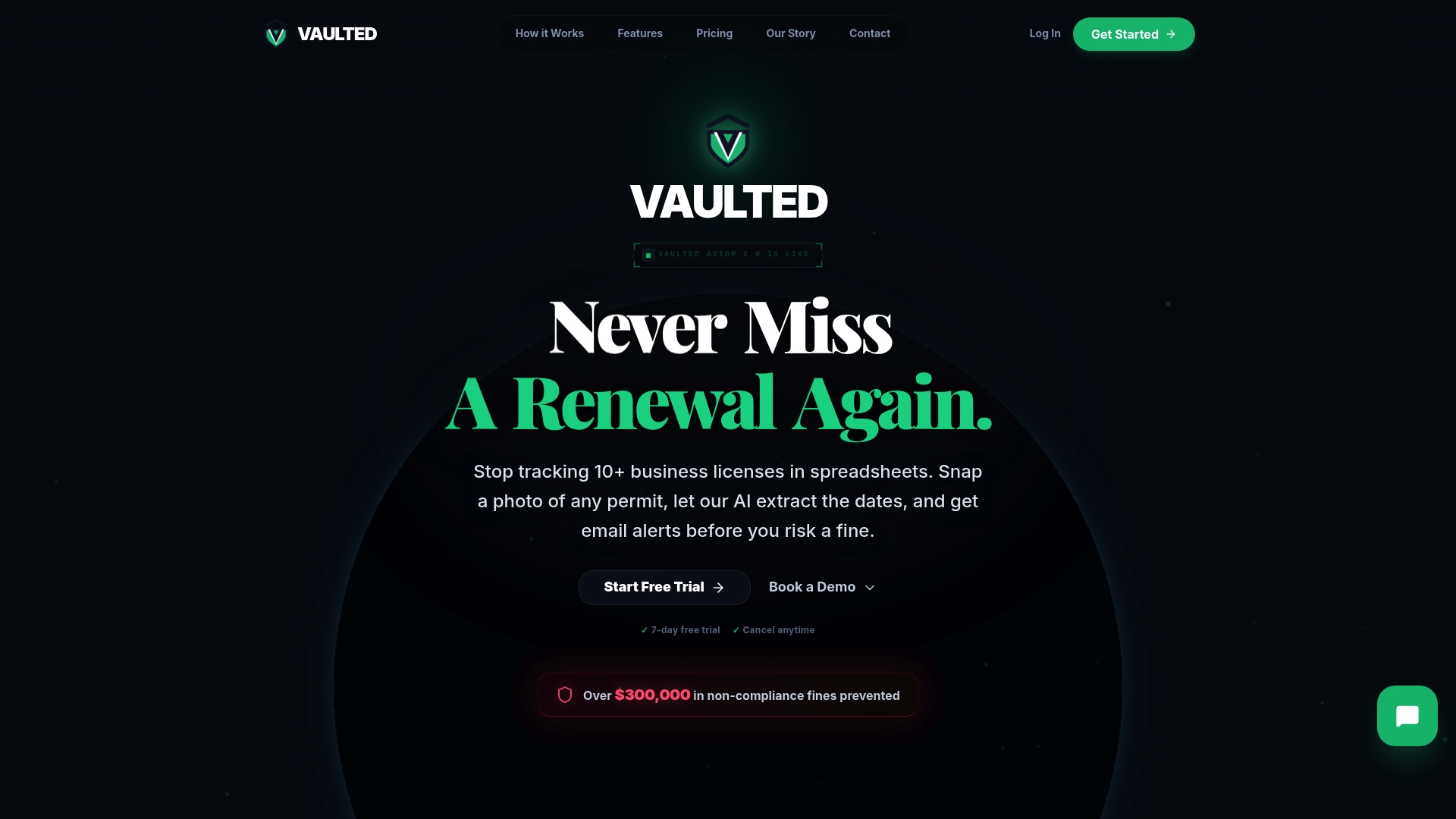
Vaultedai is built for exactly that. The platform lets you create jurisdiction-specific permit matrices for each location, track renewal deadlines with automated reminders, and store all compliance documents in one centralized system. Whether you operate five convenience stores or fifty franchise units, Vaultedai gives your team the visibility to catch lapses before they become fines. Operators managing growth across multiple states use Vaultedai to replace the spreadsheet chaos that comes with scale. Visit Vaultedai to see how the platform fits your permit management workflow.
FAQ
What is a location permit?
A location permit is a government-issued authorization that allows a business to operate, build, or modify a specific site in compliance with local zoning, safety, and health regulations. Most new business locations require several permits across multiple categories before opening.
How long does it take to get permits for a new business location?
Simple commercial permits take 5–20 business days; complex projects take 4–8 weeks or more. The review method used by the jurisdiction, parallel or serial, is the biggest factor in total approval time.
Can I use the same permit checklist for multiple locations?
No. Each jurisdiction requires a separate, location-specific permit matrix because local formatting, documentation, and submission rules vary widely. Reusing a checklist from one city in another is a leading cause of intake rejection.
What happens if I operate without the required permits?
Operating without required permits exposes your business to fines, forced shutdowns, and in some jurisdictions, a temporary ban on new permit applications. In New York City, permit violations carry fines of up to $200 per violation along with potential 60-day permit bans.
What is the first step in the permitting process for a new location?
Schedule a predevelopment or intake meeting with the local planning and building department before finalizing site plans. Permit coaching sessions, as Seattle calls them, surface hidden requirements and prevent costly resubmissions.