
If you operate more than one location, understanding the types of health department permits your business requires is not optional. It is the difference between staying open and getting shut down. Health department licenses vary by business type, jurisdiction, and operational scenario, and the permit landscape gets more complicated with every location you add. This guide breaks down every major permit category, what triggers each one, and what multi-location operators need to know to stay compliant without losing track of deadlines.
Table of Contents
- Key takeaways
- Types of health department permits: what you need to know first
- 1. Food service establishment permits
- 2. Lodging and hotel operational permits
- 3. Personal care and health facility licenses
- 4. Temporary food service permits
- 5. Burn and environmental health permits
- 6. Plan review permits for new construction and renovation
- 7. License transfers and ownership change permits
- 8. Comparison of permit types by duration, cost, and use case
- My take on managing health permits across multiple locations
- How Vaultedai helps you stay on top of every permit
- FAQ
Key takeaways
| Point | Details |
|---|---|
| Three core permit categories | Health departments issue annual, temporary, and plan review permits, each with different costs and timelines. |
| Fees scale with size | Annual permit fees range from $40 to over $1,000 depending on your jurisdiction and facility size. |
| Ownership changes require new permits | Buying an existing business does not transfer its permits. You start a new application from scratch. |
| Plan review comes before construction | Public health approval must happen before a building permit is issued for facilities involving water or septic systems. |
| Centralized tracking prevents gaps | Multi-location operators who centralize permit renewals avoid the operational disruptions that catch single-location thinking off guard. |
Types of health department permits: what you need to know first
Health department permits are categorized into three broad buckets: annual operational permits, temporary permits, and plan review permits for construction or significant alterations. Knowing which category applies to your situation tells you what documentation to prepare, how far in advance to apply, and roughly what you will pay.
A few factors shape every permit decision you make:
- Duration. Annual permits renew on a fixed schedule. Temporary permits cover a specific event or window. Plan review permits are one-time approvals tied to a project.
- Cost. Fees vary widely by jurisdiction and business size. Large grocery stores pay over $1,199, while smaller food establishments may pay $355 or less. Nonprofits sometimes pay nothing at all.
- Scope. Some permits cover your entire operation. Others cover a single activity, location, or project phase.
- Renewal timing. Miss a renewal window and your permit lapses. For food service and lodging, that means you stop operating legally until it is reinstated.
For multi-location businesses, the added complexity is jurisdictional fragmentation. A restaurant group operating in three counties may deal with three different fee schedules, three different inspection calendars, and three different renewal portals. Nevada's licensing structure, for example, allows some central management but requires local zoning confirmation at each site. That is not unusual. Plan for it.
Pro Tip: Build a permit calendar that maps every location to its specific jurisdiction, renewal date, and fee amount. Spreadsheets break under this weight fast. Purpose-built tracking tools handle it far better.
1. Food service establishment permits
This is the most common annual permit for multi-location operators in the restaurant, convenience store, and franchise space. Every facility that prepares, serves, or sells food to the public needs one. The permit is tied to the physical location, not the brand or owner.

Fees scale based on facility size and service type. A small coffee kiosk pays far less than a full-service restaurant. Inspections are tied to the permit, and inspection scores below 70 typically trigger mandatory re-inspections within 10 days, which can threaten the permit's validity. For operators running 10 or 20 locations, one failing score at one site creates a compliance event that needs immediate attention.
Food service permits are renewed annually and require a current inspection on file. Some jurisdictions also require a separate permit for each type of food service activity, such as catering, mobile vending, or on-site alcohol service.
2. Lodging and hotel operational permits
Hotels, motels, bed-and-breakfasts, and short-term rental facilities that meet a certain occupancy threshold require annual health department licenses. These cover sanitation standards, water quality, pool and spa maintenance, and in some cases food service if the property has a restaurant or continental breakfast operation.
Inspections for lodging permits focus on room cleanliness, pest control, HVAC maintenance, and water systems. Operators who run hotel groups should treat each property's permit as its own compliance project, since inspection findings at one property do not transfer to another but can signal systemic issues worth addressing across the portfolio.
3. Personal care and health facility licenses
Spas, tattoo parlors, nail salons, barbershops, and similar personal care businesses require health department licenses that are distinct from their cosmetology or professional board licenses. These permits focus on sanitation protocols, sterilization equipment, and waste disposal.
Healthcare-adjacent facilities like outpatient clinics, dialysis centers, and assisted living facilities face additional layers. Certificate of Need laws in states like Kentucky cover up to 19 facility types and require approval for capital expenditures and bed capacity changes. This is not a one-time hurdle. It is an ongoing regulatory relationship that requires dedicated tracking.
4. Temporary food service permits
Temporary health permits cover food operations at festivals, fairs, pop-up markets, and other short-term events. They are among the most commonly misunderstood business health permits because operators assume the process is simple. It is not always.
Most jurisdictions require submissions at least 10 business days before the event. Fees for temporary food permits typically run around $40, though costs vary. What catches operators off guard is the documentation: you still need to show proof of food handling certifications, a site plan, and often a commissary agreement showing where food is prepared and stored.
Pro Tip: If you run seasonal pop-ups or participate in recurring markets, apply for temporary permits in bulk at the start of the season rather than event by event. Some jurisdictions offer seasonal or multi-event permits that save time and money.
5. Burn and environmental health permits
Environmental health permits cover activities that affect air, water, or soil quality. Burn permits are the most common example for businesses that need to dispose of debris, manage agricultural waste, or conduct controlled burns on their property.
Some burn permits are free and valid for 10 days. Others require a fee and a site inspection. The key variable is fire risk conditions in your area. Many jurisdictions suspend burn permits automatically during high-risk periods, so timing your application to weather and seasonal restrictions matters. For businesses in construction, landscaping, or agriculture, environmental health permits are a recurring compliance item that belongs on the same tracking calendar as your operational permits.
6. Plan review permits for new construction and renovation
Before you break ground on a new location or significantly renovate an existing one, the health department needs to review your plans. This is not optional. Failure to submit site plans to health authorities, particularly for facilities involving water and septic systems, can stall projects for weeks or months.
The plan review process typically involves:
- Submitting architectural drawings and equipment specifications to the health department
- Receiving comments or approval from a health department reviewer
- Incorporating required changes before the building permit is issued
- Scheduling a pre-opening inspection once construction is complete
For food service operators opening new locations, this step happens before the contractor pulls a building permit. Skipping it or assuming the building department handles it is a common and expensive mistake.
7. License transfers and ownership change permits
This is the permit category that surprises operators most often. When you buy an existing business, you do not inherit its health permits. Ownership changes require a new license application, complete with inspections and background checks. In many jurisdictions, this process takes months.
The operational risk is real. If the previous owner's permit expires before your new permit is issued, you may face a gap where you cannot legally operate. Franchisors and private equity groups acquiring restaurant or retail portfolios need to build permit transfer timelines into every deal structure. The legal closing date and the operational compliance date are two different things.
8. Comparison of permit types by duration, cost, and use case
Understanding which permit applies to your situation is faster with a side-by-side view. Here is how the three main categories compare:
| Permit type | Typical duration | Cost range | Best applies to |
|---|---|---|---|
| Annual operational | 1 year, renewable | $40 to $1,199+ | Food service, lodging, personal care |
| Temporary | Days to weeks | Free to $100 | Events, pop-ups, seasonal vendors |
| Plan review | One-time per project | Varies by scope | New construction, major renovation |
| License transfer | One-time per ownership change | Varies by jurisdiction | Acquisitions, franchise resales |
| Certificate of Need | Ongoing per facility type | Varies by state | Healthcare and assisted living facilities |
The cost ranges above reflect real-world variation across jurisdictions. A food service permit that costs $200 in one county may cost $800 in the next. For multi-location operators, the aggregate permit budget is never just one number multiplied by location count.
My take on managing health permits across multiple locations
I have worked with enough multi-location operators to know that permit management is the compliance category that gets treated like an afterthought until it becomes a crisis. And when it becomes a crisis, it is always at the worst possible time. A flagship location's permit lapses during a holiday weekend. An acquisition closes but nobody flagged the 90-day new permit window. A renovation gets delayed three months because the health department's plan review was never submitted.
What I have found is that the operators who stay ahead of this are not doing anything magical. They are just treating permits the way they treat payroll. It is on a calendar. It has an owner. It gets reviewed on a schedule.
The biggest misconception I see is around permit transfers. Buyers in acquisition deals consistently assume the existing permits convey with the business. They do not. Every jurisdiction I have encountered treats an ownership change as a new application. That means new inspections, new background checks, and a new timeline that has nothing to do with your closing date.
The second thing I would push back on is the idea that local health departments are unpredictable. Accredited health departments operate with documented benchmarks and predictable timelines. If you are working in a jurisdiction where the process feels opaque, ask whether the department is accredited and what their published review timelines are. You have more leverage to hold them to a schedule than most operators realize.
For teams managing five or more locations, the only sustainable approach is centralized permit tracking. Not a shared folder. Not a spreadsheet. A system that tells you what is due, where it stands, and who owns it.
— Rakin
How Vaultedai helps you stay on top of every permit
Running permits across multiple locations means tracking dozens of renewal dates, inspection windows, and jurisdiction-specific requirements at once. That is exactly the problem Vaultedai was built to solve.
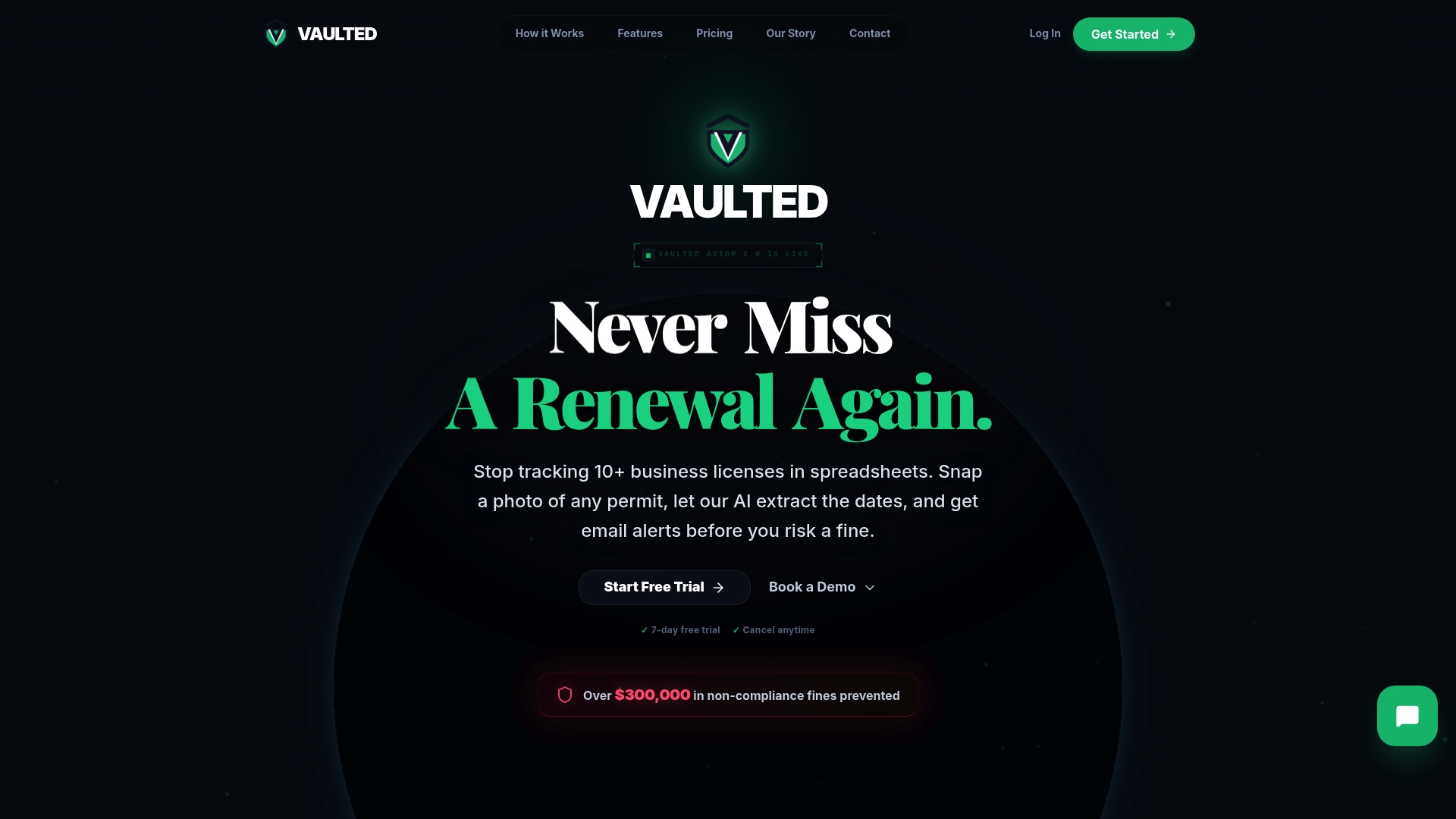
Vaultedai centralizes all your permit and license tracking in one place, whether you are managing food service permits, temporary event approvals, or plan review submissions across 5 locations or 50. You get visibility into what is coming due, what is pending, and what needs attention, without digging through email threads or shared drives. For operators who have outgrown manual tracking, Vaultedai is the compliance layer your business actually needs. See how it works at vaultedai.app.
FAQ
What is a health department permit?
A health department permit is an official authorization issued by a local or state public health agency that allows a business to operate in compliance with public health standards. Permits cover food service, lodging, personal care, and other regulated activities.
How much do health department permits cost?
Costs vary widely by jurisdiction and business type. Annual food service permits range from $40 to over $1,000, with fees often tiered by facility size. Temporary permits are typically lower cost, sometimes free.
Do health permits transfer when you buy a business?
No. Ownership changes require a new permit application, not a transfer. Most jurisdictions require new inspections and background checks, which can take months to complete.
What types of food permits does a restaurant need?
Most restaurants need an annual food service establishment permit at minimum. Depending on operations, they may also need separate permits for catering, alcohol service, outdoor dining, or temporary events.
When is a plan review permit required?
A plan review permit is required before new construction or major renovation of any facility regulated by the health department, particularly those involving food preparation, water systems, or septic infrastructure.