

Centralized permit management gives multi-location businesses one place to track every permit, license, renewal, and compliance document across all their locations. The core benefits are immediate and measurable: fewer missed deadlines, consistent regulatory oversight across jurisdictions, reduced administrative overhead, and a single source of truth that eliminates the data conflicts that plague teams still working from spreadsheets and email threads.
Here is what operators consistently gain when they consolidate permit tracking:
- Compliance oversight across every location and jurisdiction from one dashboard
- Automated deadline tracking that replaces manual calendar reminders and follow-up emails
- Standardized workflows that remove the guesswork from multi-location permit submissions
- Real-time visibility into permit status, renewal timelines, and outstanding documents
- Reduced error rates by eliminating duplicate data entry across disconnected systems
- Faster response to audits because all documentation lives in one accessible location
- Scalability that supports adding new locations without rebuilding your compliance process from scratch
Platforms like Vaultedai are built specifically for this challenge, giving growing businesses the operational clarity that spreadsheets simply cannot provide.
Table of Contents
- 1. How centralized permit management improves daily operations
- 2. The cultural shift that comes with centralized permit management
- 3. How Vaultedai supports centralized permit management
- Vaultedai gives multi-location operators a compliance edge
- Key Takeaways
1. How centralized permit management improves daily operations
The operational case for centralization is straightforward. When permit data lives in one system, your team stops wasting hours on status-check calls and email chains that exist only to answer "where does this stand?" That administrative drag is the largest hidden drain on productivity for multi-location operators, and it compounds fast across five, ten, or twenty locations.

Real-time tracking is the first thing operators notice after centralizing. Every permit, renewal date, and outstanding document is visible across departments without anyone having to ask. Centralized systems also link datasets across departments, automatically flagging conflicting permits before they become costly violations. That proactive catch is something no spreadsheet can replicate.
The time savings from centralization are documented at scale. The Portland Bureau of Transportation reduced processing time by 60% for Level 1 permit requests after consolidating fragmented workflows into a single automated system, saving 1,200 staff hours annually. Memphis and Shelby County achieved an 80% reduction in commercial plan review times after moving from a paper-based, agency-siloed process to a shared digital platform.
Cost savings follow naturally. Fewer compliance fines, less rework from incomplete applications, and reduced staff time on manual data entry all translate directly to the bottom line. For franchise groups and convenience store operators managing permits across dozens of locations, those savings add up quickly.
Pro Tip: Audit your current permit workflows before you migrate to any centralized system. Automating a broken process only speeds up the errors. Map every handoff, identify where delays actually occur, and fix the process first. The technology should reflect your optimized workflow, not your old one.
Comprehensive reporting is another operational advantage that gets underestimated. When all permit data flows into one system, you can identify compliance trends and bottlenecks that are completely invisible in siloed setups. That visibility supports better staffing decisions, smarter renewal planning, and faster responses when regulators come knocking.
2. The cultural shift that comes with centralized permit management
Centralized permit management is as much a cultural change as a technology upgrade. When permit status, assignments, and deadlines are visible to every stakeholder, accountability becomes structural rather than personal. Nobody can claim they did not know a renewal was due. Nobody can hide a bottleneck inside their inbox.
Industry analysts point to this transparency-driven shift as one of the most underappreciated benefits of centralization. Teams move from siloed responsibility, where each location manages its own permits in isolation, to a shared model where compliance is a collective function. That shift changes how people communicate, how managers track performance, and how the organization responds to regulatory changes.
Centralized permit management creates a culture where compliance gaps become visible before they become violations, not after.
The World Bank's research on digital permitting reinforces a critical point: technology alone is insufficient without prior process standardization. Digitizing a chaotic workflow produces a digital version of the same chaos. The organizations that benefit most from centralization are the ones that simplify and standardize their processes before they automate them.
Public-facing portals are another dimension of this cultural shift. Centralized systems can offer 24/7 status tracking for external stakeholders, reducing routine inquiries and building trust with regulators and the public. For multi-location businesses that interact with multiple municipal agencies, that transparency is a genuine competitive advantage when it comes to permit approvals and renewals.
Scalability is where the cultural investment pays off most clearly. A business that has standardized its permit workflows across ten locations can add a new location without rebuilding its compliance process from scratch. The 2026 compliance guide for multi-unit franchises outlines exactly how permit requirements multiply as businesses expand across state and local jurisdictions, and why a centralized approach is the only one that scales without proportional increases in administrative headcount.
3. How Vaultedai supports centralized permit management
Vaultedai is built for the specific operational reality of multi-location businesses: multiple jurisdictions, overlapping renewal cycles, and compliance documents scattered across locations, email inboxes, and shared drives. The platform consolidates all of that into one place.
Key capabilities that directly address the benefits covered above:
- Permit consolidation across all locations and license types in a single dashboard
- Automated renewal tracking with deadline alerts that replace manual calendar reminders
- Integrated compliance tracking that keeps every document current and audit-ready
- Fast onboarding designed for operators who need to be running in days, not months
- Workflow standardization that enforces consistent processes across every location
| Operational area | Without centralization | With Vaultedai |
|---|---|---|
| Permit status visibility | Manual check per location | Real-time dashboard, all locations |
| Renewal deadline tracking | Calendar reminders, email threads | Automated alerts, zero missed deadlines |
| Compliance documentation | Scattered across drives and inboxes | Centralized, audit-ready at any time |
| Multi-jurisdiction coordination | Separate processes per jurisdiction | Unified workflow across state and local permits |
| Reporting and analytics | Manual spreadsheet compilation | Built-in reporting with trend visibility |
Vaultedai's approach to managing state and local permits simultaneously reflects the reality that multi-location operators face: a single business location can require permits from a city, a county, and a state agency at the same time, each with different renewal cycles and documentation requirements. Keeping that straight manually is where compliance gaps appear.
The platform also supports the process-first principle that the World Bank and KPMG both emphasize. Vaultedai's onboarding guides operators through establishing a permit management standard process before automating it, which is the sequence that actually produces lasting compliance improvements. For franchise groups, smoke shop operators, restaurant chains, and convenience store networks, that structured approach is what separates a tool that works from one that just adds another system to manage.
Understanding what permit renewal means for your business is also part of how Vaultedai supports operators, with updated guidance that reflects 2026 regulatory requirements across the jurisdictions where its customers operate. The integration of AI in professional services workflows, as outlined in current AI adoption research, is increasingly relevant for compliance teams looking to reduce manual review time and catch errors before submission.
Vaultedai gives multi-location operators a compliance edge
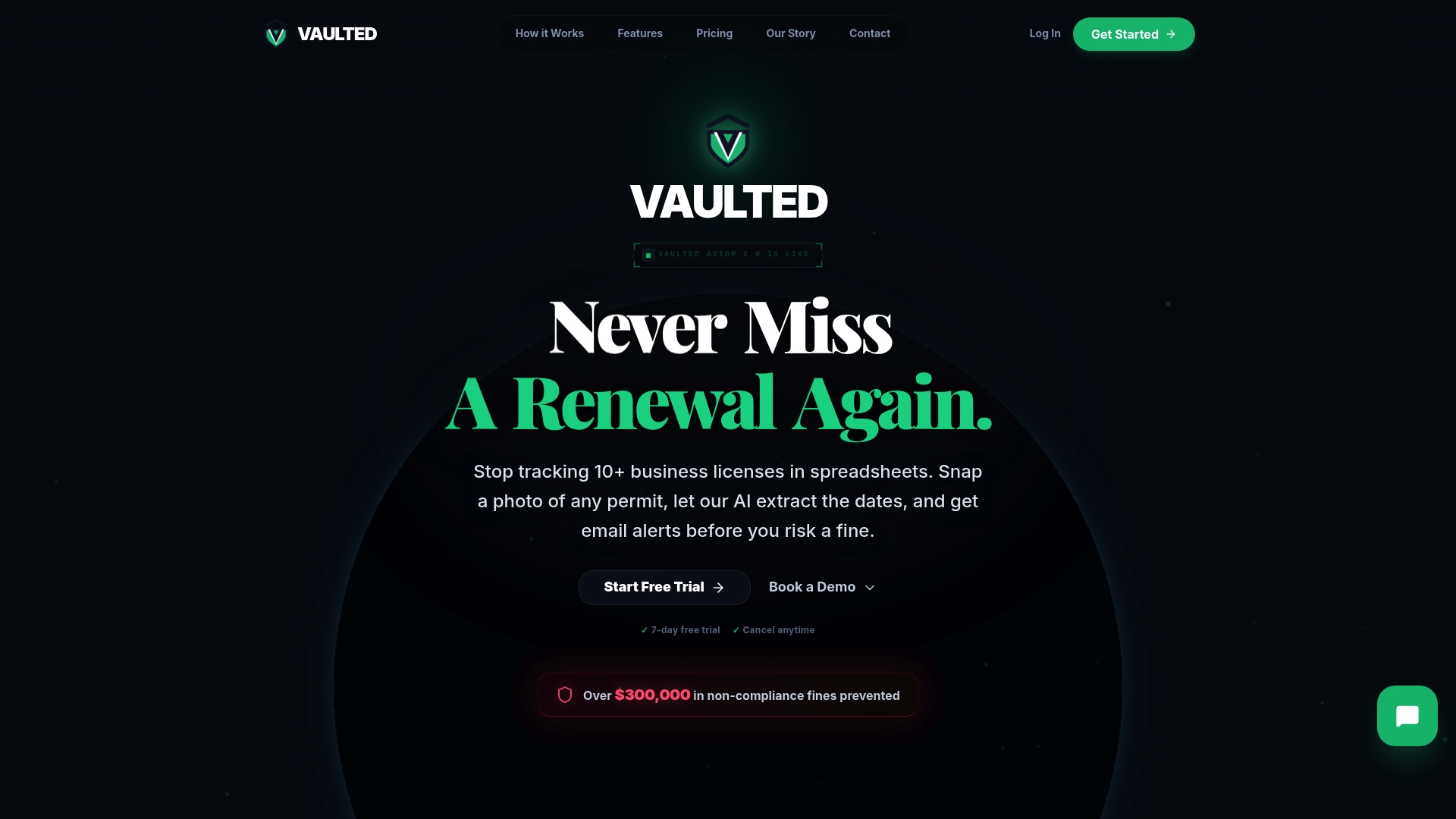
Running permits across multiple locations without a centralized system means you are always one missed renewal away from a fine, a shutdown notice, or a failed inspection. Vaultedai removes that exposure by giving your team a single place to track every permit, license, and compliance document across every location you operate.
The platform is built for operators who have outgrown spreadsheets: franchise groups, restaurant chains, smoke shop networks, convenience stores, and any multi-location business where compliance complexity grows faster than headcount. Fast onboarding, clear workflows, and automated renewal alerts mean your team spends less time chasing paperwork and more time running the business.
Start tracking your permits with Vaultedai and see how quickly centralized compliance changes the way your team operates.
Key Takeaways
Centralized permit management reduces compliance gaps, cuts administrative overhead, and gives multi-location businesses the visibility they need to scale without losing control of their regulatory obligations.
| Point | Details |
|---|---|
| Single source of truth | Consolidating permit data eliminates discrepancies and gives every stakeholder accurate, current information. |
| Documented time savings | Portland Bureau of Transportation reduced staff processing time by 60% for certain permits and saved 1,200 staff hours annually after centralizing. |
| Process before automation | Standardizing workflows before digitizing is the step most operators skip, and the one that determines whether centralization actually works. |
| Cultural accountability | Visible deadlines and shared dashboards shift compliance from individual responsibility to a team-wide function. |
| Vaultedai for multi-location teams | Vaultedai centralizes permits, automates renewals, and standardizes workflows for franchise groups, restaurant operators, and convenience store networks. |