
A permit management standard process is a documented, repeatable workflow that governs every permit-related activity across your business locations, from initial application through final closeout. Multi-location operators who lack this structure face missed renewals, inconsistent compliance records, and costly regulatory penalties. The industry term for the most rigorous version of this framework is a permit-to-work system, a formal control mechanism used across construction, food service, retail, and regulated industries. Establishing a clear standard operating procedure for permits is the single most effective way to protect your business as it grows.
What are the essential components of a permit management standard process?
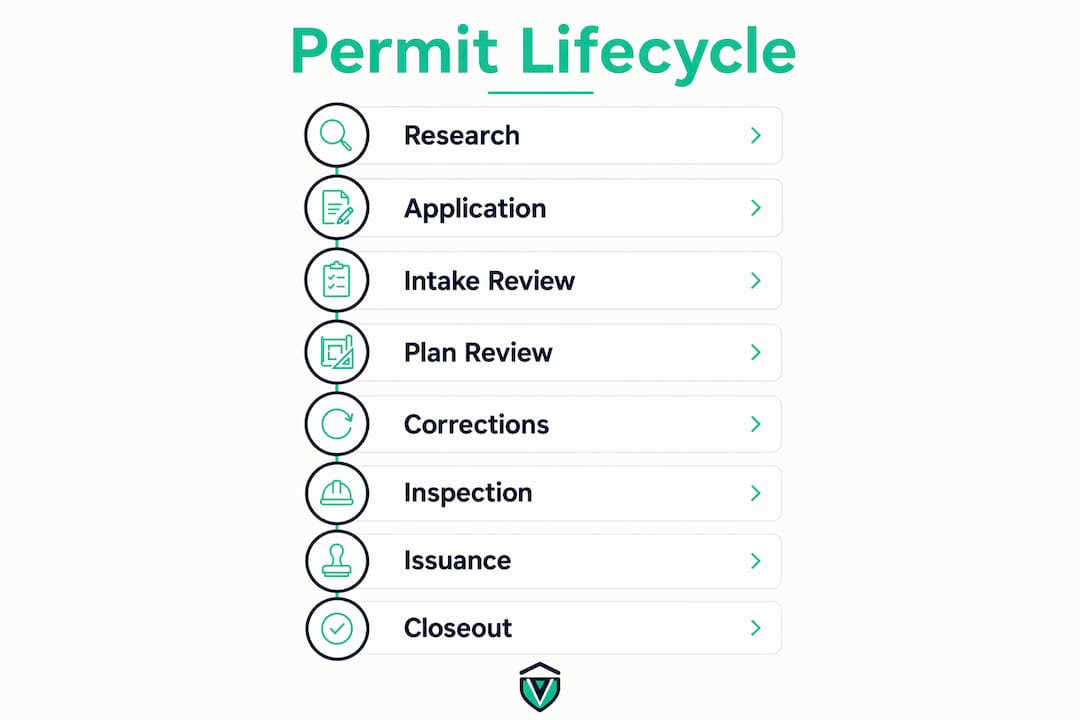
A standard permitting lifecycle covers eight core stages: research, application, intake review, plan review, corrections, issuance, inspections, and final closeout. Each stage has a defined owner, a time standard, and a handoff point. Without those three elements, the process breaks down at scale.
The table below maps each stage to its primary purpose and the team responsible.
| Stage | Purpose | Owner |
|---|---|---|
| Research | Identify required permits by jurisdiction | Compliance manager |
| Application | Submit documentation to the authority | Location manager |
| Intake review | Authority confirms submission completeness | Regulatory body |
| Plan review | Authority evaluates technical compliance | Regulatory body |
| Corrections | Applicant resolves deficiencies | Location manager |
| Issuance | Authority releases the permit | Regulatory body |
| Inspections | Field verification of permit conditions | Inspector |
| Closeout | Final sign-off and record archiving | Compliance manager |
Timelines vary by jurisdiction, but Lindon City's standard operating procedure mandates initial permit review within 14 business days and corrections within 5 business days. That kind of published standard gives compliance managers a benchmark to hold both internal teams and regulatory bodies accountable.

Effective permit management integrates a digital system as the source of truth and printed permits as field verification tools. The digital record captures every status change, renewal date, and condition. The physical permit confirms compliance at the point of work.
What tools and prerequisites do you need to implement a permit management system?
Building a permit management system requires more than software. You need the right organizational structure before any platform delivers value.
Organizational prerequisites:
- Defined permit issuer roles with documented authority levels at each location
- A centralized permit register accessible to all locations but editable only by authorized staff
- Printed permit templates formatted to meet local regulatory requirements
- A conflict-check mechanism that flags overlapping permits or expired conditions before work begins
- A trained backup issuer at each location to prevent single points of failure
Technology requirements:
- Digital permit tracking software with renewal alerts and document storage
- A permit tracking and management dashboard that shows status across all locations in one view
- Audit logging that records every status change, approval, and document upload
Permit-to-work systems require strict approval workflows with defined authority levels, conflict checks, and suspension protocols. That means your software must enforce those controls, not just display data. A platform that lets any user approve a permit without role verification is not a compliant system.
Multi-location operators commonly underestimate staffing costs. Permit-heavy portfolios require 10–15% of staff capacity dedicated to program-level coordination. That figure does not include execution. Plan your headcount accordingly before you launch.
Pro Tip: Start with a jurisdiction profile for each location before selecting software. Document the permit types, renewal cycles, and authority contacts for every site. That profile becomes the foundation of your system and prevents costly configuration rework later.
How do you execute the permit management process across multiple locations?
Rolling out a standardized process across multiple locations requires a phased approach. Trying to deploy everywhere at once produces inconsistent adoption and gaps in your compliance record.
-
Conduct a baseline assessment. Audit every active permit across all locations. Record the permit type, issuing authority, expiration date, and current status. This audit reveals gaps and creates the foundation for your centralized register. Phased deployments that start with baseline assessment capture the majority of project ROI before any automation is added.
-
Build jurisdiction profiles. For each location, document the specific permits required, the local authority contacts, and the standard review timelines. Jurisdictions differ significantly. A restaurant in one city may need a health permit, a fire safety certificate, and a food handler license, while the same concept in another city adds a zoning variance.
-
Run a pilot at one or two locations. Select locations with different permit complexity levels. Apply the full lifecycle workflow, from application intake through closeout, and document every friction point. Pilots surface process gaps that no planning session will catch.
-
Refine based on pilot findings. Adjust your templates, authority levels, and conflict-check rules before scaling. A correction made at two locations costs far less than one made at twenty.
-
Scale with a training checkpoint. Before each new location goes live, verify that the local permit issuer has completed role training and that the centralized register reflects all active permits for that site.
-
Establish a hybrid digital-physical workflow. The digital system records every permit event. Printed permits travel to the field as verification documents. Both must stay synchronized. A permit renewed in the system but not reprinted for the field creates a compliance gap during inspections.
For franchise operators, the types of permits franchises must maintain vary by concept and jurisdiction, which makes the jurisdiction profile step non-negotiable before scaling.
What are common challenges in permit management systems and how do you fix them?
Most permit management failures trace back to three root causes: bypassed controls, poor audit practices, and unclear suspension protocols.
Common bottlenecks and fixes:
- Bypassed approval workflows. Staff skip the conflict-check step under time pressure. Fix this by making the conflict check a system-enforced gate, not a manual reminder.
- Expired permits discovered during inspections. Renewal alerts set too close to the expiration date leave no buffer for regulatory delays. Set alerts at 90 days, 60 days, and 30 days before expiration.
- Inconsistent field documentation. Printed permits at job sites do not match the current digital record. Fix this by requiring a reprint confirmation step every time a permit is renewed or modified in the system.
- No suspension protocol. When site conditions change, permits must be suspended immediately. Teams that lack a documented suspension process continue work under invalid permits, creating serious liability.
Caution: Operating under a suspended or expired permit is not a paperwork issue. Regulatory agencies treat it as a compliance violation, and in safety-regulated industries, it can result in stop-work orders, fines, or loss of operating licenses.
Safety standards recommend auditing 5% of closed permits weekly to verify field compliance against permit conditions. That random sampling catches systemic issues before they become regulatory findings.
When an incident occurs at a permitted site, permit reconstruction within 24 hours is best practice. Auditors expect accurate records while details are still fresh. A digital system with full audit logging makes this reconstruction fast and defensible.
Pro Tip: Assign a monthly "permit health review" to your compliance manager. Pull the five most recently closed permits from each location and verify that the digital record, the physical permit, and the inspection sign-off all match. Discrepancies found in review cost far less than discrepancies found by a regulator.
Key Takeaways
A standardized permit management process requires a documented lifecycle, defined authority roles, and synchronized digital and physical records to hold up under regulatory scrutiny.
| Point | Details |
|---|---|
| Define the full lifecycle | Map all eight stages from research to closeout before selecting any software or templates. |
| Assign authority levels | Every location needs a named permit issuer with documented approval authority and a trained backup. |
| Use a phased rollout | Start with a baseline audit and pilot at two locations before scaling to the full portfolio. |
| Synchronize digital and physical records | The digital system is the record of truth; printed permits serve as field verification at every site. |
| Audit closed permits weekly | Sampling 5% of closed permits each week catches compliance gaps before regulators do. |
What I've learned from watching permit systems fail at scale
The most common mistake I see is treating permit management as a documentation task rather than a control system. Operators build a spreadsheet, add some renewal dates, and call it a process. Then a location gets hit with a stop-work order because a permit expired over a holiday weekend and nobody had an alert set up.
The second mistake is skipping the baseline audit. Teams want to go straight to software deployment because it feels like progress. But if you do not know what permits you currently hold, what their conditions are, and which ones are already out of compliance, you are building a system on a broken foundation.
The hybrid digital-physical workflow is the piece most operators undervalue. A digital record that does not translate into an accurate printed permit at the job site is not a complete system. Inspectors check what is on the wall, not what is in your database. Both must match, every time.
Phased deployment is not a compromise. It is the correct method. Pilots surface the jurisdiction-specific quirks that no planning document anticipates. A restaurant group I worked with discovered that one city required a separate permit for each piece of cooking equipment, a requirement that existed nowhere in their standard checklist. That finding in a pilot saved them from a compliance gap across 12 locations.
The operators who build durable permit systems treat the process as a living document. They schedule quarterly reviews, update jurisdiction profiles when regulations change, and run weekly audits as a standard operating rhythm, not a crisis response.
— Rakin
Vaultedai: built for multi-location permit compliance
Managing permits across multiple locations without a centralized system means relying on memory, email threads, and spreadsheets that go stale the moment someone forgets to update them.

Vaultedai is built specifically for multi-location businesses that need a single place to track every permit, license, and renewal across their entire portfolio. The platform centralizes your permit tracking and compliance records, sends renewal alerts before deadlines hit, and gives compliance managers real-time visibility across all locations. Vaultedai supports the hybrid digital-physical workflow described in this article, keeping your digital records and field documentation in sync. For operators running smoke shops, restaurants, convenience stores, or franchise groups, Vaultedai removes the manual work that causes compliance gaps.
FAQ
What is a permit management standard process?
A permit management standard process is a documented, repeatable workflow covering every stage of permit activity, from application through closeout, with defined roles, timelines, and approval controls at each step.
How many stages does a standard permit lifecycle include?
A standard permitting lifecycle includes eight stages: research, application, intake review, plan review, corrections, issuance, inspections, and final closeout. Each stage requires a defined owner and handoff point.
How much staff capacity does permit management require?
Permit-heavy portfolios typically require 10–15% of staff capacity dedicated to program-level coordination, separate from the time spent on actual permit execution at each location.
How often should closed permits be audited?
Auditing 5% of closed permits weekly is the recommended standard for verifying field compliance against permit conditions and catching systemic issues before they become regulatory findings.
What is the difference between a digital permit record and a printed permit?
The digital record is the authoritative source of truth for all permit data, status changes, and renewal history. The printed permit is the field verification document that inspectors check on site. Both must stay synchronized.