

What is a waste disposal permit and why does it matter?
A waste disposal permit is a government-issued legal authorization that allows a facility to collect, transport, store, treat, or dispose of solid or hazardous waste under specific environmental conditions. Without one, operating a waste facility is illegal under federal and most state laws. The consequences of skipping this step range from heavy fines and shutdowns to full project termination and lasting reputational damage.
The federal backbone of U.S. waste permitting is the Resource Conservation and Recovery Act, commonly called RCRA. Under RCRA, treatment, storage, and disposal facilities (TSDFs) must obtain a permit before beginning construction. The permit is a legally binding document that establishes exactly what waste management activities a facility can conduct and under what conditions, drawing from EPA regulations in Title 40 of the Code of Federal Regulations, Parts 260 through 270.
Permits exist for a clear reason: they prevent illegal dumping, protect soil and groundwater, and give regulators a mechanism to hold operators accountable. Think of the permit as the legal infrastructure beneath every compliant waste operation, not a formality you file once and forget.
- Covers collection, transport, storage, treatment, and disposal activities
- Applies to both solid and hazardous waste streams
- Legally binding under RCRA and complementary state regulations
- Requires ongoing compliance monitoring and reporting
- Non-compliance risks fines, shutdowns, and criminal liability
Who actually needs a waste disposal permit?
Most businesses that generate ordinary office trash do not need a permit. The requirement kicks in when a facility actively manages waste for others or handles regulated waste streams at scale. Under RCRA, all facilities that currently treat, store, or dispose of hazardous waste, or plan to do so, must obtain a permit before operations begin.
The following facility types typically require waste management permits:
- Landfills (municipal solid waste, industrial waste, construction and demolition debris)
- Hazardous waste treatment, storage, and disposal facilities
- Transfer stations where waste is consolidated before transport
- Incinerators and energy recovery facilities
- Composting operations handling commercial or industrial volumes
- Waste tire processors
State rules add another layer. In Washington State, for example, local jurisdictional health departments issue permits and may adopt standards more stringent than state minimums. In Louisiana, anyone running a landfill, transfer station, or long-term storage operation needs authorization from the state's Waste Permits Division. The takeaway: always check both federal and state requirements, because the stricter standard applies.
Exemptions do exist. Certain recycling operations, composting facilities meeting specific criteria, and some moderate-risk waste handlers may qualify for permit exemptions or deferrals. Check your state's regulations before assuming you are exempt.

Pro Tip: If you transport waste for hire or operate a drop-off station, you likely need a permit even if you never touch a landfill. Contact your state environmental agency before you start, not after.
How to get a waste permit: the application process
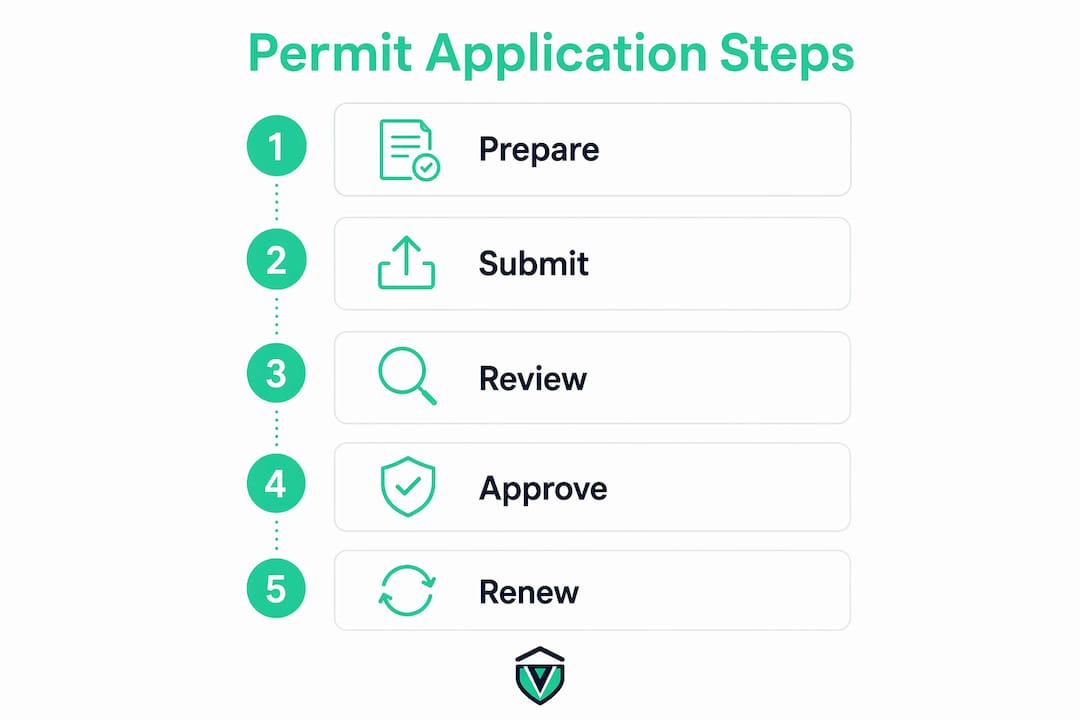
The application process for a hazardous waste permit is divided into two parts: Part A and Part B. Part A uses EPA Form 8700-23 and covers basic facility information. Part B is a detailed narrative submission that can run hundreds of pages.
Part B must address:
- How the facility will be designed, constructed, maintained, and operated to protect public health
- How potential emergencies and spills will be handled
- How the facility will finance and clean up any environmental contamination
- How the facility will close and remediate the site once operations end
For solid waste facilities, a complete application typically includes design plans, operating procedures, environmental monitoring data, and closure plans. Financial assurance, such as a bond or insurance policy, must be established before the permit is issued to guarantee safe site closure even if the operator defaults. This protects taxpayers from inheriting abandoned, contaminated sites.
Once submitted, the agency reviews the application and may issue a Notice of Deficiency if anything is missing or inadequate. After revisions, the agency issues a draft permit and opens a public comment period. Public participation often extends the timeline considerably, with requirements for public notice, comment periods, and hearings where warranted. Reviews can take between 7 and 36 months depending on facility complexity and community feedback.
Permits are typically granted for a multi-year period and require renewal applications submitted well before expiration. For franchise operators and multi-location businesses, understanding permit renewal cycles early prevents costly lapses.
One step many applicants miss: local siting approval is a separate mandatory requirement in most states and must be obtained before submitting the state permit application. Skipping this step is one of the most common causes of costly delays.
Which agencies regulate waste disposal and what happens if you violate the rules?
The EPA sets the federal floor for waste disposal regulations through RCRA and its implementing rules in 40 CFR Parts 260 through 270. In states with authorized programs, the state environmental agency (such as the Louisiana DEQ, Virginia DEQ, or Texas Commission on Environmental Quality) takes the lead role in issuing and monitoring permits. The EPA retains oversight and can step in when state enforcement falls short.
Permitted facilities must meet ongoing conditions that include:
- Emergency planning: written contingency plans and trained response personnel
- Employee training: documented hazard handling procedures for all relevant staff
- Groundwater monitoring: regular sampling and reporting at regulated disposal sites
- Reporting: periodic compliance reports submitted to the permitting agency
Violations carry real consequences. Non-compliance with permit conditions risks fines, forced operational shutdowns, and in serious cases, criminal charges against facility operators. Regulatory enforcement is designed to protect ecosystems and public health, and agencies have broad authority to act quickly when violations occur.
Permitting agencies also conduct site inspections and can modify permit conditions if a facility's operations change or if new environmental risks emerge. Staying ahead of those changes, rather than reacting to them, is what separates compliant operators from those facing enforcement actions.
Pro Tip: Sign up for regulatory update notifications from your state environmental agency. Rule changes affecting your permit conditions often come with a comment period, giving you time to respond before they take effect.
For businesses managing permits across multiple locations, a resource like permit acquisition guidance can help clarify which authorizations apply to specific site types.
Expert tips for managing waste disposal permits without losing your mind
Treat your waste disposal permit as legal infrastructure, not paperwork. Operators who approach permits that way build compliance into their daily workflows instead of scrambling before inspections.
- Engage early. Lack of early consultation with state waste departments is a leading cause of costly delays and non-compliance penalties. Schedule a pre-application meeting with your permitting agency before you draft anything.
- Separate your approvals. Local siting approval and the state environmental permit are two different processes. Confusing them or trying to run them simultaneously without coordination routinely derails timelines.
- Build your financial assurance package first. Bonds, insurance, or trust funds must be in place before permit issuance. Starting this process late is one of the most avoidable bottlenecks in the entire application.
- Document everything. Training records, monitoring logs, and emergency plan updates all become evidence of good-faith compliance during inspections or enforcement reviews.
- Plan for public participation. A contested permit application can extend the review timeline by months. Proactive community outreach before the formal comment period reduces opposition and speeds final approval.
- Track renewal dates obsessively. A lapsed permit can shut down operations as effectively as a violation. For operators managing multiple sites, a centralized permit management process prevents gaps across locations.
Pro Tip: Update your emergency response plan and employee training records at least annually, and every time permit conditions change. Outdated plans are a common citation during routine inspections.
Franchise operators and multi-location businesses face a compounded version of these challenges. A single missed renewal or a documentation gap at one site can trigger regulatory scrutiny across the entire portfolio. Vaultedai is built specifically for that problem, centralizing permits, renewal deadlines, and compliance documents across all locations so nothing slips through. For operators who have outgrown spreadsheets, Vaultedai's permit tracker gives you a single view of every permit status, expiration date, and required action across your entire operation.
Key Takeaways
A waste disposal permit is a legally binding federal and state authorization that every treatment, storage, or disposal facility must hold before beginning operations.
| Point | Details |
|---|---|
| Federal framework | RCRA and 40 CFR Parts 260–270 set the baseline rules all U.S. waste facilities must meet. |
| Who needs a permit | Landfills, transfer stations, incinerators, and hazardous waste facilities all require permits; most ordinary businesses do not. |
| Application timeline | Reviews take between 7 and 36 months depending on facility complexity and public comment volume. |
| Financial assurance required | Bonds or insurance must be in place before permit issuance to cover potential site closure costs. |
| Renewal and compliance | Permits last up to 10 years; renewal applications are due six months before expiration, with ongoing monitoring required throughout. |