

A fire safety permit is an official legal authorization issued by an Authority Having Jurisdiction (AHJ) that allows a business to conduct specific fire-related activities or install and maintain fire protection systems in compliance with NFPA codes and local regulations. For business operators managing multiple locations, understanding what is a fire safety permit is not optional. Missing or expired permits expose your business to fines, forced closures, and insurance gaps. This guide covers permit types, fire safety permit requirements, the application process, renewal obligations, and the compliance pitfalls that cost operators the most.
What is a fire safety permit and what types exist?
Fire safety permits fall into two primary categories: Protection System Permits and Operational Permits. Knowing which type applies to your business is the first step in the fire safety licensing process.
Protection System Permits cover the installation, modification, or testing of built-in fire protection infrastructure. Common examples include:
- Sprinkler system installation or modification
- Fire alarm system installation or upgrade
- Suppression systems in commercial kitchens or server rooms
- Standpipe and hose systems
Operational Permits authorize specific ongoing activities that carry elevated fire risk. These are closer in nature to a business license than a construction permit. Common triggers include:
- Hosting large crowds or public events
- Operating food trucks with propane or open flame equipment
- Storing or handling hazardous materials
- Conducting hot work such as welding or cutting
Operational permit triggers like large gatherings, propane use, and welding are among the most frequently cited reasons businesses receive compliance violations. Many of these permits require annual renewal, which operators often overlook after the initial approval.
The distinction matters because permit requirements vary by jurisdiction and may involve multiple agencies. System permits are often processed like construction permits, while operational permits move through channels similar to business licensing. Confusing the two causes processing delays and, in some cases, fines.

How to obtain a fire safety permit: process, documentation, and timelines
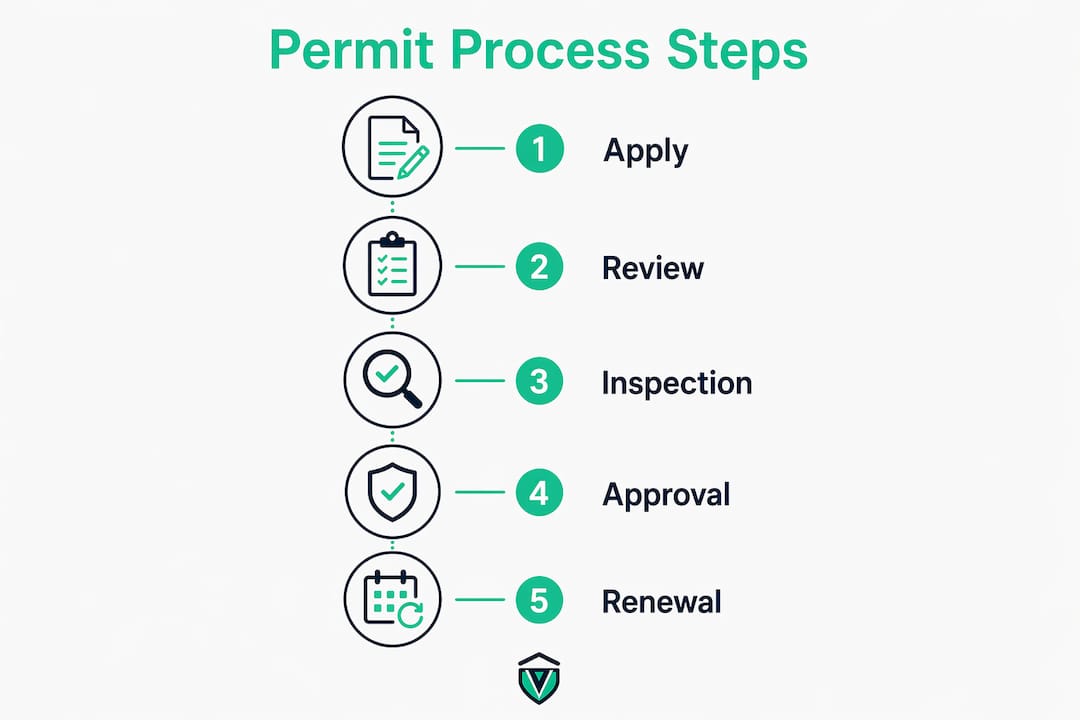
The fire safety permit application follows a three-step lifecycle: plan review, inspection, and approval. Each step has specific documentation requirements and realistic timelines that operators routinely underestimate.
-
Plan review. Submit detailed site or system plans to the AHJ. For Protection System Permits, this means engineered drawings stamped by a licensed fire protection engineer. Operational permits may require a site layout, hazardous materials inventory, or event plan. Plan reviews can take up to 20 business days for complex system permits. That timeline is legally permitted, and many jurisdictions use every day of it.
-
Inspection. Once plans are approved, a fire inspector visits the site to verify that installations or conditions match the submitted plans. Any discrepancy sends the process back to step one.
-
Approval and issuance. The AHJ issues the permit after a passing inspection. Operational permits in some jurisdictions can be obtained instantly through online portals. System permits almost never move that fast.
Common documentation required across most jurisdictions includes:
- Current business license
- Detailed system or site plans
- Contractor certifications, such as NICET Level 3 for fire alarm systems
- Proof of insurance
Costs vary widely by jurisdiction and permit type. Some municipalities charge flat fees; others calculate fees based on project valuation or square footage. Call the local fire marshal's office before budgeting.
Pro Tip: Engage the local fire marshal's office before submitting any application. Early engagement with fire marshals transforms them from gatekeepers into partners. They will tell you exactly what they want to see in a plan submission, which eliminates costly back-and-forth rejections.
For operators opening new locations, factor permit timelines into your project schedule from day one. A 20-plus business day plan review on top of contractor scheduling and inspections can push an opening date back by six weeks or more.
Why maintaining and renewing fire safety permits matters
Fire safety compliance is not a one-time event. Permit compliance requires continuous management, including timely renewals and up-to-date inspection records. Neglecting renewals causes permit expiration, which triggers significant operational disruptions.
The consequences of noncompliance are concrete and serious:
- Fines. Local fire authorities issue citations for expired or missing permits. Fines escalate with each inspection cycle.
- Forced closure. An AHJ can order a business to stop operations until permits are reinstated. This is not theoretical. It happens to restaurants, retail chains, and event venues every year.
- Insurance gaps. Most commercial property and liability policies require active fire safety permits. An expired permit gives insurers grounds to deny claims after a fire incident.
- Liability exposure. If a fire occurs and permits were lapsed, the business owner faces personal liability beyond what insurance covers.
Most operational permits renew annually. Some jurisdictions require semi-annual inspections for high-risk occupancies. Protection system permits tied to specific installations do not always expire, but the systems themselves require annual testing and inspection records to remain in compliance with NFPA 25 and NFPA 72 standards.
For multi-location operators, the renewal calendar compounds quickly. A business with 10 locations, each holding two or three permits, manages 20 to 30 renewal deadlines per year. Tracking those on a spreadsheet is how operators miss deadlines.
Common pitfalls and expert tips for managing permits efficiently
The most expensive fire safety compliance mistakes are avoidable. They follow predictable patterns.
Confusing permit requirements with contractor licensing. A frequent business owner error is assuming that holding a permit means any contractor can do the work. Some systems legally require NICET-certified installers. Using an uncertified contractor voids the permit, invalidates the inspection, and creates insurance exposure.
Underestimating plan review timelines. Complex permits legally allow 20-plus business days for plan review. Operators who submit applications two weeks before a planned opening date almost always face delays. Build permit timelines into your project schedule at the start, not after contractors are already on site.
Skipping permits for voluntary upgrades. Voluntary fire safety improvements may not require permits, but they still require certified installers to maintain insurance validity. Operators who hire uncertified contractors for "minor" upgrades discover the problem only after a claim is denied.
Letting renewals slip across locations. Compliance is an ongoing process. Diligent record keeping and renewal tracking is especially critical for businesses with multiple sites. A renewal missed at one location does not stay isolated. It creates a compliance gap that can affect your entire portfolio during an audit or insurance review.
Pro Tip: Centralize every permit document, expiration date, and inspection record in one system. Whether you manage three locations or thirty, a single source of truth prevents the "I thought someone else handled it" problem that causes most compliance failures.
For food service operators, the intersection of fire permits and kitchen equipment permits adds another layer. A commercial kitchen permit often triggers fire suppression system requirements that need their own Protection System Permit. Plan for both simultaneously.
How fire safety permits fit within broader business compliance
Fire safety permits do not exist in isolation. They connect directly to other permits and licenses every business operator manages.
| Permit type | Relationship to fire safety permits |
|---|---|
| Building permit | Required before fire system installation; AHJ coordinates with building department |
| Occupancy permit | Cannot be issued until fire safety inspections pass |
| Business license | Required documentation for most fire permit applications |
| Zoning permit | Determines occupancy classification, which drives fire code requirements |
Opening a new location means coordinating all four permit types simultaneously. The fire safety permit application often cannot move forward until the building permit is active. The use and occupancy permit will not issue until fire inspections clear. Delays in any one permit cascade into the others.
Internal policies matter here too. Designate one person per location as the permit owner. That person tracks renewal dates, schedules inspections, and maintains the permit file. Without a named owner, renewals fall through the cracks during staff turnover.
Fire safety compliance also affects your insurance premiums directly. Carriers review permit status during policy renewals. A clean permit record across all locations signals lower risk and can reduce premiums. A history of lapses signals the opposite.
For franchise operators and multi-location retail groups, business expansion permit requirements add complexity at every new site. Each jurisdiction has its own AHJ, its own fee schedule, and its own documentation preferences. There is no universal template.
Key takeaways
A fire safety permit is a legal requirement that protects your business, your occupants, and your insurance coverage. Missing or mismanaging permits creates compounding risk across every location you operate.
| Point | Details |
|---|---|
| Two permit categories | Protection System Permits cover installations; Operational Permits cover ongoing activities like events or hazardous materials use. |
| Plan review timelines | Complex permits allow up to 20 business days for review. Build this into project schedules from day one. |
| Certified contractors required | Some systems legally require NICET-certified installers. Using uncertified contractors voids permits and insurance. |
| Renewals are ongoing | Most operational permits renew annually. Multi-location operators manage dozens of deadlines per year. |
| Compliance affects insurance | Expired permits give insurers grounds to deny claims. Active permits signal lower risk and protect coverage. |
Why I think most operators underestimate fire safety permits until it costs them
Most business owners treat fire safety permits the same way they treat smoke detector batteries. They think about them only when something goes wrong. I have seen operators with 15 locations discover mid-audit that three sites had expired operational permits. The fines were manageable. The insurance review that followed was not.
The real problem is not ignorance. Operators know permits exist. The problem is that fire safety compliance sits at the intersection of construction, operations, and insurance, and no single department owns all three. The result is a gap where permits expire quietly while everyone assumes someone else is watching.
Early communication with the local fire marshal is the single highest-return action most operators never take. Fire marshals are not adversaries. They are the people who can tell you exactly what your plan submission needs to avoid a rejection. One phone call before you submit saves weeks of back-and-forth.
Certified contractors are the second undervalued asset. Operators who hire on price alone and skip NICET certification requirements pay twice: once for the original work, and again when the inspection fails or the insurance claim gets denied.
For anyone managing more than two or three locations, centralized permit tracking is not a luxury. It is the only way to maintain visibility without dedicating a full-time employee to spreadsheet maintenance.
— Rakin
Vaultedai keeps your fire safety permits organized across every location

Vaultedai is built for multi-location operators who have outgrown spreadsheets and manual tracking. The platform centralizes every fire safety permit, renewal deadline, and compliance document across all your locations in one place. You get automatic renewal alerts before deadlines hit, a single document repository for inspection records and certifications, and full visibility into your compliance status at every site. Smoke shop groups, restaurant operators, convenience stores, and franchise teams use Vaultedai to stay ahead of permit requirements without the administrative overhead. See how permit tracking works for businesses at your scale.
FAQ
What is a fire safety permit?
A fire safety permit is an official legal authorization issued by an Authority Having Jurisdiction (AHJ) that allows a business to install fire protection systems or conduct specific fire-risk activities in compliance with NFPA codes and local regulations.
Who needs a fire safety permit?
Any business installing or modifying fire protection systems, hosting large public events, handling hazardous materials, or conducting hot work like welding typically requires a fire safety permit from the local AHJ.
How long does it take to get a fire safety permit?
Operational permits can sometimes be issued instantly through online portals. Protection System Permits involving plan review can take up to 20 business days, and complex projects may take longer depending on the jurisdiction.
What happens if my fire safety permit expires?
An expired permit can result in fines, forced business closure, and insurance claim denials. Most commercial policies require active fire safety permits as a condition of coverage.
Do voluntary fire system upgrades require a permit?
Voluntary upgrades may not require a permit in all jurisdictions, but they still require certified installers to maintain insurance validity and meet safety standards. Always confirm with your local fire marshal before starting any work.