
What are the best Gystify.com alternatives for 2026?
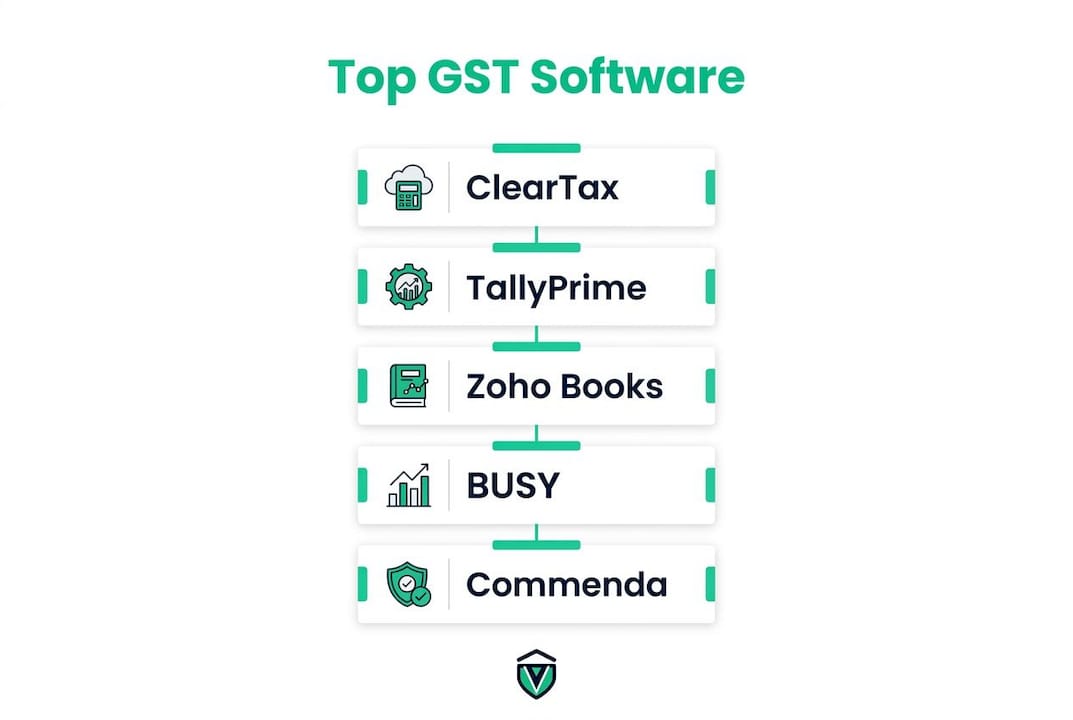
The strongest Gystify.com alternatives for Indian GST compliance are ClearTax, TallyPrime, Zoho Books, BUSY, and Commenda, each covering a distinct slice of the market from solo filers to multi-location manufacturers. If you need direct API filing with GSTN, Zoho Books and TallyPrime (Release 5.0+) are the clearest choices. If offline speed and deep inventory control matter more, TallyPrime and BUSY pull ahead. The table below maps all twelve options against the dimensions that actually drive the decision.
| Product | Best For | Pricing | Primary Features | GST Filing vs Billing | Multi-location Support | API Integration with GSTN |
|---|---|---|---|---|---|---|
| ClearTax | All business sizes, end-to-end filing | Tiered; free to premium plans | Auto-filing, reconciliation, e-invoicing | Full GST filing | Yes | Yes |
| TallyPrime | Manufacturers, traders, CA firms | — | Offline speed, BOM, audit trail, e-way bill | Full GST filing + billing | Gold plan | Yes (Release 5.0+) |
| Zoho Books | Cloud-first startups, service firms | Free (revenue <₹25L); up to ₹7,999/mo | API filing, bank feeds, 50+ integrations | Full GST filing + billing | All plans | Yes (GSP authorized) |
| Vyapar | Small retailers, shopkeepers | Free and paid tiers | Mobile invoicing, basic GST filing | Billing-first, basic filing | Limited | Limited |
| Commenda | Medium businesses, multi-location | Not publicly listed | Integrated GST filing, multi-location | Full GST filing + billing | Yes | Yes |
| Gen GST | Traders, multi-GSTIN managers | Not publicly listed | Automated returns, invoice matching | Full GST filing | Yes | Yes |
| BUSY | Retailers, distributors | — | Barcode, batch tracking, route billing | Full GST filing + billing | Yes | Partial (manual portal sign) |
| Marg ERP | Manufacturers, distributors | Not publicly listed | ERP + GST filing, inventory control | Full GST filing + billing | Yes | Yes |
| ExpressGST | Low-cost return filers | Not publicly listed | Simplified return filing interface | GST filing focused | Limited | Yes |
| myBillBook | Micro and small businesses | Free and paid tiers | Mobile billing, e-way bill, invoicing | Billing-first, basic filing | Limited | Limited |
| Saral GST | SMBs, simple compliance needs | Not publicly listed | Return filing, reconciliation, reports | Full GST filing | Limited | Yes |
| Spectrum Cloud | Multi-branch cloud users | Not publicly listed | Cloud-native, multi-GSTIN, API integrations | Full GST filing + billing | Yes | Yes |
A few patterns stand out immediately. Billing-first tools like Vyapar and myBillBook are genuinely useful for small shops but will leave a growing business short when it comes to automated return filing. On the other end, TallyPrime, Zoho Books, and Marg ERP offer full compliance stacks that handle everything from invoice generation to GSTR-3B submission. Selecting billing-only software instead of a full filing platform is one of the most common and costly mistakes businesses make as they scale.

Detailed profiles of the top Gystify.com alternatives
ClearTax
ClearTax is the most widely recognized name in Indian GST compliance, and for good reason. It covers the full filing cycle: GSTR-1, GSTR-3B, GSTR-9, e-invoicing, and reconciliation, all from a single dashboard. The platform targets businesses of every size, from a single-location startup to a large enterprise with multiple GSTINs. User reviews on G2 and Capterra consistently highlight its clean interface and responsive support team. Trial access is available directly on the website, which makes evaluation straightforward.

TallyPrime
TallyPrime is one of India's leading accounting software solutions with a widespread user base across the country. Its native GST engine handles everything from e-invoice generation to GSTR-2B reconciliation without leaving the software. Release 5.0 added direct filing via EVC or DSC, closing the loop that previously required a manual portal visit. The Silver and Gold plans offer tiered pricing, with the Gold plan unlocking multi-company and multi-user access. For manufacturers, traders, and CA firms that need offline reliability and deep inventory control, TallyPrime is the benchmark.
Pro Tip: If you rely on uninterrupted offline billing and heavy Excel imports, TallyPrime's auto-mapping behavior during bulk data ingestion saves hours compared to manual column configuration in competing tools.
Zoho Books
Zoho Books is the go-to for cloud-first businesses. As an authorized GST Suvidha Provider (GSP), it pushes GSTR-1 and GSTR-3B data directly to the portal without any manual upload step. Zoho Books offers a free plan for smaller businesses and various paid plans with increasing features. One practical note: each additional GSTIN costs extra, and the platform caps invoices per year on lower tiers, so high-volume businesses should model their actual usage before committing. G2 reviewers frequently cite its 50-plus third-party integrations and bank feed automation as the features that justify the subscription.
Vyapar
Vyapar targets small retailers and shopkeepers who need fast mobile invoicing more than they need automated return filing. The app handles GST-compliant invoices, basic expense tracking, and simple reports. It is genuinely easy to use, and the free tier covers most micro-business needs. The limitation is clear: Vyapar is billing-first. Businesses that need to file GSTR-1 or reconcile purchase data against GSTR-2B will need a separate tool or an upgrade path.
Commenda
Commenda positions itself for medium-sized Indian businesses that want both accounting depth and GST compliance in one place. It supports multi-location filing and integrates GST returns into its core workflow rather than treating compliance as a bolt-on module. G2 reviews note its clean interface and responsive onboarding support. Pricing is not publicly listed, so you will need to contact the team for a quote.
Gen GST
Gen GST from SAG Infotech focuses on traders and distributors managing multiple GSTINs. Its automated return generation and invoice matching features reduce the manual work that comes with high transaction volumes across several registrations. The platform appears on Slashdot's 2026 alternatives list as a recognized option in the multi-GSTIN segment. For businesses with five or more GSTINs, the automation depth here is worth evaluating seriously.
BUSY
BUSY sits between TallyPrime and a lighter retail tool. It handles barcode scanning, batch tracking, route-wise billing, and salesman-wise reporting out of the box, which makes it a natural fit for FMCG distributors and retail chains. BUSY offers multiple pricing options depending on the license type and user count, including enterprise editions. The one friction point: BUSY requires you to enable API access on the GST portal for a 30-day window, and the final return signing must be completed manually on the government portal rather than from within the software.
Marg ERP
Marg ERP is built for manufacturers and distributors who need a full ERP alongside GST compliance. It handles inventory control, purchase orders, and GST filing in one system, which reduces the reconciliation gaps that appear when separate tools handle different parts of the workflow. The platform supports multi-location operations and automates filing across GSTINs. Pricing is not publicly listed; contact the vendor for a quote.
ExpressGST
ExpressGST keeps things simple: its primary purpose is fast, low-friction GST return filing. The interface strips away the accounting complexity that makes other platforms harder to learn. For businesses that already manage their books elsewhere and just need a reliable filing tool, ExpressGST covers that specific need without excess. Multi-location support is limited, so it is best suited to single-GSTIN filers.
myBillBook
myBillBook targets micro and small businesses that need mobile-friendly invoicing with basic GST compliance. It generates GST-compliant invoices, supports e-way bill creation, and works on both mobile and desktop. Like Vyapar, it is billing-first. The free tier is genuinely functional for very small operations, but businesses with active return filing needs will hit its ceiling quickly.
Saral GST
Saral GST from Relyon Softech focuses on SMBs that want straightforward return filing and reconciliation without a steep learning curve. The interface is clean, automated reconciliation reduces manual matching work, and the report generation covers standard compliance needs. It suits businesses that want GST compliance handled simply, without the broader ERP features that add cost and complexity.
Spectrum Cloud
Spectrum Cloud is a cloud-native platform built for businesses managing multiple branches and GSTINs. It supports API-based filing, multi-location inventory, and compliance reporting across industry verticals. For businesses that have outgrown desktop tools but are not ready for a full SAP-level ERP, Spectrum Cloud occupies a useful middle ground. Cloud access means your team can file and reconcile from anywhere, which matters for distributed operations.
How to choose the right GST compliance software for your business
The single most important question to answer before evaluating any tool is this: do you need a billing tool or a full GST filing platform? Accounting analysts consistently flag that confusing the two is a common and expensive mistake, especially for businesses that start small and then scale. A billing tool generates compliant invoices. A full filing platform connects directly to GSTN, automates return preparation, and handles reconciliation. They are not interchangeable.
Once you have answered that question, work through these criteria:
- Number of GSTINs. Businesses with more than five GSTINs need software with deep infrastructure for IGST treatments and cross-charges, not a general-purpose tool that treats each GSTIN as a separate manual task.
- Business complexity. Manufacturers with BOM requirements, multi-godown inventory, and job costing need TallyPrime or Marg ERP. Service startups with simple invoicing needs are well served by Zoho Books or ClearTax.
- Filing automation level. If you want to file without leaving your accounting software, verify that the tool has a live API connection to GSTN, not just a JSON export for manual upload.
- Integration needs. US-based businesses managing Indian GST often use QuickBooks, Xero, or NetSuite for their primary books. Zoho Books integrates with the broader Zoho ecosystem and several third-party tools; TallyPrime connects via TDL customizations, which require a developer.
- Offline vs. cloud. If your operations run in areas with unreliable internet, TallyPrime or BUSY give you full offline capability. If your team is distributed and remote access matters more, Zoho Books or Spectrum Cloud are the better fit.
Red flags to watch for: any tool that lacks direct API filing with GSTN, any platform that cannot handle multi-location stock transfers correctly, and any vendor that cannot demonstrate GSTR-2B reconciliation in a live demo. Poor multi-location handling is the primary cause of input tax credit leakage in complex businesses.
Pro Tip: Always ask for a demo that includes your specific GSTIN count and transaction volume. A tool that performs well for a single-GSTIN retailer may slow to a crawl or produce reconciliation errors at 10 GSTINs and 50,000 monthly invoices.
Trial availability varies widely across these platforms. Cloud-native tools like Zoho Books offer direct trial access from their website. Desktop-based platforms like TallyPrime and BUSY typically require contact with a local reseller or certified partner for a hands-on demo. Factor that into your evaluation timeline, especially if you are comparing multiple options simultaneously.
For businesses managing compliance across multiple locations or entity types, it is also worth reading how compliance software scales during expansion before finalizing your choice.
Why API sync and multi-GSTIN management define GST software in 2026
The 2026 shift to what practitioners call "Connected Compliance" is not a marketing phrase. It describes a real structural change in how GST filing works: platforms with live API synchronization to the GST portal have replaced the old monthly cycle of manual JSON exports, portal uploads, and error corrections. The businesses still doing it the old way are spending hours on tasks that a properly configured tool handles automatically.
The benefits of live API sync are concrete:
- Return data pushes directly to GSTN without manual intervention, cutting the time spent on each filing cycle.
- Real-time validation catches GSTIN errors, HSN mismatches, and invoice format issues before submission, not after a rejection notice.
- GSTR-2B reconciliation happens automatically, matching your purchase records against supplier-filed data to surface ITC mismatches early.
- Audit trails are generated at the transaction level, which reduces the preparation burden when a notice arrives.
Multi-GSTIN management is where many otherwise capable tools fall short. Businesses with more than five GSTINs face genuine complexity: IGST treatments on inter-state stock transfers, cross-charges between entities, and consolidated reporting across registrations all require software built specifically for that scale. General-purpose tools handle one or two GSTINs acceptably but produce reconciliation gaps at higher counts. Those gaps translate directly into ITC leakage, which is a real financial cost, not just an administrative inconvenience.
Native GST engines embedded in ERP platforms address this by generating tax implications at the point of transaction rather than as a downstream calculation. TallyPrime, Marg ERP, and Spectrum Cloud all take this approach. The contrast with stand-alone filing tools that receive data from a separate accounting system is significant: every handoff between systems is a potential reconciliation gap.
For businesses managing complex multi-location operations, high-end ERP platforms like Ginesys and SAP Business One handle HSN-wise reporting and automate inter-state stock transfers at a scale that smaller GST software cannot match. That level of infrastructure is not necessary for most businesses, but it is worth knowing where the ceiling is before you hit it. Understanding why businesses invest in compliance software at this level of depth helps frame the decision correctly.
Key Takeaways
The best Gystify.com alternatives succeed when they match your GSTIN count, filing automation needs, and integration requirements rather than simply offering the most features.
| Point | Details |
|---|---|
| Billing vs. filing distinction | Billing tools generate invoices; full filing platforms connect to GSTN via API and automate returns. Confusing the two is costly as you scale. |
| GSTIN count drives complexity | Businesses with more than five GSTINs need software with native multi-GSTIN infrastructure to prevent ITC leakage and reconciliation gaps. |
| API sync is the 2026 standard | Live API connections to the GST portal replace manual uploads and reduce filing errors at the source, not after rejection. |
| Evaluate trials before committing | Cloud tools like Zoho Books offer direct trial access; desktop platforms like TallyPrime require a reseller demo. Build that into your timeline. |
| Vaultedai for multi-location compliance | For businesses managing permits, licenses, and compliance documents across locations, Vaultedai centralizes what GST software does not cover. |
The GST software market is changing faster than most buyers realize
The conventional wisdom in this space is that you pick a tool, learn it, and stick with it for years. That logic made sense when GST software was essentially a filing utility with a billing module attached. It does not hold in 2026.
The platforms pulling ahead are not winning on feature count. They are winning because they have closed the loop between transaction capture and compliance submission. When TallyPrime Release 5.0 added direct EVC and DSC filing from within the software, it did not just save a few clicks. It eliminated an entire category of error: the data that gets corrupted or lost in the transfer between your accounting system and the government portal. Zoho Books did the same thing from the cloud side, using its GSP authorization to push data directly rather than routing it through a browser session.
What most buyers underestimate is how quickly the "good enough" tools become genuinely inadequate. A business that files two GSTINs today and adds three more through acquisitions or new registrations will find that its billing-first tool cannot handle the cross-charge calculations or the consolidated GSTR-9 without significant manual intervention. The cost of switching software mid-growth is real: data migration, retraining, and the risk of a filing gap during transition.
The US context adds another layer. Indian businesses operating from the US or managing Indian entities from abroad face time zone gaps in support, currency conversion in pricing, and integration requirements with US accounting systems that most Indian GST tools were not designed for. Zoho Books handles this better than most, partly because the Zoho ecosystem spans both markets. TallyPrime's support network is deep in India but thinner outside it.
The trend worth watching is not AI-generated compliance reports or dashboard analytics. It is the quiet consolidation of transaction processing and tax filing into a single system that generates the correct tax treatment at the moment of sale, not as a monthly reconciliation exercise. The businesses that get this right will spend a fraction of the time on compliance that their competitors spend. The ones that do not will keep discovering ITC mismatches in the week before a filing deadline.
Vaultedai handles the compliance layer that GST software leaves behind
GST filing software solves one specific problem well: Indian tax returns. But multi-location businesses carry a much wider compliance burden, including permits, licenses, renewals, and regulatory documents that span every location they operate. That is the gap Vaultedai was built to close.

Vaultedai centralizes permits, licenses, and compliance documents across all your locations in one place, replacing the spreadsheets and email threads that most growing businesses rely on. For franchise groups, restaurant operators, convenience stores, and smoke shop chains, the platform gives every location a clear compliance status without requiring a dedicated compliance manager at each site. Onboarding is fast, workflows are simple, and the visibility it provides as you add locations is the kind of operational clarity that GST software alone cannot deliver. If your compliance needs extend beyond Indian tax returns, explore Vaultedai's platform to see how it fits alongside the GST tools covered here.