

Tracking permits, licenses, and renewals across multiple locations becomes confusing as teams grow and spreadsheets multiply. Many compliance tools gate pricing behind sales calls, hide integration details, or limit document visibility to single sites, slowing down onboarding and scaling. This review breaks down pricing, automation features, and multi-location workflows so business owners and compliance decision-makers can choose software that actually matches their growth and compliance needs.
Table of Contents
Vaultedai
At a Glance
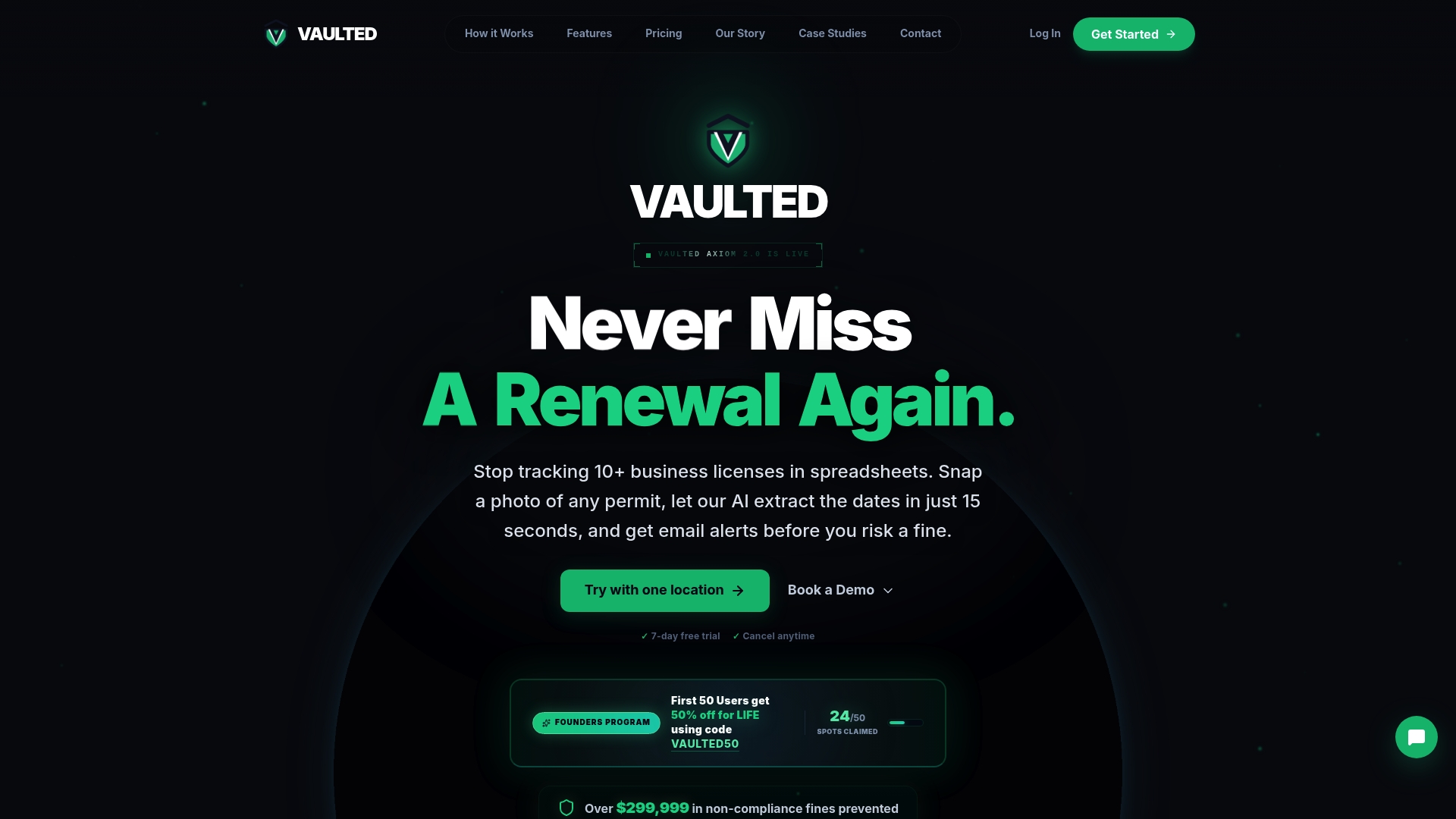
Website currently returns internal errors and missing pages, preventing access to feature lists and pricing. This review notes that the site lists 404 pages for features, integrations, products, and use cases. Vaultedai targets multi-location businesses that have outgrown spreadsheets and manual tracking systems.
Core Features
Vaultedai centralizes permits, licenses, renewals, and compliance documents across all locations in one place. The platform emphasizes fast onboarding, simple workflows, and clearer operational visibility as businesses scale. These capabilities aim to reduce missed deadlines and consolidate compliance documents for franchises, restaurant groups, convenience stores, and similar operators.
Key Differentiator
The single most specific focus is multi-location compliance. Vaultedai emphasizes location-level tracking and a centralized document repository for permits and renewals. That focus suits operators who need a single source of truth across many sites rather than per-location spreadsheets.
Pros
Centralizing permits and renewals reduces the number of separate tracking spreadsheets and paper files. Fast onboarding and simple workflow design help teams migrate away from manual systems with less training time. The vendor frames the platform toward growing businesses such as smoke shop groups, restaurant operators, convenience stores, and franchise owners, which clarifies the intended customer profile.
Cons
- Website errors prevent independent verification of features, pricing, and operational stability; this raises questions about availability and support.
Who It's For
Business owners and compliance decision-makers running multiple locations who need a single place for permits and renewal reminders. Operators with franchise networks, multiunit restaurants, or retail groups will find the stated focus relevant. Teams still using spreadsheets or manual calendars should consider a centralized tool once the product details are available.
Unique Value Proposition
Centralizing permits, licenses, and renewals across locations removes duplicated tracking and reduces missed deadlines. That consolidation converts distributed compliance data into a single operational view for managers and regional operators. For teams that lose visibility as they scale, the central repository could justify switching from spreadsheet-based tracking.
Real World Use Case
A multiunit restaurant operator would upload location permits and license scans into one repository and assign renewal owners by location. The platform holds renewal dates and documents together and gives regional managers a clear audit trail. That setup reduces the risk of a single location missing a deadline because central visibility points out soon-to-expire items.
Pricing
Pricing is not published on the site. The product data lists pricing as not applicable and informational only, and no public tiers appear due to the site errors. Contact with the vendor or a working product page is required to get current pricing and plan details.
Website: https://vaultedai.app
Copliancy
At a Glance
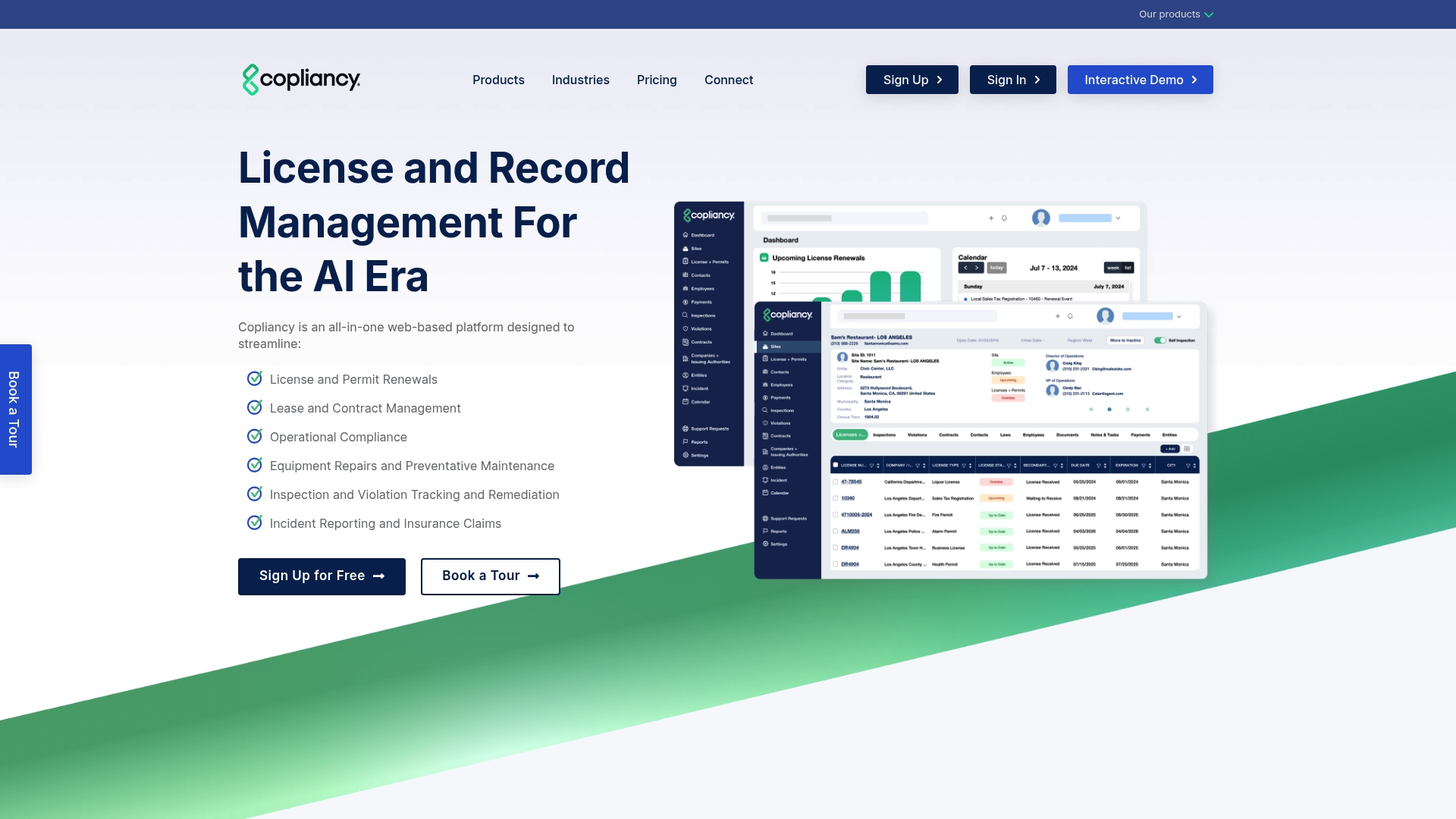
Starts at $59 per site monthly for the Pro plan. The vendor states the platform uses AI to automate licensing, permit renewals, contract alerts, inspections, and employee training. That positioning targets teams juggling permits and documentation across multiple locations.
Core Features
Copliancy bundles license and permit renewal tracking with automation and offers employee compliance and training modules. It also includes contract document management, inspection scheduling, incident logging, and a law reference database. Customizable workflows and role dashboards let teams assign tasks, set renewal alerts, and produce reports.
Key Differentiator
The vendor emphasizes AI-powered automation to reduce manual work across licensing, inspections, and training. That automation claim aims to cut repetitive data entry and keep renewal dates in one view. For multi-location operators, the promise is fewer missed deadlines and clearer task ownership.
Pros
The feature set covers licensing, documents, training, inspections, and incident reporting in one product, which reduces the number of separate tools your operations team must manage. Automation and AI features aim to remove manual renewal tracking and alert fatigue, so your compliance calendar stays current. Custom workflows and report exports let you match internal processes without heavy configuration work.
Cons
- Pricing details for enterprise plans require direct inquiry, which slows procurement for large organizations.
- The product does not list third-party integrations publicly, which may block connections to payroll or HR systems.
- The website does not publish clear information about data security and privacy measures, which raises questions for regulated industries.
- Limited independent user reviews are available, so real-world reliability and support responsiveness are hard to verify.
When It May Not Fit
If your stack depends on published connectors to payroll, HR, or GIS systems, Copliancy may be a poor match because integrations are not listed. If you must show vendor security certifications to legal or security teams, the lack of public security detail will create friction. Enterprises that require validated customer references may find the sparse independent reviews a barrier.
Who It's For
Mid-sized to large organizations that need integrated license, training, and incident records across multiple locations will find Copliancy relevant. Operators in retail, hospitality, manufacturing, and healthcare who want a single place for renewals and inspections will match the product profile. Teams that prefer vendor-assisted onboarding and custom workflows will get the most value.
Real World Use Case
A nationwide retail chain uses Copliancy to automate license renewals, track employee certifications, and log compliance incidents. The chain sets renewal alerts per state and assigns local managers tasks through role dashboards. That setup reduces missed renewals and centralizes audit-ready records.
Pricing
The Pro plan starts at $59 per site monthly. Enterprise pricing and volume discounts are available on request and require direct sales engagement. The vendor handles custom licensing for larger deployments.
Website: https://copliancy.com
InstaPermit
At a Glance
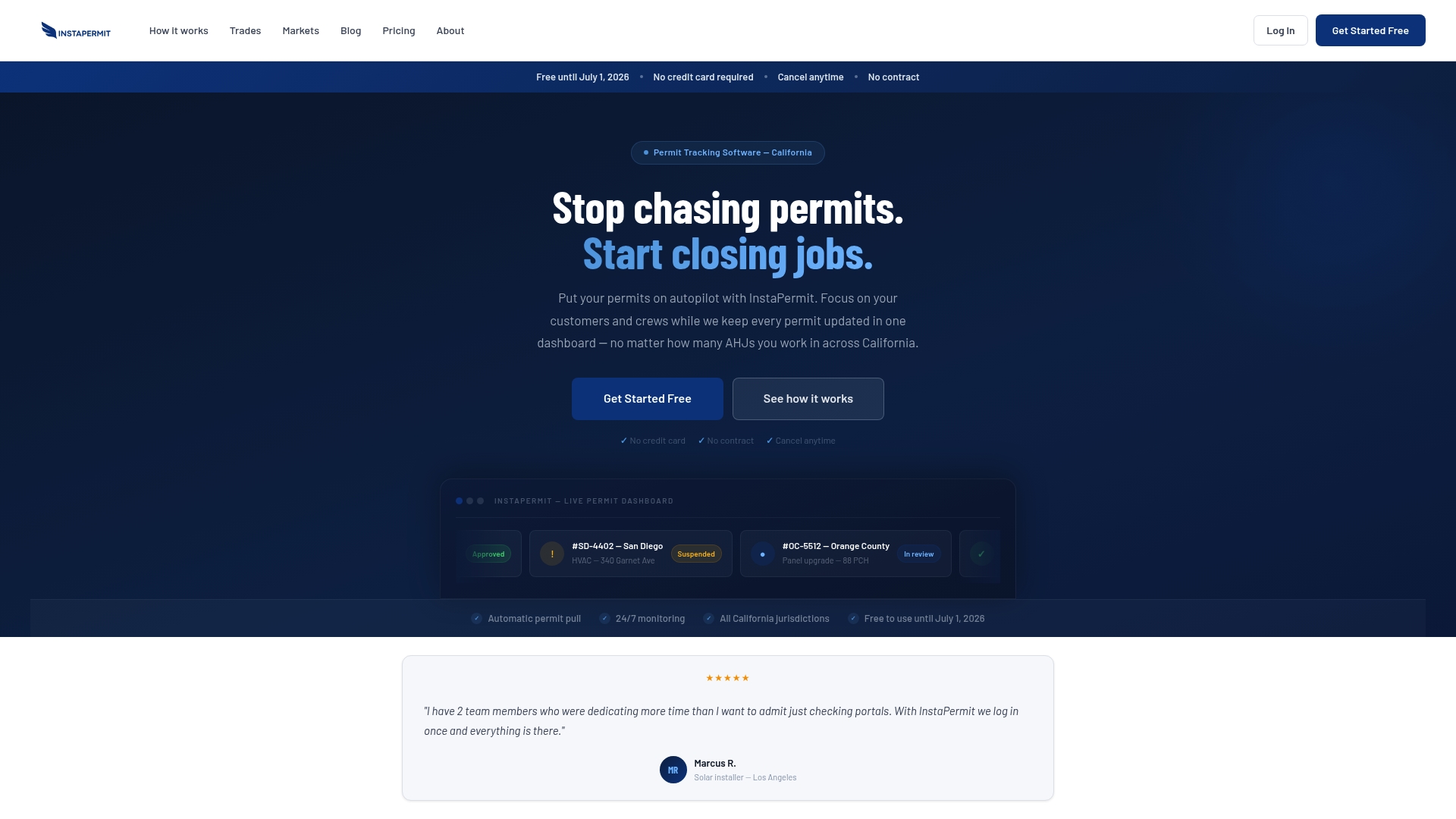
Automatically pulls permits and monitors status changes across major California jurisdictions with no manual input. According to the company, the service is free to use until July 1, 2026. The product focuses on trades such as solar, electrical, HVAC, and plumbing and covers Los Angeles, San Diego, Orange County, Bay Area, Sacramento, and Fresno.
Core Features
InstaPermit connects to government portals to pull permits automatically and monitors status updates 24/7, presenting everything in a single dashboard. The platform issues alerts for corrections and suspensions and supports multiple permits across multiple jurisdictions in California. Setup does not require manual permit number entry for supported portals.
Key Differentiator
The platform’s standout capability is that it automatically pulls and tracks permit statuses across all major California jurisdictions with no manual input. That design reduces the need for repeated portal logins and manual status checks. This focus on statewide permit extraction narrows its scope to California trades.
Pros
InstaPermit reports an average 80% time savings for teams that replace manual portal checks. That claim suggests field staff and office teams spend far less time chasing permit updates. The product supports all common permit types for solar, electrical, HVAC, and plumbing in major California markets, and setup avoids manual permit number entry for supported jurisdictions. The current free access window removes onboarding cost for small teams through the trial period.
Cons
- Limited to California jurisdictions, so contractors operating outside the state will need a different tool.
- Depends on portals that support automated login; some jurisdictions may have delays or require manual input if not supported yet.
- Larger teams may face a learning curve when organizing many permits and locations in one account.
When It May Not Fit
If your company works nationally, InstaPermit’s California focus makes it a poor match. If key jurisdictions refuse automated login or change portal rules often, you may still need manual checks. Teams that require integrated time tracking, advanced reporting beyond permit status, or multi state coverage should look elsewhere.
Who It's For
California based contractors in solar, electrical, HVAC, or plumbing trades who manage multiple permits and jurisdictions will get the most value. Office managers who currently assign staff to portal checks will see the biggest operational relief. Small teams testing automated permit tracking during the free period will find the product low risk.
Real World Use Case
A solar installation company used InstaPermit to auto track permit approvals across several cities, eliminating much of its portal follow up. The vendor reports the company cut permit follow up time by about 80 percent. That figure freed schedulers to focus on installations rather than checking portals.
Pricing
The vendor lists plans starting at $99/month for small teams and offers custom enterprise pricing for larger operations. Access is free until July 1, 2026, under the company’s current offer.
Website: https://instapermit.com
EntityKeeper
At a Glance
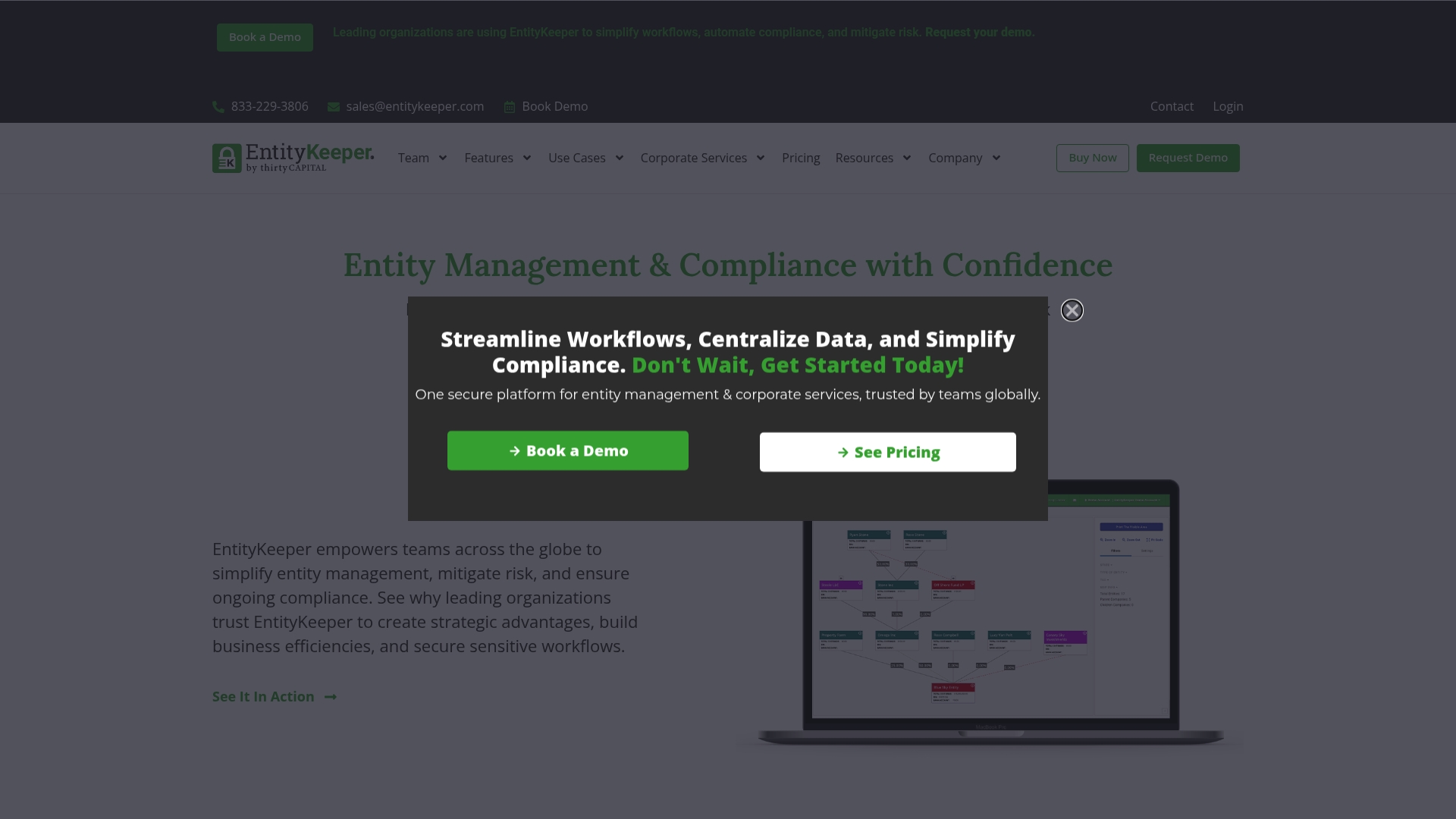
Starting at $465 per month for up to 100 entities is the most concrete published detail. EntityKeeper targets organizations that need a single place to centralize entity records, filing dates, and legal documents. The platform pairs document storage with visualization tools to make ownership and governance easier to follow.
Core Features
EntityKeeper centralizes entity records, legal documents, and ownership structures while tracking filing deadlines and tasks. The platform includes an org chart builder that maps complex ownership and control relationships, and it provides role based permissions so teams see only the data they need. Corporate services such as filings, registered agent support, and document retrieval sit alongside automation for routine notices and reporting.
Key Differentiator
EntityKeeper combines entity management, compliance tracking, legal document handling, and organizational visualization in one product. The combination of an org chart builder with ownership structure management makes it useful for groups with layered ownership or investor networks. The vendor emphasizes automation and security as part of that unified workflow.
Pros
EntityKeeper consolidates entity records and compliance deadlines into a single source of truth, which reduces duplicate files and missed renewals. Automation cuts repetitive manual tasks and creates consistent notifications for filings and tasks, and that helps teams spread work across in house and external counsel. Integration options for Box, Dropbox, Google Drive, and OneDrive let you keep existing document libraries while migrating index and metadata into the platform.
Cons
- Initial setup can be time consuming for complex organizations. Training and data mapping require dedicated attention.
- Pricing starts at $465 per month, and custom enterprise plans can raise costs for smaller teams. This may make the service expensive for groups with only a handful of entities.
- The feature set can feel heavier than needed for organizations managing fewer than 10 entities. Smaller teams may not use the org chart and governance features.
When It May Not Fit
Organizations that only need a lightweight calendar for renewals will find EntityKeeper more than they need. Small companies with under 10 entities may pay for capabilities they never use, and the platform requires setup time for nested ownership and complex corporate structures. Likewise, buyers who need a pure filings tool without visualization and document management will find the product broader than necessary.
Notable Integrations
EntityKeeper connects to common storage and property platforms. Core integrations include:
- Box
- Dropbox
- Google Drive
- OneDrive
- LobbyCRE
Who It's For
Growing companies, large organizations, and global teams that manage multiple entities across jurisdictions will get the most value. Legal operations teams, corporate secretaries, and in house counsel who must track ownership and filings across jurisdictions benefit from the visualization and permission controls. Teams with existing cloud storage will appreciate the built in connectors.
Real World Use Case
A multinational corporation centralizes its entity registry and legal documents in EntityKeeper, and it maps a layered ownership structure with the org chart builder. The compliance calendar pushes notifications to local managers, and the legal team pulls jurisdictional filings and document history from a single index when preparing audits or investor reports.
Pricing
Pricing starts at $465 per month for up to 100 entities, and the vendor offers custom pricing for larger organizations and enterprise plans. Prospective buyers should factor setup and training costs into their first year budgeting.
Website: https://entitykeeper.com
Comparison of alternatives
Vaultedai uniquely emphasizes centralized compliance tracking tailored for multi-location establishments. This analysis examines its strengths and tradeoffs relative to Copliancy, InstaPermit, and EntityKeeper, each targeting distinct user needs.
Multi-location compliance versus AI automation
Vaultedai excels in consolidating compliance data across multiple locations, providing a single source for teams managing permits and renewals for chain businesses. Copliancy emphasizes AI automation to reduce repetitive data entry and integrates permit management with employee training. While Copliancy specializes in automation for broad compliance workflows, Vaultedai’s focus on multi-location document management distinctly supports scaling businesses such as franchises and multi-unit operators.
Geographic focus versus scope
InstaPermit provides automation for tracking permits across California jurisdictions, saving contractors substantial time on manual portal checks; however, its scope is geographically limited. Vaultedai supports diverse industries and geographic locations, suiting multi-location operations across regions, though specifics remain unlisted due to website errors. InstaPermit’s standout California features cater to contractors operating within this specialized market niche.
Best fit
- Multi-location franchises needing centralized compliance tracking and permit renewal management for scalable operations will favor Vaultedai.
- Firms that prioritize integration of AI automation for license renewals, inspections, and employee compliance training will value Copliancy.
- California contractors requiring efficient, jurisdiction-specific permit and portal tracking will benefit from InstaPermit’s automation capabilities within the state.
- Organizations managing complex entity ownership structures, legal filings, and governance procedures will match EntityKeeper’s unique offerings.
Our pick
Vaultedai is recommended for growing franchises and multi-location businesses prioritizing compliance centralization across multiple operational sites. Its capacity to consolidate permits, renewals, and compliance data ensures streamlined workflows and improved oversight as organizations scale their footprint. Nevertheless, those requiring state-specific tracking or AI-supported compliance may explore InstaPermit or Copliancy for specialized features.
Comparing solutions for centralizing location compliance management provides businesses with tools tailored to their needs.
| Product | Key Features | Intended Users | Pricing | Limitation |
|---|---|---|---|---|
| Vaultedai | Centralized permits, licenses, and renewals for multi-location businesses | Multi-location businesses using manual systems | Price not published | Website errors limit verification of features and stability |
| Copliancy | Licensed and training management with AI-powered task automation | Mid-sized to large organizations | $59/site monthly | Lacks publishing of third-party integrations and detailed security measures |
| InstaPermit | Automatic permit tracking for California jurisdictions | California-based service trades | Free until 2026; $99 | Limited functionality outside California and relies on supported portals |
| EntityKeeper | Centralized entity management and compliance tracking with robust features | Mid-to-large organizations | $465/month for 100 entities | High setup time and cost for small entities |
When Multi-Location Compliance Gets Complex, What Options Help Beyond harborcompliance.com Alternatives?
Running multiple locations brings compliance tracking challenges. Many teams feel overwhelmed by spreadsheets and manual permit monitoring. Vaultedai meets these needs by centralizing permits, licenses, and renewals across all your sites in one organized place. The platform simplifies workflows and improves visibility to reduce missed deadlines.
Vaultedai fits multi-location operators like franchise owners, restaurant groups, and convenience store chains that want fast onboarding and clearer compliance control. If you seek alternatives to harborcompliance.com that focus on operational clarity and simple workflows, Vaultedai delivers a targeted solution.
Explore what Vaultedai offers and experience how consolidating your compliance documents can reduce hassle. See your compliance status across locations and assign renewal ownership with ease.
FAQ
What unique features does Vaultedai offer for multi-location businesses?
Vaultedai centralizes permits, licenses, and compliance documents for multi-location businesses in one place. This capability helps operators manage renewals and operational visibility as they scale, reducing missed deadlines. Business owners can expect a simplified management experience across all locations.
How does Copliancy compare to Vaultedai in terms of automation?
Copliancy emphasizes AI-powered automation to reduce manual work, making it suitable for teams managing various compliance tasks. In contrast, Vaultedai focuses specifically on the centralized management of permits and renewals across locations. For businesses primarily dealing with multi-location compliance, Vaultedai provides a more fitting solution.
Which platform is better for small teams needing quick onboarding, Vaultedai or Copliancy?
Vaultedai offers fast onboarding and simple workflows that help teams migrate from manual systems with minimal training time. While Copliancy has robust features, its complexity may not suit smaller teams needing immediate, straightforward setups. Teams requiring swift user adoption should consider Vaultedai as the optimal choice.
What concerns might users have about data security when choosing between these platforms?
Some users may worry about the lack of public security details on platforms like Copliancy, which can be challenging for regulated industries. Vaultedai, while also not elaborating, may serve as a lower-commitment starting point for users focused on centralizing compliance management.
Is Vaultedai suitable for businesses on a tight budget?
Vaultedai offers a single source of truth for compliance needs, which can help streamline operations and reduce costs associated with misplaced documents. However, specific pricing information is not available, so businesses should assess their budget against the features they require.