

A special event permit is the official legal authorization required to organize any event that affects public property, involves street closures, or includes activities like amplified sound, food vending, or large crowd gatherings. Without it, your event is not just unorganized. It is illegal. Cities from Miami to Seattle require this permit before a single tent stake hits the ground, and the consequences of skipping it range from fines to forced shutdowns. If you plan events for a living, or manage a business that hosts them, understanding this process is non-negotiable.
What is a special event permit and when do you need one?
A special event permit is a city-required authorization for events of limited duration that use public or private property governed by local code. The City of Miami, for example, defines it as the permit required for events using public parks, rights-of-way, or private property under specific code sections. That definition is broad by design because the permit covers an equally broad range of event types.
Parades, outdoor concerts, street festivals, charity runs, farmers markets, and block parties all fall under this category. So do corporate product launches held in public plazas, food truck rallies, and community fairs. The common thread is impact: any event that changes how a public or regulated space is used typically requires formal authorization.
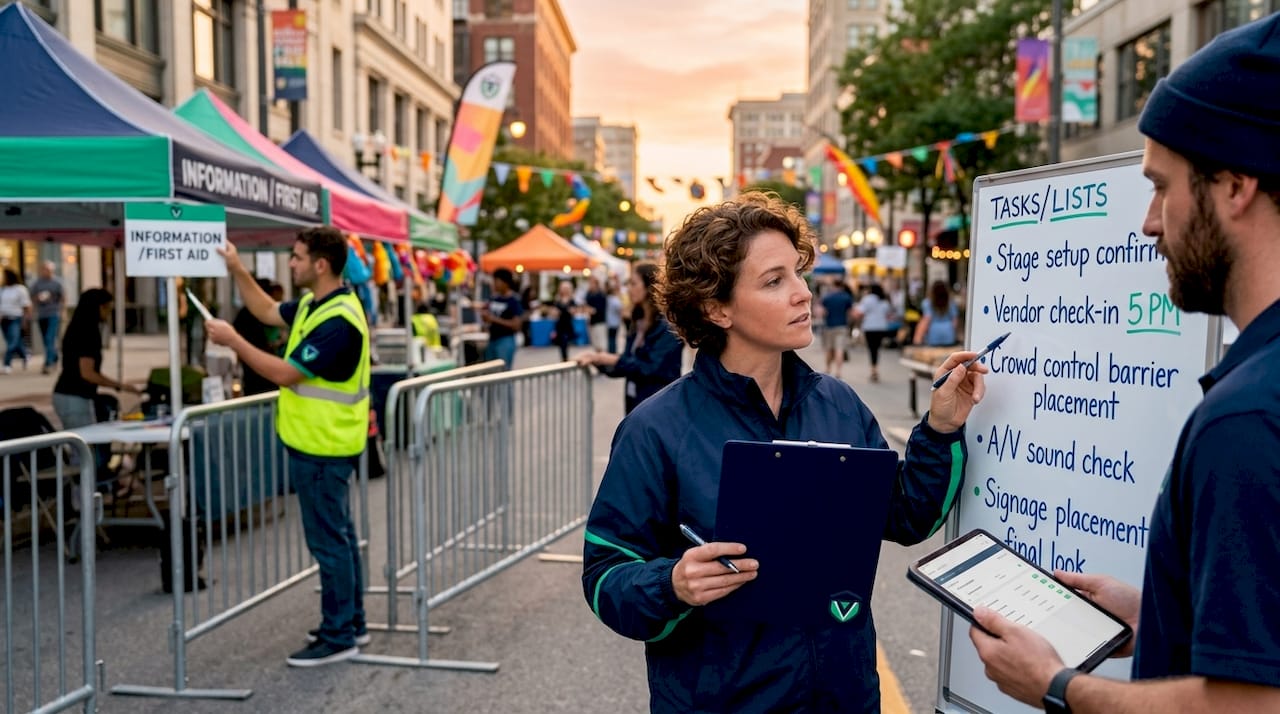
The permit serves three core functions. First, it confirms the event is legal. Second, it coordinates city departments like police, fire, and public works so they can prepare. Third, it protects attendees by requiring safety and emergency planning before the event date. Think of it as the city's way of saying, "We know this is happening, we've reviewed the plan, and we've assigned resources accordingly."
What conditions trigger a special event permit requirement?
Common triggers include use of public property such as parks, streets, or sidewalks; road or lane closures; amplified sound; food or merchandise vending; open flames or cooking equipment; temporary structures like tents or stages; and crowd sizes that exceed local thresholds. Fort Myers and Madison both illustrate that even a single food truck at a public gathering can push an event into permit territory.
Crowd size thresholds vary significantly by city. Some jurisdictions set the bar at 75 attendees. Others use 250 as the trigger point. A few cities apply permit requirements to any organized public gathering regardless of size. This variability is the reason you cannot rely on rules from one city when planning an event in another.
Here is a quick reference for common permit triggers:
- Use of any public park, plaza, or right-of-way
- Street or sidewalk closures, even partial lane blockages
- Amplified music or public address systems
- Food vending, alcohol sales, or merchandise booths
- Tents, stages, bleachers, or temporary fencing
- Open flames, grills, or cooking equipment
- Crowd size exceeding local thresholds (typically 75 to 250+ attendees)
- Fireworks, pyrotechnics, or special effects
Pro Tip: Check your specific city's threshold before assuming your event is small enough to skip the permit. A 100-person corporate picnic in a public park almost certainly requires one, even if it feels informal.
How to apply for a special event permit
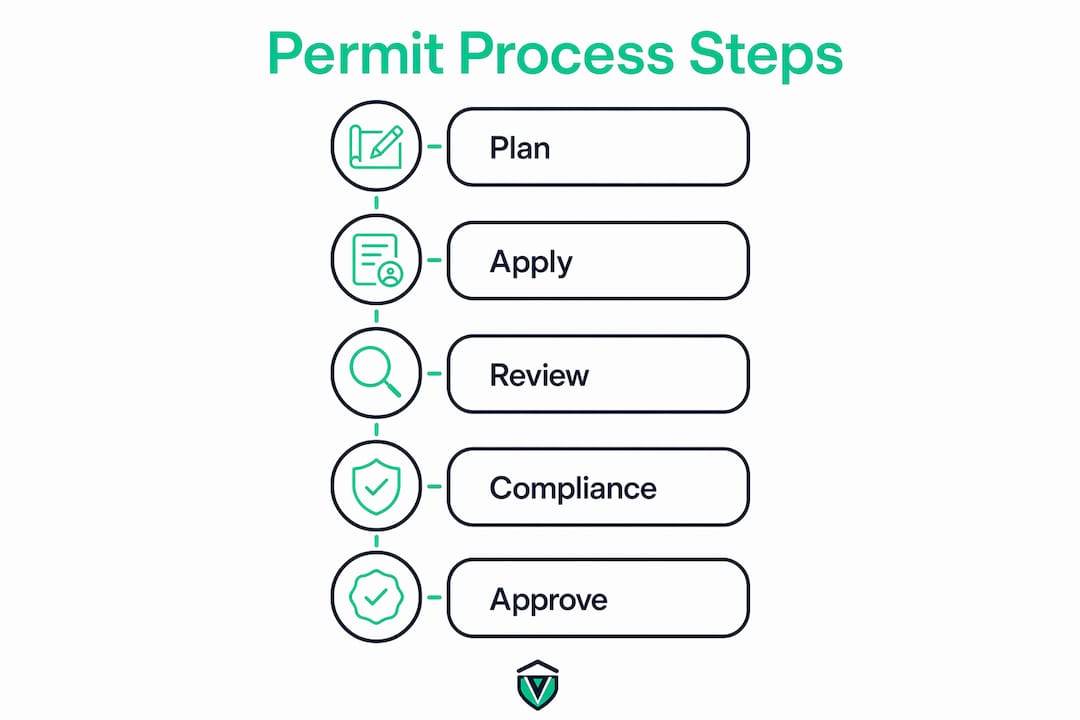
The special event permit process follows a predictable structure across most U.S. cities, though the details differ by jurisdiction. Start earlier than you think you need to. Seattle requires applications 90 days in advance. Boise requires 60 days. Reno operates on a 90-day timeline with scheduled review committees. Missing these windows does not just create delays. It can result in late fees or outright rejection.
Here is the standard application process:
- Identify your permitting authority. Most cities route special event applications through a parks department, city clerk, or dedicated events office. Some cities use online portals; others require in-person submissions.
- Gather required documentation. Typical requirements include a detailed site layout map, a public safety and emergency plan scaled to your crowd size, proof of general liability insurance, vendor lists, and a non-refundable application fee.
- Submit the application. Online portals like those used by Seattle and San Francisco allow digital submission. Smaller cities may still require paper forms or in-person appointments.
- Attend review meetings if required. Cities like Reno and Jersey City use multi-agency review committees that may request follow-up meetings before issuing approval.
- Secure additional permits. Depending on your event, you may need separate permits for alcohol sales, food handling, temporary structures, or street closures. These often run parallel to your main application.
- Receive conditional or final approval. Many cities issue conditional approvals requiring you to submit final insurance certificates or updated site plans before the permit is officially granted.
Pro Tip: Submit your detailed event layout and safety plans in their most legible, complete form on the first submission. Reviewers who receive incomplete plans generate correction requests that add weeks to your timeline.
If your event involves food vendors, you will also want to review health department permit types that apply alongside your special event authorization.
What fees, approvals, and conditions are typically involved?
Fees follow a two-layer structure in most cities. The first layer is a non-refundable application fee paid at submission. The second layer covers cost recovery for actual city services used during your event.
Madison charges a $60 application fee plus additional cost recovery charges. Spokane uses a cost-recovery model where the event organizer pays for actual city services incurred, including police, fire, traffic control, cleanup, and equipment. These variable costs can range from a few hundred dollars to tens of thousands for large events. Nonprofits sometimes qualify for fee waivers or caps, but this varies by city.
Here is a comparison of common fee and approval components:
| Component | What to expect |
|---|---|
| Application fee | Non-refundable; typically $25 to $150 depending on city |
| City service recovery | Variable; based on actual police, fire, and cleanup costs |
| Insurance requirement | General liability coverage, often $1 million per occurrence minimum |
| Multi-department review | Police, fire, parks, and public works all may weigh in |
| Conditional approval | Common; final permit issued after insurance and plans are confirmed |
Beyond fees, approval conditions typically include specific insurance requirements. Insurance certificates must match exact coverage language and coverage periods specified by the city. A certificate that covers the wrong dates or omits the city as an additional insured is one of the most common reasons permit approvals stall.
Types of special event permits and how they differ
Not all special event permits are the same document. Park event permits, street use permits, and temporary outdoor activity permits are the three most common categories, and they differ based on venue type and event activities.
Park event permits cover gatherings held in city parks. These typically have crowd-size thresholds that determine fee tiers and required documentation. A 50-person birthday party in a park pavilion may require a simple reservation permit. A 500-person festival in the same park triggers a full special event permit with safety plans and insurance.
Street use permits apply when your event affects roads, sidewalks, parking spaces, or traffic flow. Block parties, parades, and road races fall here. These permits require coordination with the city's traffic engineering department and often the police department for traffic control.
Temporary use permits cover events on private property involving temporary structures or activities not normally associated with that property's zoning. A pop-up market in a parking lot or a concert on a private field typically requires this type. For more detail on this category, the guide on temporary use permits covers the specifics.
Additional specialized permits that often layer on top of the base permit include:
- Alcohol sales permits issued through the state liquor authority or ABC board
- Food vendor permits or temporary food establishment licenses from the health department
- Amplified sound permits in noise-sensitive zones or after certain hours
- Pyrotechnics permits for fireworks or special effects, typically issued by the fire marshal
Each of these may have its own application timeline and fee, which is why experienced event planners treat the special event permit as the anchor document and build all other permit applications around it.
Common challenges and tips for managing the permit process
The most expensive mistake in special event permitting is late submission. Document turnaround times are critical: waiting to finalize insurance or emergency plans close to the event date triggers late fees or denial. A 90-day lead time sounds generous until you factor in the time needed to get insurance quotes, finalize your vendor list, and produce a legible site map.
Here are the most common challenges and how to address them:
- Incomplete applications. Reviewers return incomplete submissions, which resets your timeline. Build a checklist from your city's official requirements and check every item before submitting.
- Insurance mismatches. The city's required coverage language is specific. Confirm the exact wording with your insurer before the certificate is issued, not after.
- Underestimating city service costs. Cities using cost-recovery models bill for actual services used. Budget a contingency of 20 to 30 percent above your initial estimate for police, fire, and cleanup costs.
- Missing secondary permits. A food vendor at your event needs a temporary food establishment permit. Alcohol service needs a liquor license. Missing these creates compliance gaps even if your main permit is approved.
- Operating without a permit. A Nevada County enforcement case resulted in a compliance investigation ordering an event venue to apply for proper permits or face further penalties. The cost of retroactive compliance far exceeds the cost of applying correctly the first time.
Pro Tip: Call the permitting office before you submit. A five-minute conversation with a permit coordinator often surfaces jurisdiction-specific requirements that are not listed on the official website, saving you a correction cycle.
Because requirements vary locally and depend on event-specific impacts, the most reliable starting point is always your jurisdiction's official special event permit checklist.
Key takeaways
A special event permit is the legal foundation of any organized public event, and securing it early with complete documentation is the single most effective way to avoid delays, fines, and last-minute cancellations.
| Point | Details |
|---|---|
| Definition and scope | A special event permit authorizes events using public or regulated private spaces under local code. |
| Application lead time | Submit 60 to 90 days in advance; cities like Seattle and Reno enforce strict timelines. |
| Documentation requirements | Site maps, safety plans, insurance certificates, and vendor lists are standard requirements. |
| Fee structure | Expect a non-refundable application fee plus variable cost-recovery charges for city services. |
| Permit types | Park, street use, and temporary use permits differ by venue; alcohol and food permits often layer on top. |
What I've learned from watching planners get this wrong
Most permit problems I've seen are not caused by bad intentions. They are caused by underestimating how much coordination this process actually requires. Event planners who treat the permit application as a formality to handle two weeks out almost always end up in a scramble. The ones who treat it as the first item on the project plan consistently have smoother events.
The permit is not just paperwork. It is the document that forces you to answer hard questions early: Where exactly will the stage go? What happens if someone has a medical emergency? Who is responsible for cleanup? Answering those questions in a permit application is genuinely useful, not just bureaucratic box-checking.
One thing that surprises planners is how much the quality of your submitted materials affects the speed of approval. A hand-drawn site map on a napkin and a professionally drafted layout of the same venue will generate very different responses from a review committee. Reviewers approve what they can clearly understand. Legibility is a competitive advantage in the permitting process.
The other underrated factor is the relationship with the permitting office itself. Cities that run scheduled review committees, like Reno and Jersey City, give you a real opportunity to present your event and address concerns in real time. Planners who show up prepared and responsive to questions get faster approvals than those who submit and disappear.
Finally, budget for the unexpected. Cost-recovery fees are variable by definition. A city that bills you for actual police hours cannot give you a firm number until the event is over. Build that flexibility into your event budget from day one, not as an afterthought.
— Rakin
Manage your event permits without the chaos
Running events across multiple locations means juggling permit deadlines, insurance renewals, and compliance documents that pile up fast. Vaultedai is built for exactly this situation.
With Vaultedai, you centralize every permit, license, and compliance document in one place. Automated reminders flag upcoming application deadlines before the 60 or 90-day windows close. Your team gets full visibility into which permits are active, pending, or expiring across every location. For event planners and multi-location operators who have outgrown spreadsheets, Vaultedai turns permit management from a recurring fire drill into a controlled, trackable workflow. Start managing permits before the next deadline sneaks up on you.
FAQ
What is a special event permit used for?
A special event permit authorizes events that use public property, close streets, involve vending or amplified sound, or exceed local crowd-size thresholds. It coordinates city departments and confirms the event meets local safety and regulatory requirements.
How far in advance should I apply for a special event permit?
Most cities require applications 60 to 90 days before the event date. Seattle and Reno both enforce 90-day lead times, and late submissions can result in fees or denial.
How much does a special event permit cost?
The cost of a special event permit includes a non-refundable application fee, typically between $25 and $150, plus variable cost-recovery charges for city services like police, fire, and cleanup. Large events in cities using cost-recovery models can face significantly higher total costs.
What happens if you hold an event without a permit?
Operating without a required permit can trigger enforcement actions, fines, and orders to obtain retroactive permitting. A Nevada County case resulted in a compliance investigation requiring an event venue to apply for proper permits or face further penalties.
Do I need separate permits for food vendors or alcohol at my event?
Yes. Food vendors typically require a temporary food establishment license from the health department, and alcohol sales require a separate liquor permit from the state authority. These run parallel to your main special event permit and have their own timelines and fees.