
Business inspection certificates are official documents that verify a business, product, or property meets specific regulatory standards or contractual requirements. Every business owner managing multiple locations needs to understand the different types of business inspection certificates because gaps in compliance can trigger fines, shipment holds, or forced closures. These certificates span building safety, product testing, environmental compliance, and international trade. The right certificate depends on your industry, jurisdiction, and whether the requirement comes from a regulator or a contract.
What are the main types of business inspection certificates?
Business inspection certificates divide into two broad categories: official certificates and commercial certificates. Official certificates are issued or mandated by government agencies and regulatory bodies. Commercial certificates are triggered by contractual agreements, such as Letters of Credit or buyer specifications, rather than law.
Within those two categories, the most common certificate types include:
- Certificate of Occupancy (CO): Issued by local building departments, this confirms a structure is safe for its intended use. Restaurants, retail stores, and warehouses all require one before opening.
- Electrical Compliance Certificate: Required after electrical installation or modification work, confirming the work meets local wiring standards.
- Certificate of Conformity (CoC): Confirms a product meets the technical standards of the destination market. Common in manufacturing and import/export.
- Pre-Shipment Inspection Certificate: Issued after a third-party inspector verifies goods before they leave the country of origin.
- Phytosanitary Certificate: Required for agricultural products crossing borders, confirming the goods are free from pests and disease.
- Health Certificate: Required for food, beverage, and pharmaceutical products, confirming they meet health and safety standards.
- ISO Certification: Issued by accredited bodies confirming a business or lab meets International Organization for Standardization management or quality standards.
- Factory Audit Certificate: Documents a third-party review of a manufacturer's processes, quality controls, and working conditions.
- Environmental Compliance Certificate: Confirms a business meets emissions, waste disposal, or environmental impact standards set by local or federal agencies.
Inspection certificates fall into categories such as pre-shipment inspection, certificate of conformity, phytosanitary certificates, and health certificates, each serving distinct trade and compliance purposes. Matching the right certificate to the right transaction is not optional. A missing phytosanitary certificate, for example, can result in an entire shipment being quarantined at the port of entry.
Pro Tip: Build a certificate matrix for your business. List every location, every product category, and every market you sell into. Map the required certificate type to each combination. This single document will prevent most compliance gaps before they happen.

How industry and jurisdiction shape inspection certificate requirements
No two jurisdictions apply the same rules. The certificate requirements for a convenience store in Texas differ from those for a franchise restaurant in California or an electrical contractor in New South Wales. Business owners who assume one set of rules applies everywhere face the most expensive surprises.
Electrical compliance is a clear example. From july 1, 2026, the NSW government mandates all Certificates of Compliance for Electrical Work be submitted via an online portal, with fines up to $1,000 per occurrence for noncompliance. Submission must occur within 7 days of completing the work. That deadline and penalty structure does not exist in most U.S. states, where paper submission is still accepted.
California takes a different approach to vehicle-related compliance. The state issues electronic vehicle safety certificates for a flat fee of $7.00 through the Bureau of Automotive Repair Safety Inspection System, replacing older paper-based brake and light certificates. The shift to electronic issuance is faster and harder to falsify.
Contractual obligations add another layer of complexity. Inspection certificates are often triggered through Letters of Credit or specific import regulations, not uniformly required for all shipments. Mandatory pre-shipment inspection programs are especially prevalent in African and Middle Eastern markets. A business exporting to Nigeria or Saudi Arabia may face pre-shipment requirements that simply do not apply to shipments headed to Canada.
For multi-location operators, the compliance challenges across jurisdictions compound quickly. Each new location adds a new regulatory environment with its own certificate types, deadlines, and submission methods.
What verification and validation processes ensure certificate reliability?
A certificate is only as good as the body that issued it. Fraud in inspection certificates is a real risk, particularly in international trade, where altered test results and counterfeit conformity documents have caused product recalls and customs seizures.
Certificate verification involves validating the issuing authority, accreditation status, certificate number, and inspection results with the respective issuing body or its online portal. The process is straightforward but often skipped under time pressure. Skipping it is where costly mistakes happen.
A reliable verification process follows these steps:
- Confirm the issuing body's accreditation. For product testing certificates, verify the laboratory holds ISO 17025 accreditation. ISO 17025 is the international standard for testing and calibration laboratories. Without it, test results may not be recognized at borders or by regulators.
- Cross-check the certificate number. Most issuing bodies maintain searchable online registries. Enter the certificate number directly into the issuer's portal to confirm it is genuine and has not been revoked.
- Verify the scope of the certificate. A certificate issued for one product model does not automatically cover a revised version. Confirm the certificate scope matches the exact product or work being certified.
- Check expiration dates. Certificates have validity periods. An expired certificate is legally equivalent to no certificate in most jurisdictions.
- Confirm the inspector's credentials. Virtual and digital site inspections require credentialed inspectors, such as a Professional Engineer or licensed inspector, for the results to carry legal weight.
Pro Tip: When sourcing from new suppliers, request the full test report, not just the certificate summary. The full report shows which specific tests were conducted, the pass/fail margins, and the lab's accreditation number. A certificate without a traceable test report is a red flag.
Inspections and audits are not the same thing. Inspections are targeted checks focused on product or work conformity, while audits evaluate entire management systems for systemic improvements. Knowing the difference helps you request the right document from the right party.
Practical certificate management for multi-location businesses
Managing inspection certificates across multiple locations is a tracking problem as much as a compliance problem. The businesses that struggle most are those relying on email threads and spreadsheets to monitor renewal dates, submission deadlines, and jurisdiction-specific requirements.
Centralized tracking is the foundation of any working system. Every certificate should be stored in one place with its expiration date, issuing body, location, and next renewal action clearly recorded. Without centralization, a certificate expiring at one location goes unnoticed until an inspector or auditor flags it.
Digital submission is becoming the standard, not the exception. Jurisdictions like NSW and California have already moved to online portals and electronic issuance. Businesses that build digital workflows now will adapt faster as more jurisdictions follow. Paper-based processes create lag time and introduce transcription errors that delay approvals.
For businesses opening new locations, the permit requirements for expansion often trigger a fresh round of inspection certificates. A new restaurant location, for example, may require a new Certificate of Occupancy, a fresh health inspection certificate, and updated electrical compliance documentation before the doors open.
Local expertise matters. A compliance manager in Chicago may not know that a new location in Houston requires a specific fire suppression inspection certificate before the city issues a Certificate of Occupancy. Partnering with local inspectors or compliance consultants familiar with each jurisdiction's rules reduces the risk of missing location-specific requirements.
Project timelines must build buffer periods for certification cycles. Redesign and retesting occur if products fail initial inspections, which can add weeks or months to a launch schedule. Building that buffer into the project plan prevents a failed first inspection from derailing an entire product rollout.
Businesses must carefully match inspection certificate types to specific operational and contractual contexts to avoid compliance gaps. A pre-shipment inspection certificate required by a buyer's Letter of Credit is a different document from a certificate of conformity required by the destination country's customs authority. Conflating the two creates delays at the border.
Key Takeaways
Business inspection certificates are not interchangeable. Each type serves a specific regulatory or contractual function, and using the wrong one creates compliance gaps that cost time and money.
| Point | Details |
|---|---|
| Certificate types vary by function | Official certificates come from regulators; commercial certificates are triggered by contracts like Letters of Credit. |
| Jurisdiction determines requirements | Rules differ by location, from NSW's mandatory online submission to California's electronic vehicle safety certificates. |
| Verification prevents fraud | Always confirm ISO 17025 lab accreditation and cross-check certificate numbers through official issuer portals. |
| Centralized tracking reduces risk | Multi-location businesses need one system to monitor expiration dates, submission deadlines, and renewal actions. |
| Buffer time protects timelines | Failed inspections require retesting, so build extra time into any project that depends on certification approval. |
Why I think most businesses underestimate certificate complexity
Most business owners treat inspection certificates as a one-time checkbox. Get the certificate, file it, move on. That mindset works fine when you operate one location in one jurisdiction. It breaks down fast when you add a second city, a new product line, or an international supplier.
The detail that surprises operators most is how often certificates are contractually triggered rather than legally mandated. A buyer in a new market adds a pre-shipment inspection requirement to a purchase order, and suddenly you need a third-party inspector on-site before goods ship. That requirement was not in any regulation. It was in the contract. Missing it means the buyer can reject the shipment or withhold payment under the Letter of Credit terms.
The shift to digital submission is the other underestimated change. Jurisdictions are moving fast. A process that worked on paper last year may now require an online portal submission with a 7-day deadline and a $1,000 fine for noncompliance. Businesses that do not actively monitor regulatory updates in each jurisdiction they operate in will get caught off guard.
My practical advice: treat certificate management the same way you treat financial reporting. Assign ownership, set calendar reminders well ahead of expiration dates, and review your certificate inventory every quarter. The businesses I have seen handle this well are the ones that built the habit before they needed it.
— Rakin
Vaultedai keeps your inspection certificates organized across every location
Tracking inspection certificates across multiple locations is where manual systems fail. Vaultedai is built for exactly this problem. The platform centralizes all your permits, licenses, and compliance documents in one place, with automated deadline alerts so nothing expires without warning.
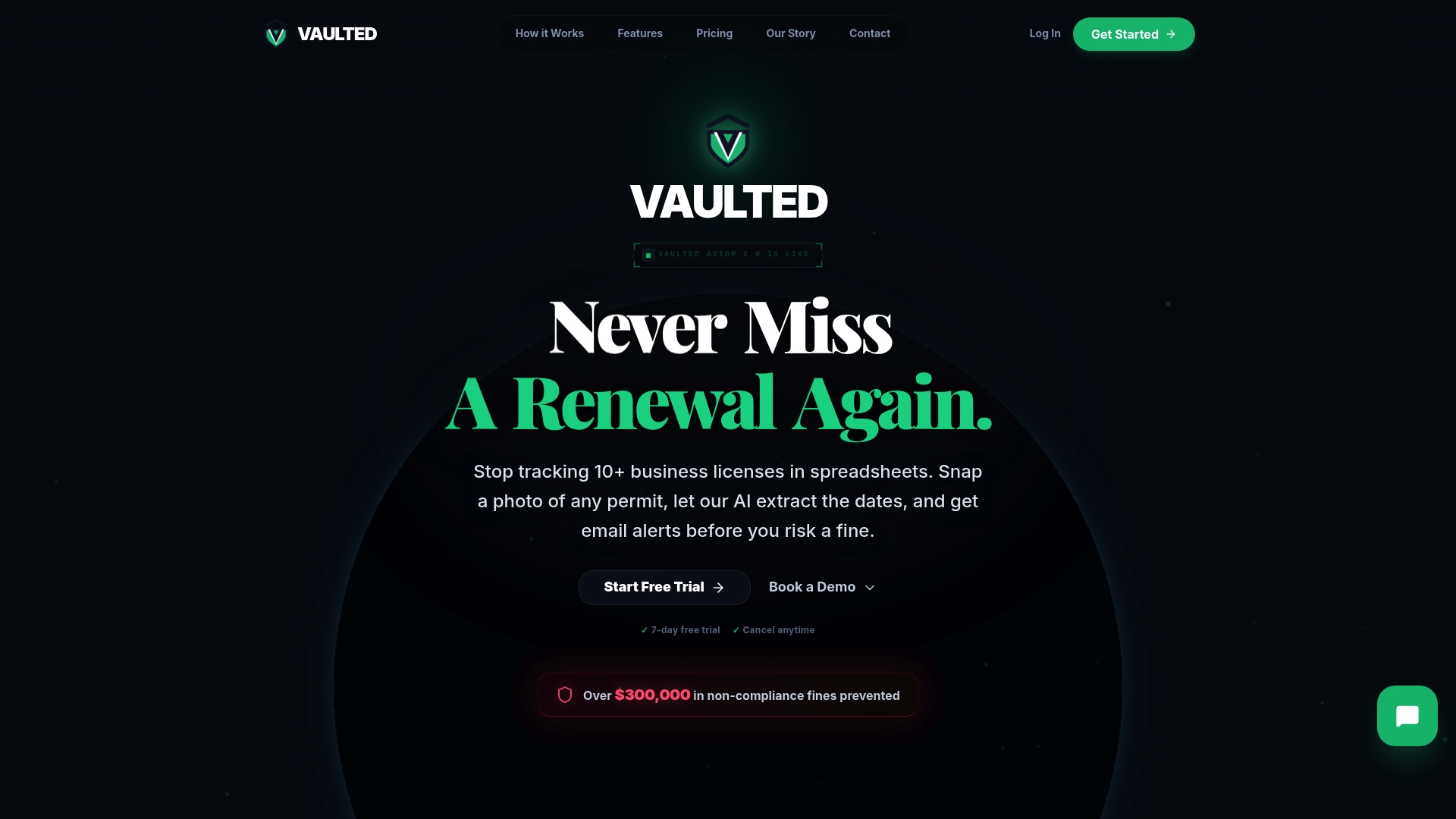
Vaultedai monitors jurisdiction-specific submission requirements and flags upcoming renewal windows before they become emergencies. For restaurant groups, franchise operators, convenience store chains, and smoke shop groups managing locations across multiple states, the AI permit tracker replaces the spreadsheet chaos with a clear, auditable compliance record. If your business has outgrown manual tracking, Vaultedai gives you the visibility to stay ahead of every certificate requirement across every location you operate.
FAQ
What is a business inspection certificate?
A business inspection certificate is an official document confirming that a business, product, property, or shipment meets specific regulatory or contractual standards. Certificates are issued by government agencies, accredited third-party bodies, or authorized inspectors depending on the certificate type.
How do I know which inspection certificates my business needs?
The certificates your business needs depend on your industry, the jurisdictions where you operate, and any contractual requirements from buyers or lenders. A local business license review is a good starting point for identifying location-specific compliance documents.
What is the difference between a certificate of conformity and a pre-shipment inspection certificate?
A certificate of conformity confirms a product meets the technical standards of the destination market. A pre-shipment inspection certificate confirms that goods were physically verified by a third-party inspector before shipment. Both may be required for the same transaction.
How do I verify that an inspection certificate is genuine?
Confirm the issuing body's accreditation, cross-check the certificate number through the issuer's official portal, and verify the certificate scope matches the exact product or work. For product testing certificates, confirm the laboratory holds ISO 17025 accreditation.
What happens if my business misses an inspection certificate deadline?
Penalties vary by jurisdiction. In New South Wales, missing the 7-day submission deadline for an electrical compliance certificate carries a fine of up to $1,000 per occurrence. In trade contexts, a missing certificate can result in shipment rejection or payment withholding under Letter of Credit terms.