
The most effective way to standardize permits across franchise units is to build a centralized, repeatable system that pairs a fixed national baseline with local adaptation modules. That means developing clear standard operating procedures, using pre-formatted permit packages, partnering with permit expeditors who know local authorities, and deploying a technology platform that gives your entire team real-time visibility. Franchises that treat permitting as a production system rather than a location-by-location scramble open faster, spend less on rework, and stay out of regulatory trouble.
Here is what that system looks like in practice:
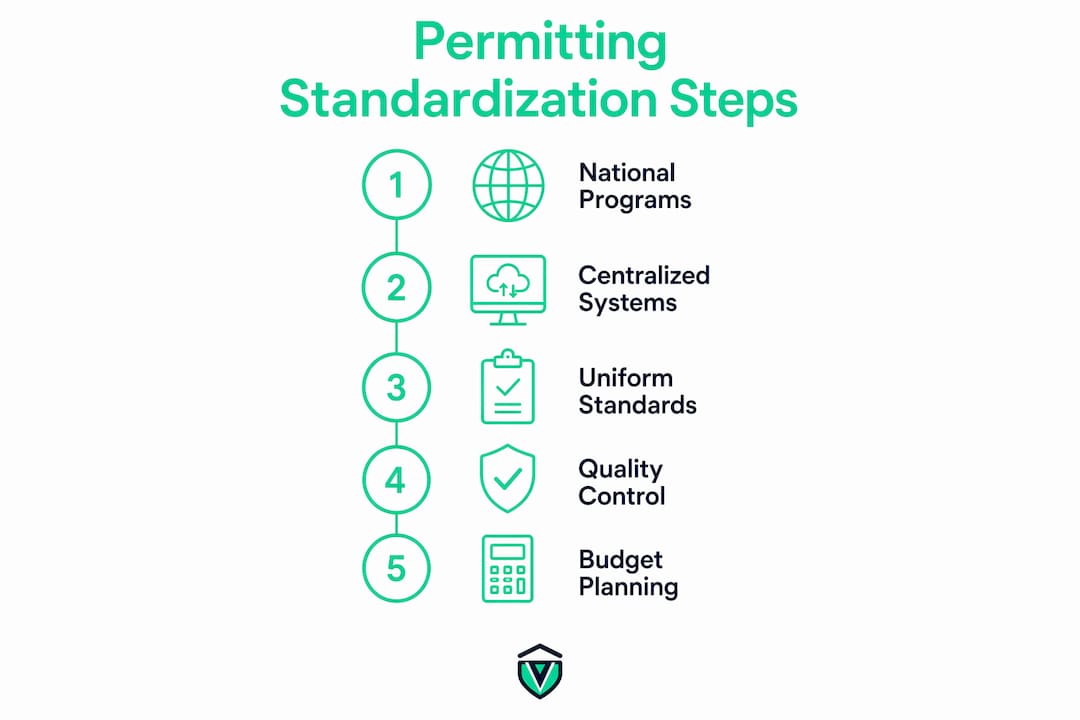
- Centralize permit management under one dashboard so every location's status is visible at a glance.
- Build SOPs that define who does what, from initial due diligence through final inspection sign-off.
- Use modular permit packages where the bulk of documentation is standardized and a smaller portion adapts to each jurisdiction's specific requirements.
- Tap national permitting programs and uniform registration frameworks to reduce state-by-state variation.
- Hire permit expeditors in high-volume markets to compress approval timelines.
- Automate renewal tracking and form pre-fill to cut human error before it causes resubmittals.
- Train franchisees and local staff on compliance requirements so they are not the weak link in the chain.
How national programs and partnerships simplify franchise permit compliance
No franchise operator should be reinventing the permitting wheel in every new market. National frameworks already exist to reduce that friction, and the operators who use them move faster.
The Franchise Disclosure Document process, governed by NASAA guidelines, gives franchisors a uniform registration format that works across multiple states, even though individual state requirements still apply. That uniformity is the foundation for consistent franchisor-level compliance. Building your permit strategy on top of that same logic, standardized where possible, adapted where required, is exactly how high-volume operators reduce chaos.
Pre-formatted permit packages take that logic further. When plan sheets, detail sheets, and specification sections are organized the same way every time, jurisdiction reviewers know exactly where to find what they need. Consistent submission packages can reduce permit review times significantly compared to ad-hoc submittals. That is weeks recovered per location, multiplied across a 20- or 30-unit rollout.
Experienced permit expeditors add another layer of speed. In high-volume markets, third-party expeditors with established AHJ relationships can compress approval timelines materially per application. For a large rollout with many locations in permitting simultaneously, that compression is material to your opening schedule and revenue.
When selecting a permit partner, look for:
- Nationwide coverage with proven multi-site rollout experience, not just local runners.
- A single point of contact who manages all jurisdictions rather than a patchwork of local vendors.
- Upfront due diligence that surfaces zoning conflicts and code issues before you submit anything.
- Quality control built into their process, not bolted on after the fact.
Pro Tip: Before entering any new market, schedule a pre-application meeting with the local Authority Having Jurisdiction (AHJ). Pre-application meetings surface potential code conflicts early and can prevent entire rounds of revision comments, which is far cheaper than a resubmittal.
For a deeper look at how franchise permit types vary by jurisdiction and what to prepare for, that resource covers the compliance landscape in detail.
How to build centralized systems for permit tracking and compliance
The single biggest shift for multi-unit operators is moving from reactive permit chasing to proactive, centralized data management. Spreadsheets and email threads cannot give you a real picture of your permit pipeline across 30 locations. A centralized platform can.
A centralized permit dashboard gives every stakeholder, from construction managers to real estate directors, one place to view statuses, access documents, and track deadlines across every project in every state. That visibility alone reduces the administrative burden that typically falls on project managers and pulls them away from higher-value work. When a permit moves to the next stage, gets flagged for correction, or is approved, the right people know immediately without anyone making a phone call.

Automated workflows that pre-fill forms, check completeness, and track renewals cut human error before it reaches the reviewer's desk. A missing signature or an incorrect fee calculation can set a timeline back by weeks. Automation catches those errors at the source. Over time, submitting clean packages consistently also builds a reputation with local reviewers that speeds future approvals.
When evaluating permit management software, prioritize these features:
- Real-time status tracking across all locations and jurisdictions.
- Automated renewal reminders so no license or permit expires unnoticed.
- Document storage with version control so everyone works from the current plans.
- Proactive alerts when a correction is requested or a deadline is approaching.
- Integration with your project management workflow so permitting does not live in a silo.
Pro Tip: Treat your permit platform as the single source of truth for all compliance data. When permit data is centralized, your team stops chasing updates and starts managing exceptions, which is a fundamentally different and more productive operating mode.
Vaultedai is built exactly for this use case. Multi-location operators use it to centralize permits, licenses, renewals, and compliance documents across all locations in one place, replacing the spreadsheet chaos that slows growing franchise networks. You can also explore territory-based permit management strategies that pair well with a centralized platform.
How franchisors should enforce uniform permit standards across all units
Centralized tracking only works if the underlying standards are clear and enforced. Franchisors who leave permitting up to individual franchisees get inconsistent results, missed deadlines, and compliance gaps that create liability at the brand level.
Standard Operating Procedures are the backbone of any consistent permitting program. A well-built SOP defines every step from initial due diligence through final inspection, names who is responsible for each task, and sets the quality bar for every submittal. When a new franchisee opens a location or a new staff member joins the team, the SOP is what keeps standards from slipping. It also makes onboarding faster because the process is documented, not tribal knowledge.

Jurisdiction-specific checklists sit underneath the SOP. A generic checklist will miss the specific requirements of a local authority, and a missed requirement means a resubmittal. Build and maintain detailed checklists for every jurisdiction you operate in, specifying required forms, drawing formats, and local ordinances. That level of detail is your best defense against incomplete applications. National permit partners who handle the full permit lifecycle, from due diligence to final approval, often maintain these checklists as part of their service.
Balancing standardization with local flexibility is where many franchisors struggle. A modular approach works well: fix the bulk of your permit package as a standard baseline and reserve a smaller portion for local adaptation. The fixed elements drive speed and cost consistency; the adaptive portion prevents rejections from jurisdictions with unique requirements. Franchisors should also establish clear communication protocols so that every unit knows how to report permit status updates, escalate issues, and request support from the central team.
Quality control before every submittal is non-negotiable. A formal QC review catches the unforced errors, a missing signature, an incorrect fee, an outdated drawing, that cause rejections and add weeks to your timeline. Some teams use automated tools to check applications for completeness before submission. Others use a senior team member as the final reviewer. Either way, no package should leave without a documented sign-off.
How to plan and budget for permits across multiple franchise locations
Permit costs and timelines vary more than most operators expect, and that variability will derail a rollout if it is not built into the plan from the start. The franchises that open on schedule treat permitting as a financial and scheduling variable, not an afterthought.
Start with jurisdiction-level due diligence before you finalize your site selection. Understanding the permit review timelines for each market, which can range from a few weeks to several months depending on the jurisdiction, lets you set realistic opening dates and avoid calendar surprises. A site that looks attractive on paper can become a liability if the local AHJ has a 16-week review cycle and your model assumes 8.
Budget for permit fees across varied jurisdictions, including application fees, plan check fees, and any special review costs for zoning variances or health department approvals. For a practical breakdown of how franchise permit costs are structured, that resource covers the fee categories operators most often underestimate. Always include a contingency line for unexpected local requirements, because even experienced operators encounter jurisdictions with rules they have not seen before.
Parallel processing is one of the most effective ways to compress your overall rollout timeline. Standardized documentation enables parallel workflows where material procurement and contractor prequalification can begin before permits are issued, rather than waiting for approvals before starting the next phase. That overlap can shave weeks off your critical path without cutting any corners.
Training franchisees and local staff on permit requirements belongs in the budget too, not just as a line item but as a scheduled activity. When local teams understand what is required, what the deadlines are, and who to contact when something goes wrong, they become an asset to the compliance process rather than a source of errors. A new franchisee permit setup workflow gives new operators a structured path through the process from day one.
Key budgeting and planning actions:
- Map permit timelines by jurisdiction before finalizing your rollout schedule.
- Include permit fees and contingency costs in your per-location financial model.
- Schedule parallel procurement and contractor prequalification to overlap with the permit review period.
- Allocate training time and budget for franchisees and local staff on compliance requirements.
- Conduct regular compliance audits across all locations to catch expired permits or missed renewals before they become violations.
Consistent permitting practices also support your franchise growth systems by reducing the operational friction that slows expansion and undermines brand consistency across markets.
Vaultedai gives multi-location operators one place for all permit compliance
Managing permits across dozens of franchise units without a dedicated platform means someone on your team is spending hours every week chasing status updates, hunting for documents, and manually tracking renewal dates. That is time your operators should be spending on the business, not on administrative follow-up.
Vaultedai is built for exactly this problem. It centralizes permits, licenses, renewals, and compliance documents for every location in one place, giving your whole team real-time visibility without the spreadsheet chaos. The platform is designed for fast onboarding and simple workflows, so you are not spending weeks on implementation before you see value. Franchise operators, restaurant groups, and multi-location retail teams use Vaultedai to stay ahead of deadlines, reduce missed renewals, and maintain consistent compliance across their entire portfolio. If your network has grown past what a shared drive and a spreadsheet can handle, Vaultedai is the practical next step. Visit vaultedai.app to see how it works for your operation.
Key Takeaways
Standardizing permits across franchise units requires a centralized system, modular permit packages, and consistent SOPs that balance national standards with local regulatory requirements.
| Point | Details |
|---|---|
| Use modular permit packages | Fix the bulk of documentation as a standard baseline and adapt a smaller portion to each jurisdiction's specific requirements. |
| Centralize with a dashboard | A single permit dashboard gives every stakeholder real-time visibility into status, deadlines, and documents across all locations. |
| Automate to cut errors | Automated workflows that pre-fill forms and flag missing information reduce resubmittals and build credibility with local reviewers. |
| Budget for timeline variability | Map jurisdiction-level review timelines before finalizing rollout schedules; permit review periods vary widely across U.S. markets. |
| Vaultedai for multi-unit compliance | Vaultedai centralizes permits, licenses, and renewals across all franchise locations, replacing manual tracking with real-time visibility. |