
Restaurant operator multi-location licensing is the process of securing and managing all required permits and licenses for each individual restaurant location within a multi-unit operation to maintain legal compliance and operational efficiency. Every location needs its own business license, food service permit, occupancy certificate, and fire department permit. Multi-unit franchise operators now control about 54% of franchise units in the U.S., which means the compliance burden at scale is enormous. Operators who treat licensing as a one-time task rather than an ongoing system consistently face fines, delays, and forced closures.
What are the essential licenses and permits for each restaurant location?
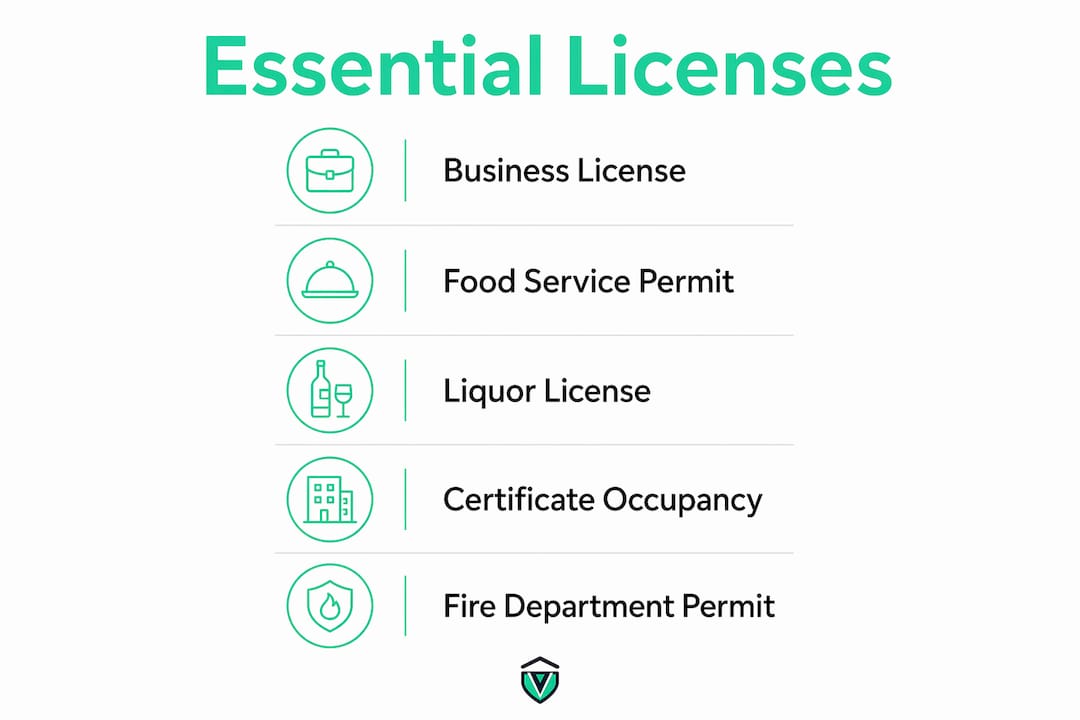
Each restaurant location requires its own complete set of permits, regardless of how many other locations you already operate. Regulatory bodies treat every site as a standalone business. A permit issued for your flagship location does not transfer to a new address across town, let alone across state lines.
The core permits every location needs include:
- Business license: Issued by the city or county where the location operates. Renewal cycles vary by jurisdiction, typically annually.
- Food service permit: Issued by the local health department. Requires a pre-opening inspection and annual renewal.
- Certificate of occupancy: Confirms the building meets local zoning and safety codes for restaurant use.
- Fire department permit: Covers suppression systems, hood installations, and fire alarm compliance. Inspections are site-specific.
- Seller's permit: Required in most states for collecting sales tax on food and beverage sales.
- Employer Identification Number (EIN): Required federally for payroll and tax reporting at each business entity.
- Liquor license: Required if you serve alcohol. Costs range from $5,000 to $400,000+ depending on the market and quota system in that jurisdiction.
Trade permits for construction or renovation add another layer. Electrical, plumbing, mechanical HVAC, and fire alarm or sprinkler permits are all required before a certificate of occupancy is issued. These are pulled by your contractors but must be coordinated with your opening timeline.
| Permit Type | Issuing Body | Typical Timeline |
|---|---|---|
| Business license | City or county clerk | 1–4 weeks |
| Food service permit | Local health department | 2–6 weeks |
| Certificate of occupancy | Building and zoning department | 4–12 weeks |
| Fire department permit | Local fire marshal | 2–8 weeks |
| Liquor license | State alcohol control board | 30–180+ days |
| Seller's permit | State revenue department | 1–3 weeks |
Pro Tip: Apply for your liquor license the day you sign your lease. Liquor licenses routinely take 30 to 180+ days to process and are the single most common cause of restaurant opening delays.
How do multi-location operators manage licensing across all sites?
Centralized permit tracking is the foundation of compliance at scale. Without a single system of record, renewal deadlines fall through the cracks and individual location managers make inconsistent decisions about inspections and documentation.
The most effective operators build their compliance infrastructure around three pillars:
- A master renewal calendar: Every permit, across every location, logged with expiration dates and lead-time alerts. A 90-day alert for liquor license renewals and a 30-day alert for annual health permits gives your team enough runway to act without rushing.
- Defined compliance roles: District managers overseeing 5–8 locations each are the standard model for high-performing multi-unit operators. Each district manager owns the compliance status of their sites, not just the sales numbers.
- Unified technology platforms: Sophisticated multi-unit operators adopt centralized systems for POS, scheduling, accounting, and training. Permit tracking belongs in that same ecosystem, not on a separate spreadsheet.
Coordinating inspections across multiple sites requires advance scheduling and standardized preparation checklists. Each location should have a pre-inspection protocol that mirrors the health department's own evaluation criteria. That consistency reduces failed inspections and the re-inspection fees that follow.
Pro Tip: Assign one compliance officer or designated team member at the corporate level to own the permit management process across all locations. When everyone is responsible, no one is.

What are common challenges and mistakes in multi-location restaurant licensing?
The most expensive licensing mistakes are not the dramatic ones. They are the quiet administrative failures: a renewal missed by two weeks, a permit pulled for the wrong address, a liquor license application submitted without the required architectural drawings.
Varying local jurisdiction requirements create genuine complexity. A process that takes three weeks in one county can take four months in the next. Operators who assume uniformity across markets consistently underestimate timelines and budget for new openings.
Failure to maintain separate licenses per location can result in fines, forced closures, and legal liability. Health departments and fire marshals inspect each location independently. A compliant flagship does not protect a non-compliant second location from enforcement action.
Underestimating development fees compounds the problem during rapid expansion. Area Development Agreements require development fees that often run 25%–100% of the per-unit franchise fee, and failure to meet opening schedules can trigger penalties or loss of territory rights. Licensing delays that push back an opening date can cascade into ADA violations.
Documentation mismanagement across multiple states is another consistent failure point. Operators expanding across state lines face different renewal cycles, different issuing agencies, and different inspection standards. Without a centralized document repository, location managers store permits locally, creating gaps that only surface during audits.
What best practices optimize compliance for multi-location operators?
Operators who scale past five locations without a formal compliance system are building on a fragile foundation. The best practices below reflect what high-performing multi-unit groups actually do, not what sounds good in theory.
-
Build a location-specific licensing checklist. A new location permit checklist tailored to each jurisdiction prevents missed permits during the opening process. Generic checklists miss local requirements.
-
Integrate licensing into your opening project plan. Permit timelines should appear on the same Gantt chart as construction milestones. A certificate of occupancy delay is a construction problem and a compliance problem simultaneously.
-
Hire or retain a licensing consultant for complex markets. Jurisdictions with quota-based liquor licenses, strict zoning overlays, or high-volume inspection backlogs reward operators who have local relationships. A consultant who knows the county health director by name is worth the fee.
-
Negotiate credit structures in development agreements. Experienced operators negotiate license fee credits in Area Development Agreements to reduce upfront capital burden. Development fees applied as credits toward unit fees as locations open improve cash flow during rollouts.
-
Implement a district manager compliance model with defined KPIs. Each district manager should report permit status, upcoming renewals, and inspection results on a defined cadence. Centralized compliance oversight reduces the risk of lapses and improves renewal timeliness across the portfolio.
-
Use a centralized dashboard for real-time permit status. Spreadsheets break at scale. A centralized dashboard with renewal alerts, document storage, and location-level status reporting gives corporate leadership the visibility to catch problems before they become violations.
Pro Tip: Review your full permit portfolio quarterly, not just at renewal time. Regulatory changes, business structure updates, and remodel projects can all trigger new permit requirements mid-cycle.
How does licensing change when you expand or acquire new locations?
Expansion through acquisition carries a compliance risk that operators consistently underestimate. Buying an existing restaurant does not transfer its permits to you. Food permits and catering licenses are not transferable; every acquired location requires fresh applications in the new operator's name.
Due diligence before closing an acquisition must include a full permit audit. The key questions are:
- Are all current permits active and in good standing?
- Are there any outstanding violations or pending inspections?
- Does the existing certificate of occupancy cover the intended use and seating capacity?
- Are there any liquor license complications, including quota restrictions or pending renewals?
- What is the status of fire suppression and alarm system certifications?
Remodeled or significantly altered locations trigger new plan reviews and inspections even if you are not changing the concept. A kitchen expansion, a new hood system, or a seating reconfiguration all require updated permits before reopening that section of the space.
Geographic expansion across state lines adds jurisdictional complexity that compounds with each new market. Licensing timelines, fee structures, and inspection standards differ materially between states. Operators entering a new state for the first time should budget an additional 60–90 days into their opening timeline to account for unfamiliar regulatory processes.
Area Development Agreement timelines typically run 3–7 years, and licensing delays that push back openings can put operators in breach of their development schedule. Building licensing milestones directly into ADA negotiations protects operators from penalties caused by regulatory factors outside their control.
Key Takeaways
Multi-location restaurant licensing requires a permit-by-location approach, centralized tracking systems, and defined compliance roles to prevent costly lapses and opening delays.
| Point | Details |
|---|---|
| Every location needs its own permits | No permit transfers between locations; each site requires independent applications and renewals. |
| Liquor licenses demand early action | Apply immediately after lease signing; processing takes 30–180+ days and delays entire openings. |
| District managers own compliance | Assign 5–8 locations per district manager with defined KPIs for permit status and renewal tracking. |
| Acquisitions require fresh applications | Buying an existing restaurant does not transfer its permits; plan for full re-application at every acquired site. |
| Credit structures reduce expansion costs | Negotiate development fee credits in Area Development Agreements to protect cash flow during multi-site rollouts. |
The compliance shift nobody talks about enough
The hardest part of scaling a restaurant group is not the permits themselves. It is accepting that you cannot personally manage compliance across ten locations the way you managed it across one. I have watched operators who were meticulous single-unit owners become the biggest liability in their own growing companies because they never made the shift from doing to overseeing.
The operators who scale well treat compliance as an organizational design problem, not a paperwork problem. They build systems, hire the right district managers, and invest in technology before they need it, not after a violation forces their hand. The ones who struggle keep adding locations while still relying on the same spreadsheet they used for their first restaurant.
The competitive advantage in multi-location licensing is not knowing every regulation in every jurisdiction. It is having a system that surfaces the right information to the right person at the right time. That is a solvable problem, and the operators who solve it early grow faster and with far fewer crises than those who treat compliance as an afterthought.
— Rakin
How Vaultedai helps operators stay compliant at scale
Managing permits across five, ten, or twenty locations is a different problem than managing one. The volume of renewal dates, inspection records, and jurisdiction-specific documents grows faster than any spreadsheet can handle.
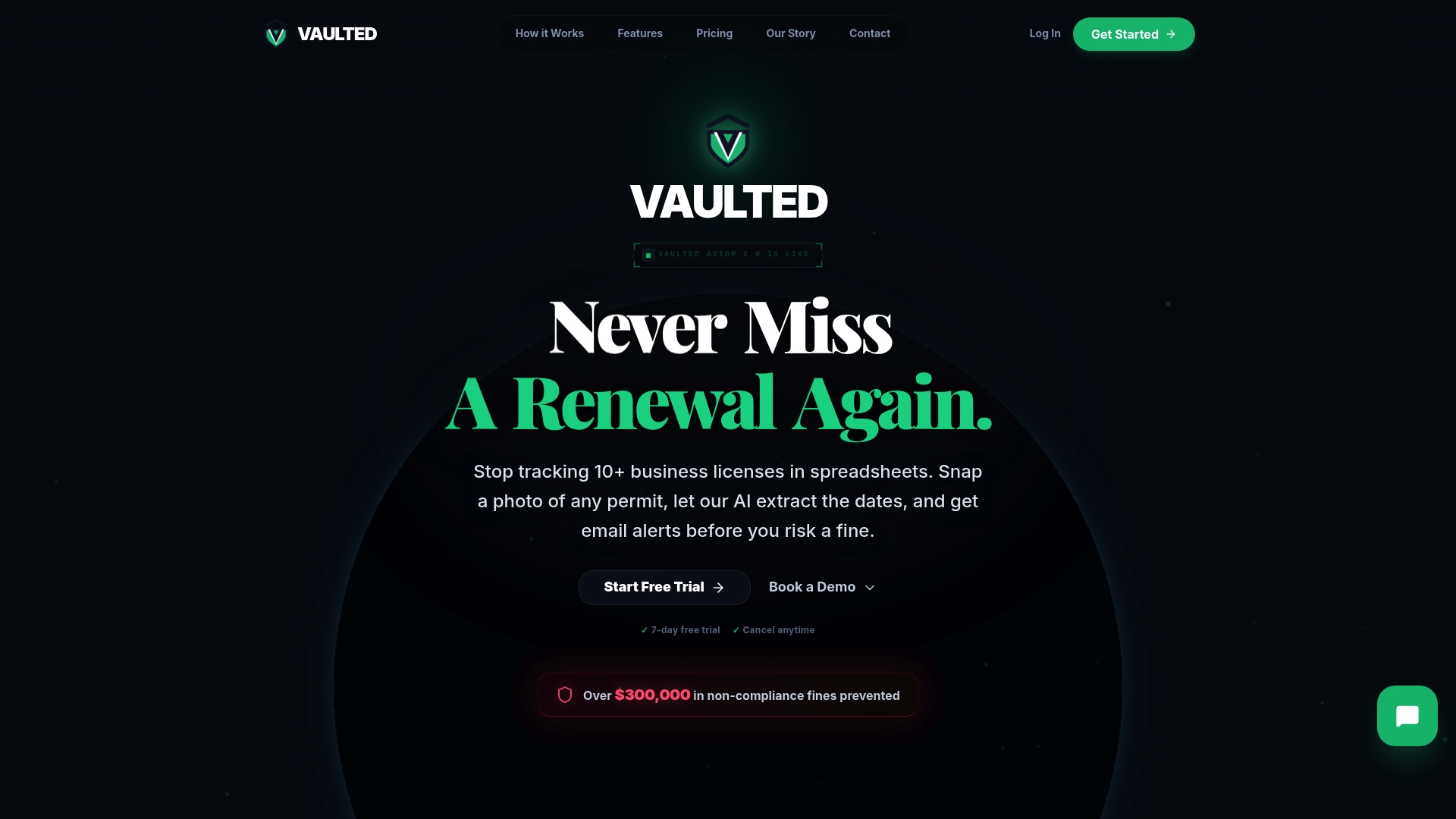
Vaultedai is built specifically for multi-location operators who need a single place to track every permit, renewal, and compliance document across their entire portfolio. The platform centralizes license status by location, sends renewal alerts before deadlines hit, and gives district managers and corporate teams real-time visibility into compliance gaps. Operators use Vaultedai to replace reactive fire-fighting with a proactive system that scales as they add locations. Visit Vaultedai to see how the platform fits your operation.
FAQ
What licenses does each restaurant location need?
Every location requires a business license, food service permit, certificate of occupancy, and fire department permit at minimum. Locations serving alcohol also need a separate liquor license from the state alcohol control board.
Can permits transfer when I buy an existing restaurant?
No. Food permits and catering licenses are not transferable. Every acquired location requires fresh permit applications in the new operator's name before reopening.
How long does a liquor license take to process?
Liquor licenses typically take 30 to 180+ days to process depending on the state and local quota system. Apply immediately after signing your lease to avoid delaying your opening.
What is the best way to track permits across multiple locations?
A centralized compliance platform with renewal alerts and document storage by location is the most reliable method. Assigning a district manager to own compliance for 5–8 locations each adds a human accountability layer.
Do I need new permits when remodeling an existing location?
Yes. Significant remodels, including kitchen expansions, new hood systems, or seating changes, trigger new plan reviews and inspections. Confirm with your local building and fire departments before starting any construction.