

Multi-location businesses lose their operating licenses, face daily fines, and get locked out of government contracts every year, not because they ignored compliance, but because they tracked it badly. The most common missed business renewal deadlines fall into a predictable set of categories: state and local business licenses, health and safety permits, sales tax registrations, domain names, insurance policies, and SSL/TLS certificates. Miss any one of these across five locations and you are not dealing with one problem. You are dealing with five simultaneous fires, each with its own regulator, its own penalty schedule, and its own cure window.
The stakes in 2026 are sharper than ever. The IRS imposes failure-to-file penalties that compound daily, and regulatory bodies at the state level have grown less forgiving about late filings from multi-location operators. Here is what you are actually up against:
- Business licenses: Annual renewals vary by city, county, and state. A restaurant group with 12 locations may face 12 different renewal dates.
- Health and safety permits: Fire marshal certificates, food handler permits, and occupancy approvals each carry independent expiration cycles.
- Sales tax registrations: States require periodic renewal or reactivation, especially after address or ownership changes.
- Domain names: Typically renew annually or biennially. A lapsed domain can be seized by bad actors within days.
- Insurance policies: A gap in general liability or workers' comp coverage, even 24 hours, can void a claim filed the same day.
- SSL/TLS certificates: Browsers flag expired certificates immediately, killing customer trust and e-commerce revenue.
What are the most common renewal deadlines multi-location firms miss?
The critical expiration dates that businesses consistently overlook share one trait: they live in different systems, owned by different people, with no central visibility. For a single-location business, a shared calendar might hold things together. For a firm with 10, 20, or 50 locations, that approach breaks down fast.
Common renewal pitfalls by category:
- State business licenses renew annually in most states, but renewal windows open at different times. California's Seller's Permit has no expiration, but local business tax certificates in Los Angeles renew every February. Texas requires annual franchise tax reports due May 15. Conflating these is a common renewal pitfall.
- Local permits (signage, zoning, health department) often renew on fiscal-year cycles that do not align with the calendar year, making them easy to miss when teams are focused on Q4 operations.
- Federal and state tax registrations require periodic confirmation of active status, particularly after a change in ownership structure or a new location opening.
- Professional certifications for licensed trades (electricians, food safety managers, HVAC technicians) expire on individual schedules tied to the employee, not the business calendar.
| Renewal Type | Typical Renewal Period | Common Pitfall for Multi-Location Firms |
|---|---|---|
| State business license | Annual | Different due dates per state; no unified dashboard |
| Local health permit | Annual or biennial | Tied to inspection cycles, not calendar year |
| Sales tax registration | Varies by state | Triggered by address or ownership changes |
| Domain name | Annual or biennial | Auto-renew fails when card on file expires |
| Insurance policy | Varies by policy | Broker reliance without internal verification |
| SSL/TLS certificate | Multi-year periods | Multiple domains; one slips through manual tracking |
Decentralized tracking is the root cause of most multi-jurisdiction compliance failures. When each location manager handles their own renewals in a spreadsheet, version control collapses and deadlines fall through the gaps between locations.

What happens when your business misses a renewal deadline?
The consequences are not abstract. Missing a statutory return triggers a cascade that starts with monetary penalties and can end with operational shutdown, blocked permits, and personal liability for directors.
Financial and operational consequences:
- Daily or monthly penalty fees that compound until the filing is resolved
- Interest accruals on any unpaid fees tied to the missed return
- Loss of good standing, which blocks loan sanctions and permit renewals
- Ineligibility for government incentives and grant programs
- Forced operational shutdown at specific locations pending reinstatement
Legal consequences:
- Contract breach exposure, particularly when agreements contain a "time is of the essence" clause
- Director disqualification and potential prosecution for willful neglect of statutory filings
- Voided insurance coverage during a lapse period, leaving the business personally liable for any incident
"A 'time is of the essence' clause transforms a deadline from a target into a hard wall. Without it, a minor delay is usually treated as a non-material breach. With it, even a short delay can constitute a material breach that lets the non-breaching party cancel the entire agreement and pursue full remedies." — LegalClarity, Time for Performance in Contracts
Legal experts caution that the distinction between a minor and a material breach hinges on specific contract language and business context. A two-day delay on a routine service contract is very different from a two-day delay on a permit filing that a landlord or franchisor required as a condition of the lease.
The reputational damage compounds the financial hit. Late compliance filings are consistently rated lower by evaluators, and the reputation penalty often outlasts the direct financial cost. A franchise group that loses its health permit at one location, even briefly, can see that incident surface in reviews, franchisor audits, and future lease negotiations.
Pro Tip: Review every contract your business holds for "time is of the essence" language before a renewal deadline passes. If that clause is present, a missed date is not a minor administrative issue. It is a potential contract termination event.
How do you actually prevent missing renewal deadlines across multiple locations?
Decentralized monitoring is the single biggest controllable cause of missed deadlines in multi-location firms. The fix is not more reminders. It is a system that removes the dependency on any one person remembering anything.
Practical steps that work:
- Build a master renewal calendar that lists every permit, license, and registration for every location, with the renewal date, the responsible party, and the governing agency.
- Set layered alerts at 90, 60, 30, and 7 days before each deadline. A single reminder is not enough. If the first alert lands in a spam folder, the deadline still passes.
- Assign location-level accountability with a named owner for each renewal, plus a backup. When one person leaves, the renewal does not leave with them.
- Standardize extension procedures. If a deadline cannot be met, know the formal process for requesting an extension in each jurisdiction before you need it. Verbal agreements with regulators are rarely enforceable.
- Audit your license application processes annually to catch errors that could delay future renewals before they become emergencies.
- Centralize all renewal documents in one repository. A permit buried in a filing cabinet at one location is invisible to the compliance manager at headquarters.
For firms scaling past five locations, manual systems fail reliably. Compliance platforms built for multi-location permit renewal centralize every document, automate alerts, and give leadership a real-time view of what is current and what is at risk. The operational clarity that comes from a single dashboard, rather than 20 spreadsheets, is the difference between catching a lapse 60 days out and discovering it the day a regulator shows up.
Vaultedai keeps your renewals from falling through the cracks
Running compliance across multiple locations without a centralized system is like managing payroll with sticky notes. It works until it doesn't, and when it fails, the cost is not just a fine.
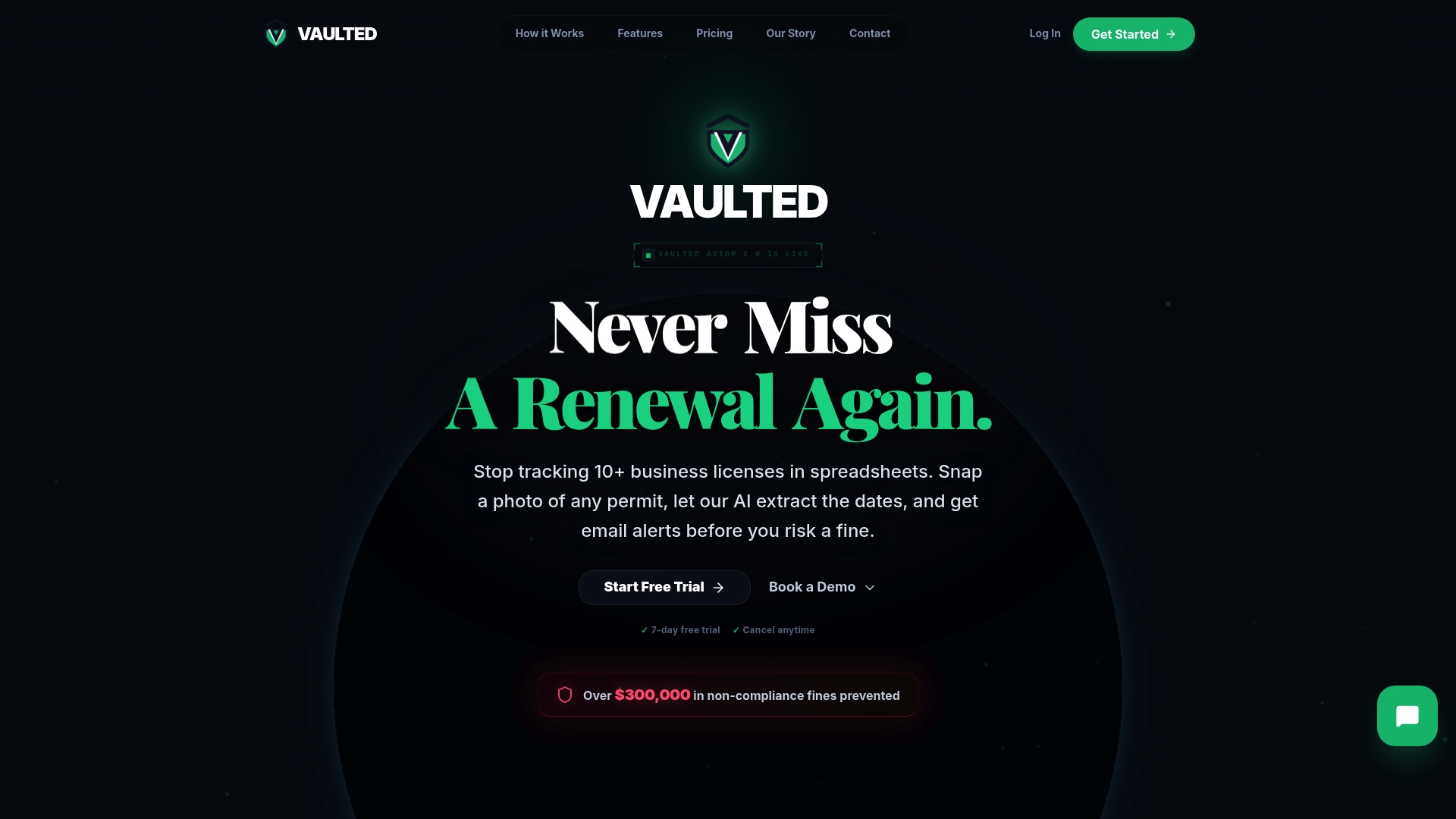
Vaultedai is built specifically for multi-location operators: franchises, restaurant groups, convenience store chains, and smoke shop operators who need one place to see every permit, license, and renewal deadline across every location. The platform centralizes your compliance documents, fires automated reminders well before deadlines hit, and gives your team a clear view of what needs attention and when. Onboarding is fast, the workflow is simple, and you do not need a compliance department to run it. If your business is scaling and your current tracking system is a shared spreadsheet, Vaultedai is the upgrade that pays for itself the first time it catches a deadline you would have missed.
Key Takeaways
Multi-location businesses face the highest risk of missed renewal deadlines because each location carries its own permit, license, and registration schedule across different jurisdictions.
| Point | Details |
|---|---|
| Most-missed renewal types | Business licenses, health permits, domain names, insurance policies, and SSL/TLS certificates top the list. |
| Penalty severity | Missed filings trigger daily fees, interest accruals, loss of good standing, and blocked loan or permit approvals. |
| Legal exposure | Contracts with "time is of the essence" clauses can treat even short delays as material breaches with termination rights. |
| Root cause | Decentralized tracking across locations is the primary driver of renewal lapses in multi-location firms. |
| Vaultedai's role | Vaultedai centralizes permits, licenses, and renewal deadlines for multi-location businesses, replacing fragmented spreadsheets with automated alerts and a single compliance dashboard. |