
A franchise outdoor seating permit is a municipal legal authorization that allows a business to extend customer seating into public spaces such as sidewalks, streets, or parking lanes beyond its indoor premises. This is not a simple business license. It is a formal approval governed by urban planning codes, ADA accessibility standards, and local safety regulations. For franchise operators managing multiple locations, understanding what these permits require, how they differ by city, and how to stay compliant is the difference between a profitable patio and a costly enforcement action.
What is a franchise outdoor seating permit and who issues it?
A franchise outdoor seating permit, known in most municipalities as an outdoor dining permit or sidewalk café permit, is a municipal legal document required any time a business extends customer seating into a public right-of-way. Seating placed entirely on private property typically does not require this permit. The moment chairs and tables cross onto a public sidewalk, street, or parking lane, a permit is mandatory.
Local city or county transportation and public works departments issue these permits. In larger cities, the process may involve multiple agencies, including planning departments, building inspection offices, and sometimes historic preservation boards. Each issuing authority applies its own standards, which is why permit requirements vary so widely across franchise territories.
The permit exists to serve urban management goals, not just business interests. Municipal agencies prioritize pedestrian flow, public safety, and urban aesthetics above commercial convenience. Franchise operators who treat the permit as a formality rather than a compliance obligation routinely face rejections, redesigns, and fines. Understanding the permit's purpose is the first step toward getting one approved.
What are the common requirements for getting an outdoor seating permit?
The application process for an outdoor dining permit follows a consistent pattern across most U.S. cities, even though specific requirements vary. Franchise operators should expect to gather several categories of documentation before submitting anything.
- Scaled site plan: A detailed drawing showing the proposed seating area, furniture layout, dimensions, and proximity to fixed obstacles such as trees, utility meters, and lamp posts.
- Proof of liability insurance: Many municipalities require high-value public liability insurance coverage before approving any application. Coverage thresholds vary significantly by city.
- Property owner or landlord consent: Cities commonly require written consent from property owners before accepting an application, particularly in multi-tenant shopping centers where a franchise may not control the building.
- Municipal site inspection: An inspector visits the location to verify pedestrian clearance, safety compliance, and ADA accessibility before the permit is approved.
- Permit type selection: Operators must choose between seasonal, temporary, and permanent permits, each carrying different renewal timelines and inspection requirements.
Review timelines range from a few weeks to several months depending on the city and the complexity of the proposed seating area. Operators who submit incomplete applications restart the clock. Reinspection fees apply when required modifications are not completed within the allotted window, with reinspection costs running around $150 in cities like Portland.
Pro Tip: Submit your outdoor seating permit application at least 60 days before your target opening date. Line up your site inspection appointment at the same time you submit paperwork. Cities with high application volumes schedule inspections weeks out, and a late inspection is the most common reason operators miss their seasonal launch.
What regulations govern outdoor seating safety and ADA compliance?
Outdoor seating regulations exist at the intersection of local building codes, federal accessibility law, and urban planning policy. Franchise operators must satisfy all three simultaneously.
The Americans with Disabilities Act sets the baseline for sidewalk clearance. ADA compliance requires a minimum clear pedestrian path of 6 feet on any sidewalk where outdoor seating is placed. This measurement is taken from the outermost edge of the seating area to the nearest fixed obstacle or building face. ADA compliance is the leading cause of application rejection and mandatory redesign.
Outdoor seating permits are urban management tools first and business accommodations second. A city that approves your patio is also signing off on how that patio interacts with every pedestrian, wheelchair user, and delivery worker who passes by. Operators who design their seating area with the pedestrian in mind get approved faster and face fewer reinspections.
Beyond the 6-foot clearance rule, most cities impose the following standards:
- All furniture must be removable and not permanently affixed to any public surface.
- Barriers such as planters or rope dividers must guide pedestrian flow without blocking it.
- Furniture placement must respect fixed obstacles including fire hydrants, utility access panels, and transit stops.
- Seating footprints cannot exceed the square footage specified in the approved site plan.
- Accessible seating positions must be included within the outdoor area to meet ADA table requirements.
Non-compliance carries real consequences. Cities issue fines and can order the immediate removal of all outdoor furniture. Possessing the furniture does not grant any legal right to use it without an active permit. For franchise operators, a single enforcement action at one location can trigger audits across the entire network.
How do fees and permit limitations affect multi-location operators?
Permit costs vary widely and franchise operators managing multiple territories must budget for this variability. Application fees alone range from modest amounts to well over $1,000. Fees range from $164 in some municipalities to over $1,845 in cities like San Rafael, California, with annual renewal fees added on top. That spread makes financial planning difficult without a centralized tracking system.
| Cost category | Typical range |
|---|---|
| Initial application fee | $164–$1,845+ |
| Annual renewal fee | Varies by city; often $100–$500 |
| Reinspection fee | Around $150 per visit |
| Liability insurance premium | Varies; often required at high coverage thresholds |
Beyond fees, permit limitations shape what franchise operators can actually do with their outdoor space. Permits are tied to specific physical locations and are non-transferable. If a franchise location changes ownership or moves, a new application is required from scratch. This creates a real operational gap for franchise networks where ownership transitions are common.
Seasonal restrictions add another layer of complexity. A permit approved for summer months does not automatically extend into fall. Permanent permits require separate applications and typically face stricter review. Furniture type, number of seats, and the exact footprint are all locked into the approved permit. Any change, even adding two chairs, requires an amendment or a new application.
Pro Tip: Build a permit fee budget line for each franchise territory, not a single national estimate. Create a renewal calendar that flags each location's expiration date 90 days in advance. The cost of a missed renewal, including fines and lost revenue during the gap, far exceeds the renewal fee itself.
What steps should franchise operators take to manage permits across locations?
Managing outdoor seating permits across multiple franchise locations requires a system, not just good intentions. The permit management challenges that sink multi-location operators are almost always organizational, not regulatory.
- Centralize all permit records. Store every permit, site plan, insurance certificate, and renewal date in one place accessible to your operations team. Spreadsheets fail at scale because they require manual updates and offer no alerts.
- Engage local authorities early. Contact the permitting office before submitting an application. Ask specifically about current wait times, common rejection reasons, and any recent rule changes. Cities update their outdoor seating regulations more often than operators expect.
- Standardize your seating design within local constraints. Create a base furniture layout that meets ADA clearance requirements in your most restrictive market. Use that as the starting template for all locations, then adjust for local rules. This approach protects brand consistency while reducing redesign cycles.
- Train location managers on permit boundaries. Staff who add chairs, move barriers, or extend the seating footprint without authorization create compliance violations. Every location manager should know exactly what the permit allows and what triggers a violation.
- Document everything. Keep dated photos of your outdoor seating area after each setup. If a city inspector disputes your compliance, photographic records are your strongest defense.
A franchise location opening checklist that includes outdoor seating permit steps prevents the most common pitfall: operators who open a patio before the permit is approved because they assumed approval was automatic. It is never automatic.
Key Takeaways
A franchise outdoor seating permit is a mandatory municipal authorization, not an optional upgrade, and non-compliance carries fines, forced removal, and operational disruption across your entire network.
| Point | Details |
|---|---|
| Permits cover public space only | Seating on private property is generally exempt; public sidewalks and streets always require a permit. |
| ADA clearance is the top rejection cause | Maintain a minimum 6-foot pedestrian path and include accessible seating positions in every layout. |
| Fees vary widely by city | Budget $164 to over $1,845 per location for initial applications, plus annual renewal and reinspection costs. |
| Permits are non-transferable | Each location requires its own permit; ownership changes or relocations trigger a new application. |
| Centralized tracking prevents violations | A system that flags renewal deadlines 90 days out protects revenue and franchise reputation. |
The part of outdoor seating permits nobody warns you about
Most franchise operators focus on getting the permit approved. The harder problem is keeping it approved across a dozen locations in a dozen different cities, each with its own renewal cycle, inspection schedule, and rule updates.
What I have seen consistently is that the operators who struggle most are not the ones who fail the initial application. They are the ones who get approved, relax, and then miss a renewal or let a location manager add chairs without checking the permit. One enforcement action can freeze your outdoor seating program network-wide while you sort out the paperwork.
The other thing worth saying plainly: municipal outdoor seating regulations are not static. Cities revise their sidewalk café rules in response to pedestrian complaints, accessibility audits, and urban planning shifts. A permit condition that was acceptable in 2023 may require modification by 2026. Operators who treat permit compliance as a one-time task rather than an ongoing responsibility get caught off guard.
My honest advice is to treat each location's outdoor seating permit the same way you treat a lease. Read it carefully, track its expiration, and build a review into your annual operations calendar. The types of permits your franchise must maintain are more interconnected than they appear. A lapse in one often triggers scrutiny of others.
Branding consistency is also harder than it looks. Cities that require removable, non-permanent furniture limit your ability to install fixed branded elements. The franchises that handle this best design modular furniture systems that meet the removability requirement while still looking intentional and on-brand. That takes planning, not improvisation.
— Rakin
How Vaultedai helps franchise operators stay compliant
Outdoor seating permits expire, get amended, and vary by city. Tracking them manually across multiple locations creates the exact gaps that lead to fines and forced closures.
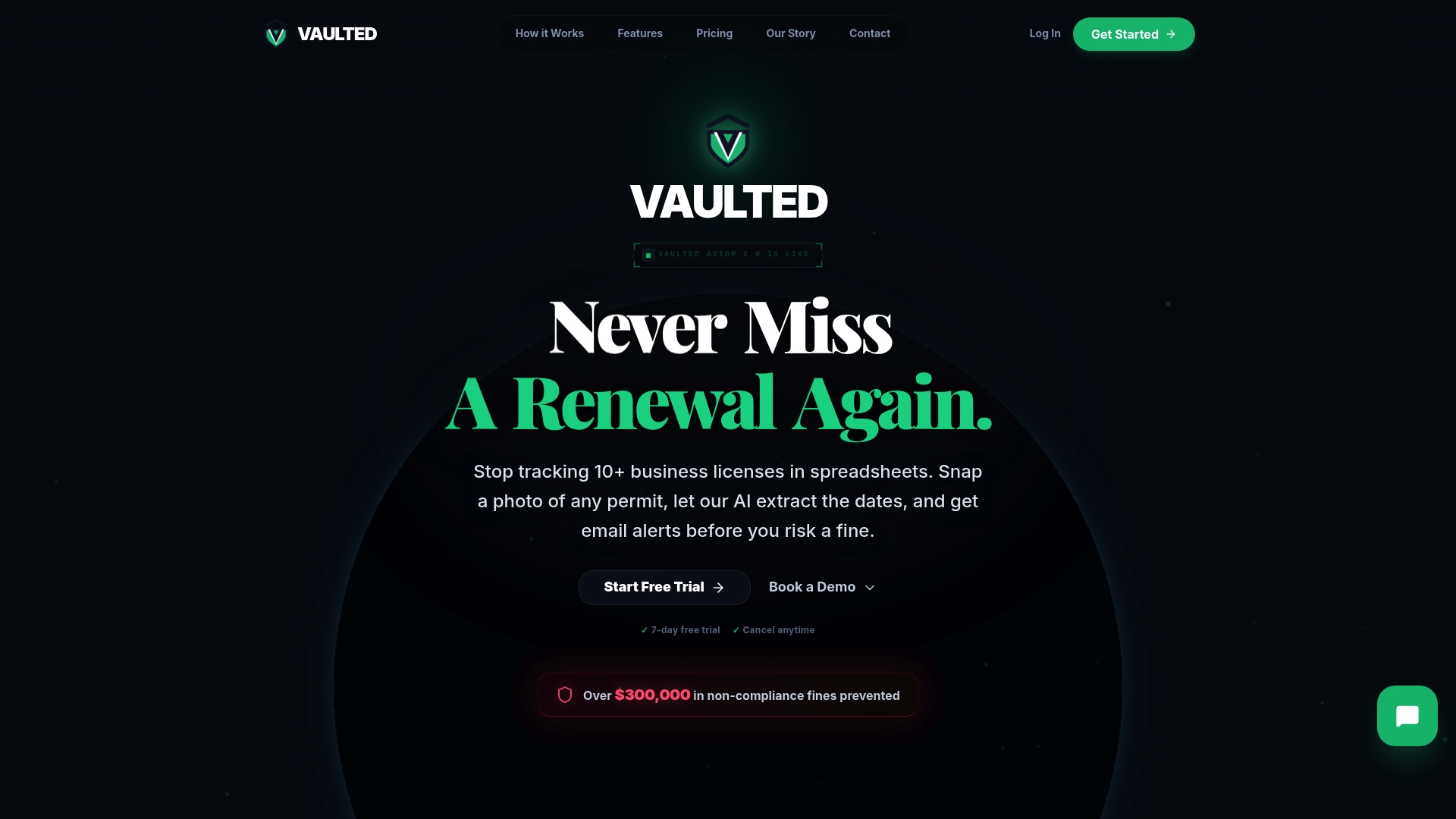
Vaultedai is built for franchise operators who need one place to manage every permit, renewal deadline, and compliance document across their entire network. The platform centralizes outdoor seating permits alongside your other licenses, sends renewal alerts before deadlines hit, and gives your operations team clear visibility into which locations are compliant and which need attention. For multi-location businesses managing food service permit networks across different municipalities, that visibility is not a convenience. It is a protection. Visit Vaultedai to see how the platform works for franchise operators at scale.
FAQ
What is an outdoor dining permit for a franchise?
An outdoor dining permit is a municipal authorization that legally allows a franchise to place customer seating in public spaces such as sidewalks or streets. Without it, any outdoor furniture on public property is a compliance violation.
How much does an outdoor seating permit cost?
Permit costs vary significantly by city, ranging from $164 in some municipalities to over $1,845 in others, with additional annual renewal and reinspection fees on top of the initial application cost.
Can a franchise transfer its outdoor seating permit to a new location?
No. Outdoor seating permits are location-specific and non-transferable. A new application is required any time a franchise location moves or changes ownership.
What ADA requirements apply to outdoor seating areas?
ADA standards require a minimum 6-foot clear pedestrian path on any sidewalk where outdoor seating is placed, and all furniture must be removable rather than permanently affixed to public property.
How long does it take to get an outdoor seating permit approved?
Review timelines vary by city and application complexity, but operators should plan for several weeks to several months. Submitting a complete application with all required documents and scheduling the site inspection early reduces delays significantly.